Cyberpunk 2077

I was not yet a fan of The Witcher by the time Cyberpunk 2077 was announced in 2012. Assassin of Kings hadn’t managed to capture my interest, and it would be quite a few years still before I sunk any significant amount of time into Wild Hunt, so I was merely a witness to the events surrounding one of the biggest release flops in my memory. The anticipation that built over the next near-decade expanded to astronomical proportions. Even before its release, it was receiving awards and accolades for the sheer scope of the project, and what they promised did sound compelling. A living, evolving city that reacted to your every action; dozens of ways to approach problems, from running and gunning to hacking from the shadows; choices having far-reaching consequences in your story experience. What we ended up getting was a much more limited, buggy game that only shows a fraction of the potential it had. I purchased the game on sale for $25, and I feel like I paid a fair price for that quality of game. Had I paid more, I’d have felt ripped off.

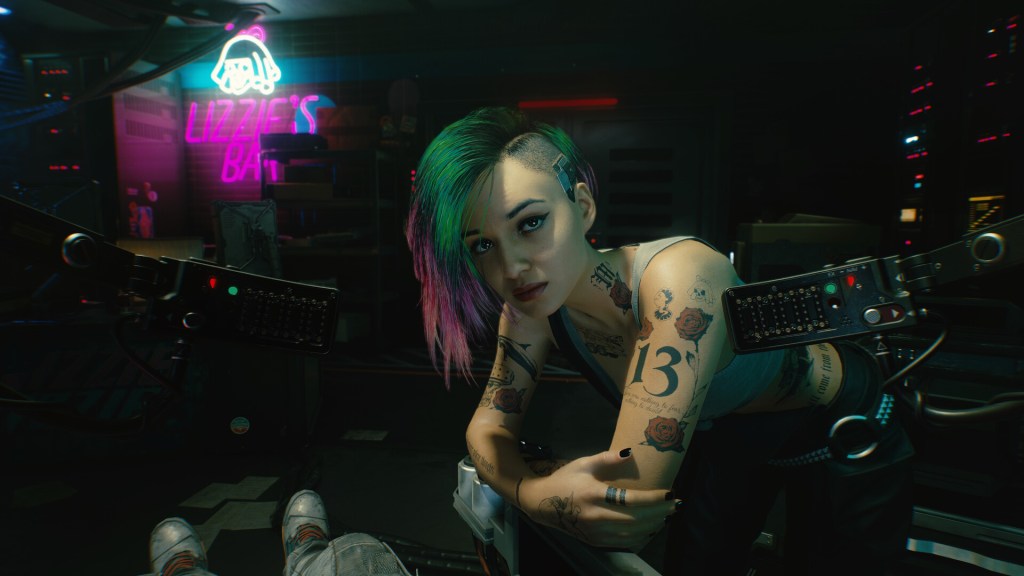
Players have a relative variety of customization options to create their own version of the main character, V, including their own life path and backstory before the game’s events. Whether a Nomad entering the metropolis for the first time, a Street Kid making their way while avoiding ganglife, or a Corpo agent working for one of the city’s megacorporations, all paths eventually lead to Night City. The city itself is its own character; it’s multifaceted, with different districts that have their unique aesthetic while still falling under the umbrella of cyberpunk. Regardless of the life path you choose, your goal remains the same: to become the best fixer in all the city. No agent works alone, however, and the cast is quite diverse. Judy Alvarez is one of my particular favorites, but there’s also Viktor Vektor, Alt Cunningham, Panam Palmer, and Johnny Silverhand. Speaking of the rocker boy, the character himself is played by Keanu Reeves, whose presence does add a little bit of spice to the game. (Likewise, two of the voice actors really stuck out to me in particular; Cherami Leigh and Erika Lindbeck, who play female V and Misty, respectively, are also the voice talents behind Makoto Niijima and Futaba Sakura from Persona 5! What a small world.) The narrative itself tries to take on topics including anti-capitalism and sex positivity, but they ultimately boil down to the shallowest attempts. It ends up being reduced to “Corporations bad! Technology bad!” but without actually saying anything of substance as a commentary on the subjects it broaches. It’s almost like a teenage trying to speak as an authority on topics of which they only have secondhand knowledge. If that wasn’t bad enough, many of the choices you make in the game have little-to-no impact on how the story plays out. Really, the only choice that matters is the ending decision, and all that does is give you a different cutscene to watch. Characters won’t react differently to you based on the choices you make or the things you say, while Night City remains stagnant and does not reflect any of the decisions you make in the game. However, everything that makes Cyberpunk cyberpunk is present. It very much does its best to live by the four core tenets of the tabletop RPG: Style over substance; Attitude is everything; Always take it to the Edge; and (Break) the rules.

It’s not as though the game is entirely bad. When taking on enemy gangers or corpos, mastering the combat system is essential to surviving long. The combat can be brutally difficult. I found myself dying repeatedly during many of the encounters, and I was only playing on normal difficulty. You can never take as much damage as you think you can, leading to many frustrating restarts at the checkpoint. Once you do begin to improve, with the help of your skill trees and cybernetic upgrades, the battles can be fulfilling. I found myself trying to stealthily engage most encounters, taking out enemies using quickhacks, and then, when I’m inevitably spotted, I would pull out my tech shotgun and mow them down. When I wasn’t using fast travel, I would drive from combat sequence to combat sequence, taking in the surroundings of the megacity. Color me surprised when I open the in-game radio and there’s a whole channel dedicated to black metal. Listening to Tomb Mold while cruising through Watson certainly enhanced my experience with the game. There are little moments like that which stood out to me and provided a little mirth. Two which come to mind are acquiring the Kusanagi motorcycle, a reference to the main character of Ghost in the Shell; and when you assist the Voodoo Boys in repairing the roller coaster.

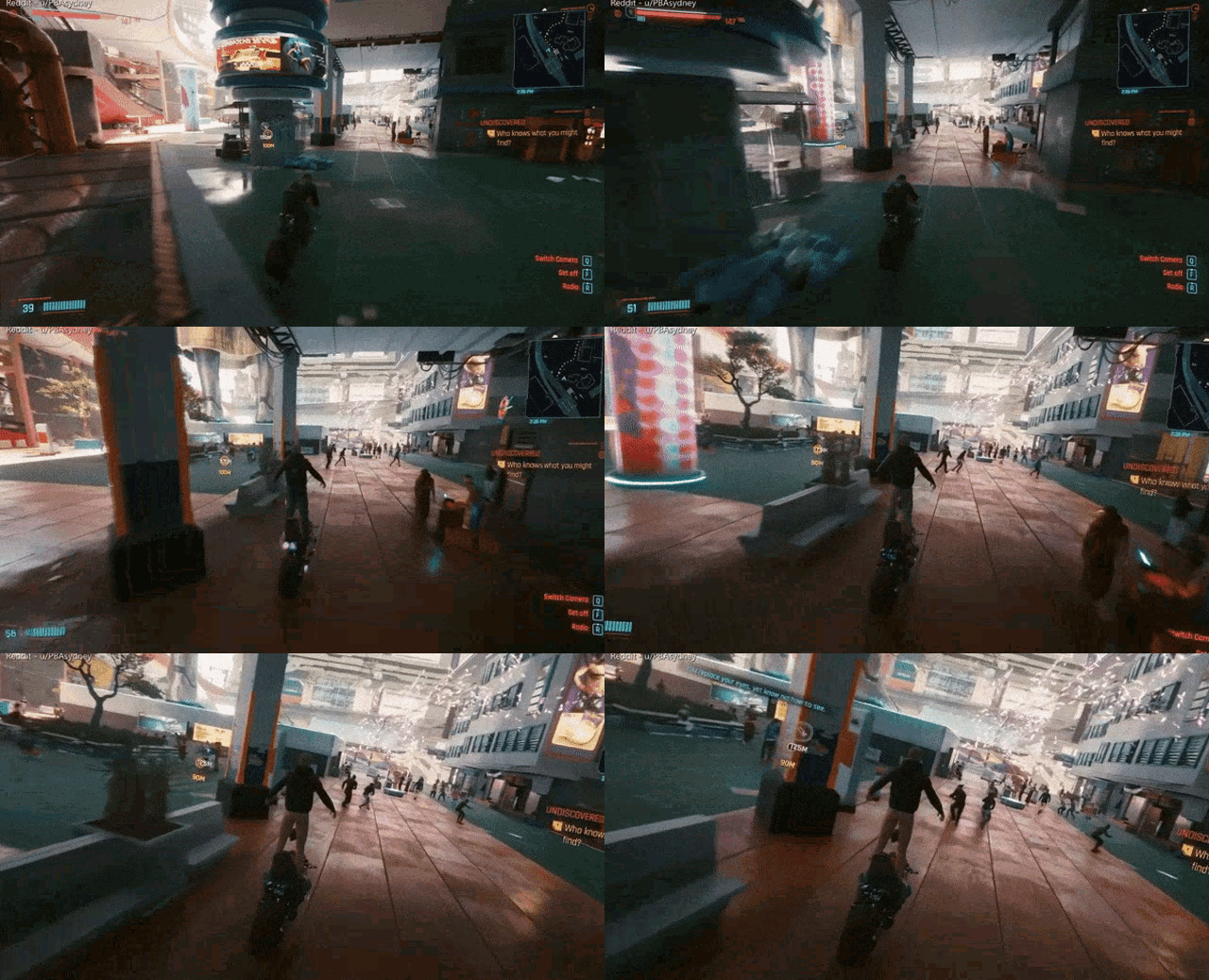
Three years post-launch, however, and not only is the game still lacking real substance, it’s still riddled with bugs and glitches. Driving pathfinding, for example, doesn’t always work, leading to hilarious collisions caused by either yourself or the AI. I’ve also noticed enemies randomly resetting into T-poses mid-animation. Major mechanics like crafting feel superfluously tacked-on. Apart from upgrading my own items, I never actually made anything from scratch. Most of the gear you find in your explorations will be more than enough to carry you. Consumables, however, are a trap. These items you find literally littered in the streets are probably helpful on higher difficulties, but in my playthrough, they just cluttered my inventory like an overstuffed purse, tossing aside spare change and old receipts in an attempt to dig out your phone. None of this compares to the disappointment that is Night City. While supposedly brimming with activity, in actuality, it feels quite barren. More often than not, I found myself hopping from fast travel point to fast travel point. I would occasionally drive through the streets in order to take in the skyline or come across randomly-generated combat scenarios, but in the end, I felt like I was just wasting my time. I wasn’t really experiencing the city, which leads to another problem: there isn’t anything to “do” in the game apart from going from mission to mission. There really aren’t any side activities or hidden collectibles in Night City (except for the tarot, which is a side quest; not hidden necessarily). You can’t go to clubs, you can’t invite friends out, you can’t experience braindances outside of relevant story quests. It adds to the hyper-independence that is at the core of the tabletop RPG, but it ends up feeling completely isolating.

Why was it such a mess, though? In the decade leading up to its release, hype was building at a rate I’d never before seen. CD Projekt Red was under intense pressure to complete the game “on-time” after years of development hell and millions of dollars, even though the game was nowhere near ready. Having already been delayed numerous times, they made the decision to start scaling down the project. Significant sections of the story had to be cut out entirely, like V’s first six months within Night City; promised features like NPC daily routines and quest decisions having an impact on the world were stripped down or removed entirely. Developers had to enter “crunch” in order to ensure it came out on time, essentially amounting to weeks’ worth of unpaid overtime. Between fans’ excitement for its launch and developers’ trying to patch holes in a sinking ship, tensions were ready to explode before its release. And like a volcano, negative reviews and vitriol spewed out like lava. When it did finally come out, it was plagued with so many performance issues and game-breaking bugs that it was literally unplayable for PS4/Xbox One users, and only just barely playable for PS5/Xbox Series X/PC users. Character pathfinding was so poorly implemented, it made controlling V like piloting a Steel Battalion mech. Clothes would literally disappear off characters. Years later, as I’ve described above, many of these issues are still present in the game. Despite numerous promises of patch fixes, the game doesn’t run all that much better now than it did on launch.

CP2077 went from being promised as an “RPG first and foremost [… with] a much, much deeper roleplaying experience than The Witcher 3“, but what we got instead was an “open-world, action-adventure story“. Your tale as V is predefined, forcing you on a path down which your choices don’t matter. The background you decide and the kind of character you want to play as are shoved into the specific mold the narrative requires. This is fine for a typical, linear story, but in an RPG, your choices ultimately have no consequence. That disparity between the desire to create your own legacy and the experience CDPR expects players to encounter is crux of why CP2077 is disappointing in the end.

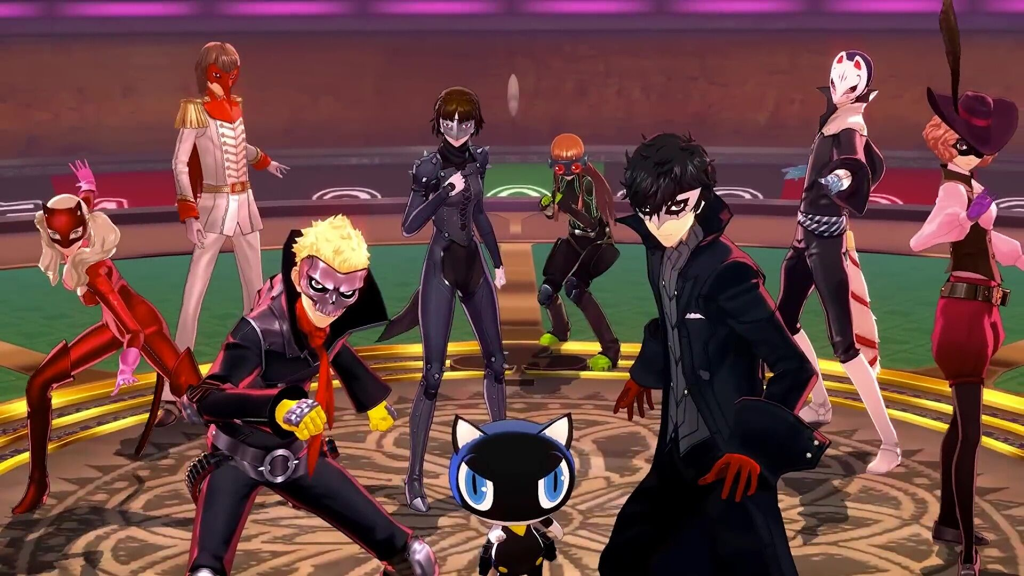
Persona 5 and Persona 5 Royal

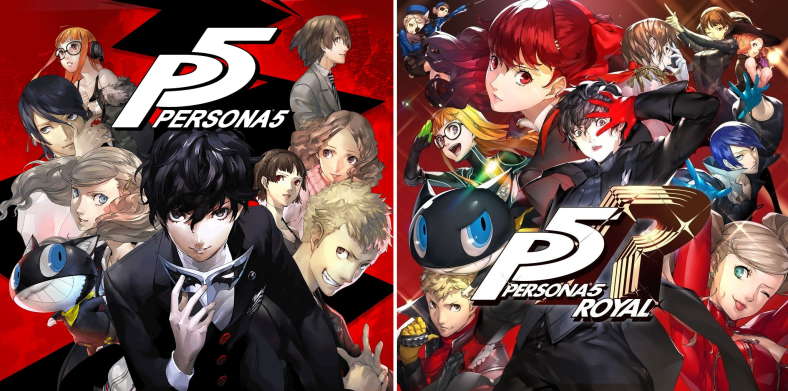
After experimenting a little with a Persona-inspired tabletop RPG and watching my seniors struggle through P3FES, the concept of the series had piqued my interest, but lacking the consoles to play the “definitive” versions of P3 and P4, it would be years before I actually played the games for the first time. I hadn’t even necessarily planned on playing any of them, until a sale on the PlayStation Store brought down Persona 5 to $20. A single-player RPG with over 100 hours of content for $20 sounded like an absolute steal, and so I dipped my toes into the cognition-centered game, not realizing I had just started one of the best modern JRPGs in the last 20 years. Not even a year later, when the revamped Persona 5 Royal version came out, I had pre-ordered it and anticipated returning to Shibuya, not realizing yet that while the gameplay had been smoothed out and rebalanced, the narrative at the core of it took a major hit.

Much like in its predecessor, Persona 5 starts out with the high-school-aged protagonist (commonly referred to as Akira Kurusu or Ren Amamiya, depending on whether you read the manga or watched the anime) being sent to Tokyo as part of a required probation after being accused of assaulting an adult. Prejudged by the student body, the faculty, and the community, the player eventually teams up with other social outcasts and, thanks to the deus ex machina of a supernatural phone app, infiltrates alternate realities created through people’s twisted cognitions and the collective unconscious. Sneaking into these Palaces, stealing away people’s distorted desires, and summoning supernatural legendary figures and monsters as Personas, the main characters take on the guise of Phantom Thieves and steal treasure to cause a change-of-heart in their victims. Much like P4, players take on increasing challenges, adding to their network of confidants, and save all of reality from subjugation.

There is a serious thematic base being built to support the narrative and world of the game, between all of the philosophical remarks and literary allusions. To just name a few, some of the theorists and concepts approached include Carl Jung and cognitive functions; Georg Hegel and dialectics; Shelly Kagan and perception; Jeremy Bentham and utilitarianism; Robert Nozick and libertarianism; even Albert Camus and absurdism. Hell, one of the characters literally asks the others, “Is it like the application of optical illusions in social cognitive psychology?” Not to mention the constant references to picaresque literature, appropriately categorized by roguish protagonists who are able to survive in corrupt societies living by their own wits and skills, in the specific forms the characters’ Personas take, including Arsène Lupin, Ishikawa Goemon, Captain William Kidd, and Popess Joan. This can be quite a lot to absorb, especially considering some of the extremely serious topics the game attempts to approach, from sexual assault to suicide. While these are some very impressive and massive motifs to grapple with, the game doesn’t always handle them with the most grace. The writing itself can vary in quality, ranging from extremely thought-provoking to unintentionally tone-deaf, depending on the subject approached. While somewhat tactless at times, perhaps because it was originally created for a Japanese audience and then localized into English, the game tries to handle all of these mature topics while still keeping things light-hearted and fun. It’s a careful balance that isn’t always perfectly achieved, but the core of the narrative remains.

Also like in the previous installments in the franchise, social links return in the form of Confidants, which not only advance each character’s individual arcs, but also provide benefits like passive combat abilities or new inventories/services by merchants. Perhaps because this was technically my first Persona game (even though I’d been already exposed to the cast of P4), or perhaps of some latent empathetic connection, but I felt a real affinity for the cast of characters this time around. I suppose there’s something to be said for rooting for the underdog, the person everyone else shrugs off and doesn’t believe much will come of them. P5‘s cast is loaded with all these kinds of characters, societal “rejects” and “outcasts” who are attempting to find their own place. I constantly find myself rooting for Kawakami to realize her own self-worth, or Iwai trying to provide his son with a safe and normal life despite his own past with the yakuza. Maybe it’s because of this affinity that I had more difficulty this time around in pursuing a single romantic interest (although going for the “harem” route this time around will have consequences). Each of the characters they can overlap and try to dominate one another for screen time, but thanks to the hundreds of hours this game takes, you’ll be able to spend plenty of time with everyone. On their own, they are all, for the most part, extremely well-written and easy to relate to, with some minor exceptions.

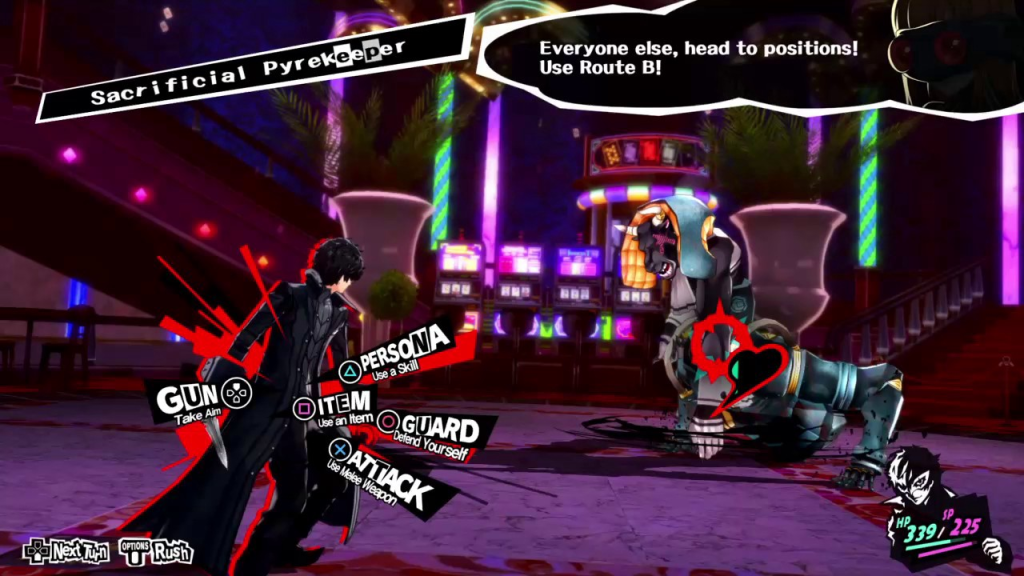
Describing the gameplay to friends has been a bit challenging, so bear with me for a moment. Persona plays like part Pokémon, part high school simulator. You split your days between being a normal high school student and being a nationally-famous ephemeral thief. In the real world, you spend time studying for exams, strengthening friendships, improving social skills, going fishing, playing pool or darts, and going out to eat; while as a phantom thief, you sneak through the Palaces of corrupt individuals, defeating enemies and making your way to the Treasure chamber at the very end. Your escapades will take you to locales perfectly suited for stealth and thievery, from a gilded museum to a high-stakes casino. All the while, the vast majority of Shadow enemies you encounter can be weakened and convinced to join you, being “captured” by the main character and turning into a Persona, which you may use in battle (hence the reference to Pokémon) and fuse together in Execution rituals to create new, powerful allies. Be careful, though. As Morgana will constantly remind you, every action you take will chip away at your limited time, whether you have to go to bed or are coming up against the deadline to claim a Palace ruler’s Treasure, so you have to carefully consider how you spend your days. You might want to level up your Personas through constant battle, but that may mean neglecting advancing your Social Links with friends, locking you out of certain interactions and events. Or you might want to take an excursion to a nearby town with a friend, but you will have even less time to clear any particularly difficult Palaces before the deadline. It’s entirely possible to finish a Palace in a single day, but you need to be particularly prepared in order to do so.

One of the main reasons I love this game is how it expresses and presents itself. P5 just oozes style, with its comic/pop-art aesthetic, regular use of red, white, and black, and text styled after clippings in a ransom note. It appears to be heavily influenced by the British punk scene of the 1970s and 1980s, with a thematically-appropriate “never back down to authority” attitude pervading throughout. Contrasting that is the soundtrack, which brings an element of jazz new to the franchise. Each song is unique and memorable, helping to build the mood of whatever it is you happen to be doing. I found myself regularly singing along with the songs, whether humming “Beneath the Mask” while wandering Shibuya’s streets at night, or belting out “The Whims of Fate” exploring the distorted casino. By far, however, my favorite part of the entire game’s presentation is the animation that displays whenever you defeat enemy Shadows. The Victory Screen is integral to any JRPG, as fans of the Final Fantasy franchise can attest. Instead of describing it to you, however, just take a look and see what I mean.

As with Persona 4 and Persona 4 Golden, there are key differences between the original “vanilla” release of Persona 5 in 2016 and the Royal release in 2020. Royal revamps the gameplay majorly, including reworked Palaces with platforming sections, a grappling hook allowing you to traverse the environment or engage enemies from afar, a roaming store in Mementos, the palace of the collective unconscious, and new wildcard mechanics to the Executions. It also smooths out many of the kinks from the original release, like restocking your ammunition after every battle (as opposed to restocking it after exiting the Palace) or an “assist” function that provides players with a recommendation as to how to spend their time. By far the largest additions to the game, though, include a new party member, an additional semester with a new final Palace, an extra Tokyo neighborhood with more activities and stores, two new confidants, reworked calendar events, and additional cutscenes that are now voiced. However, some of these changes aren’t necessarily as welcome. People familiar with both games will no doubt know what I am talking about when I refer to an infamous boss fight roughly halfway through the game, which was changed from being mildly annoying in the original to notoriously difficult in the rerelease.

While the vast majority of these adjustments improve the experience and make the gameplay even more enjoyable, I feel as though the changes to the narrative ultimately take away from the story being told. Two of the new characters, Yoshizawa and Maruki, feel shoehorned into the plot, creating an expectation from the very beginning that they will be important to the story and, as a result, feel “railroaded” into how the story itself is told. In addition, the Third Semester adds another 10-20 hours of gameplay after the original’s climactic final battle, which ends up bloating the game and making the narrative feel artificially extended. As a result of these changes, the True Ending isn’t as satisfying as the original; the characters’ final interactions are underwhelming, and the narrative threads aren’t as neatly tied together. These additions the developers injected into the story ultimately make the game fall flat toward the end.

That is not to say that Royal is, in any way, a bad game or has a story not worth experiencing. I just believe that the execution felt tighter and neater in the original P5. It all depends on the kind of experience you, as a player, are looking for: what the developers originally intended to do, or a streamlined version of that.

I should also point out that the vanilla ending leads much more neatly into the beginning of Persona 5‘s sequel as opposed to P5R. *hint hint*

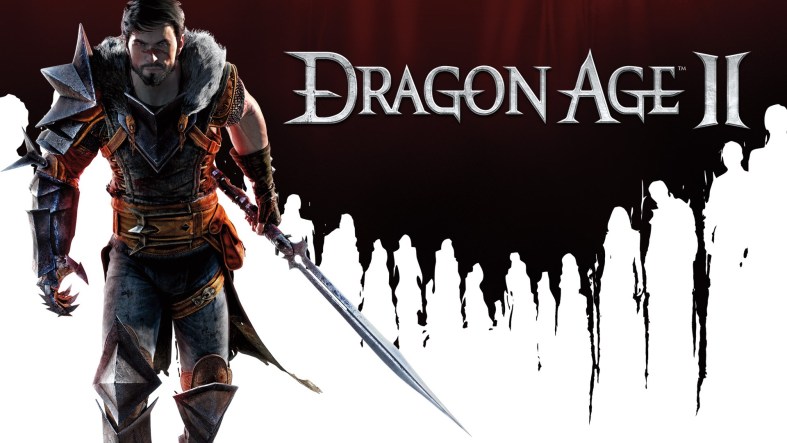
I was wrong about Dragon Age II

Over a decade ago, before I ever truly began to understand and appreciate games beyond just playing them, I wrote a review on Dragon Age II that I can’t seem to find anywhere online anymore. I’m more embarrassed by the “edgy” style I was trying to go for, still thinking that it was cool when I was writing it, rather than the quality of the writing itself. The reason I bring it up at all is because I really laid into DA2. I criticized the protagonist, the characters, the reused level designs, a story that seemed to undermine itself, the graphics, the combat; apart from one or two comments I made about Varric Tethras, I had nothing nice to say about the game, and so I avoided it for years, choosing to play Dragon Age: Origins and Dragon Age: Inquisition instead and just skipping over DA2. At the start of the coronavirus pandemic, I was convinced by a friend to revisit the series, especially because they seemed to hate DA2 even more than I did. It got me really thinking whether my opinion had changed and my memories were skewed by my initial perceptions, or whether the game was truly as bad as I remembered it being. I am utterly surprised to say that I was wrong about Dragon Age II; it’s actually a fun and deep game that greatly contributes to Thedosian lore.

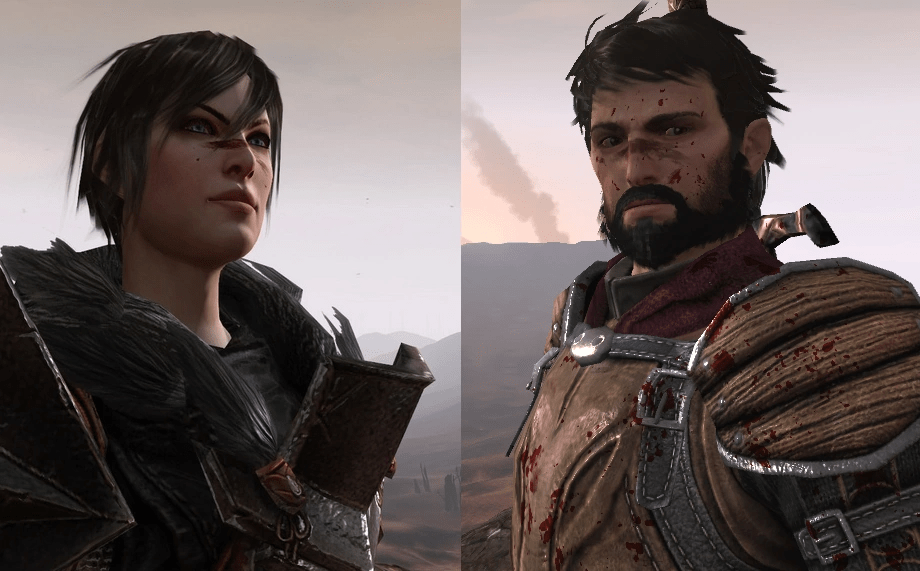
One of the biggest changes I made on my second playthrough was creating a female main character, rather than a male one. I usually tended to create guys when I play, and still sometimes do, but I find myself more and more creating women instead nowadays. Male voice actors tend to sound monotonous and gruff, depicting a tough personality, but female voice actors seem to put a lot more range into their characters; or maybe I just find women’s voices to be pleasant, generally speaking. Plus, if I’m going to be staring at a character’s ass on-screen for hours at a time, might as well be one I enjoy looking at. Regardless, my experience with DA2 was significantly better with FemHawke, and I felt more drawn to her than I did my BroHawke.

Another change I decided to make was to play a rogue instead of a mage this time around. For me, mage protagonists in the Dragon Age games seem to have the most investment and the highest stakes in the story, as far as classes go. But in DA2, your class doesn’t only choose what abilities you have available, but it also determines your starting party. Create a mage, and your sister Bethany is killed, leaving you with your brother Carver, an annoying younger brother (speaking from the perspective of a youngest brother) who swings a sword around, constantly reminds everyone of his jealousy toward his older sibling, and then joins the Templars (or the Grey Wardens, depending on another story choice). On the other hand, create a warrior or a rogue, and it is instead Bethany who survives. Whereas Carver wants to step out from under his sibling’s shadow, Bethany simply desires to have a stable home life for herself, her older sibling, and her mother. Eventually, this leads to guilt over the constant running that her family must endure to safeguard her, an apostate mage, from being captured, and she turns herself over to the Circle of Magi to protect them from potential retribution. I think it’s a much more touching character arc, and as a result, the relationship between Bethany and Hawke is much nicer than between Carver and Hawke. It’s less argumentative and more cooperative while still being teasing and playful. Carver does turn around by the third act and he’s much more matured and mellow, but by that point, my impression of him had already been set. Bethany is consistent from beginning to end. It may come down to taste in the end, but something to ponder when creating your future Champion of Kirkwall.

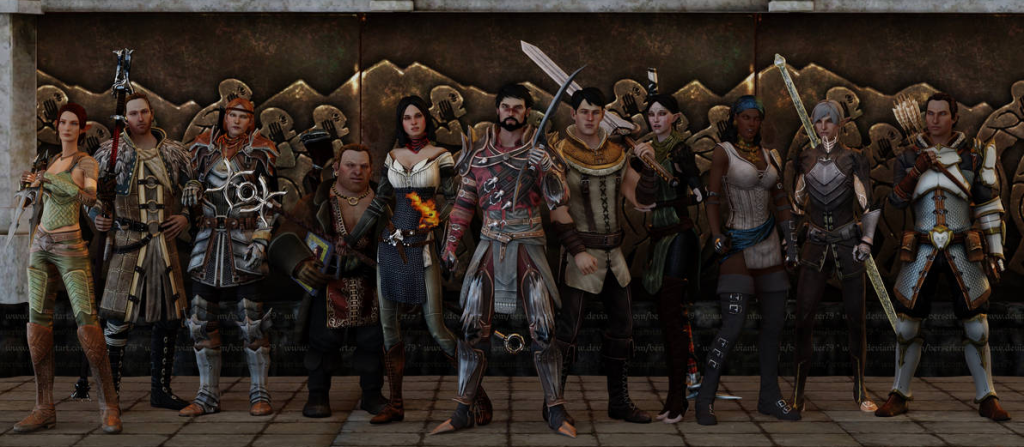
One of my biggest gripes about the game originally was the cast of characters, who I reduced to their personalities when I met them and refused to see them beyond any depth. Now, however, learning about the secrets of Kirkwall and the dark, nihilistic aura that seems to hang over the walled city, their dismal and melancholic personalities make more sense, betraying the very optimism that the city tries to destroy. I looked beyond the initial impressions I had made of them and realized how interesting they truly are. Isabela puts emotional barriers up in the forms of random sex and drinking, in order to keep herself from falling in love and being hurt again. Merrill is torn between her people and her people’s history, forced out from her clan while trying to preserve Elvhen magics, even if it costs her own life. Even Anders, a character who undergoes such drastic changes between Dragon Age: Awakening and DA2 that he’s essentially unrecognizable from who he was before. I don’t like what he’s turned into, but maybe that’s the point. By absorbing the spirit of Justice, he no longer is that sarcastic and aloof mage who let nothing bother him. He was permanently and irrevocably changed into an avatar of vengeance, eventually sparking the game’s critical climax. I would’ve preferred to have seen this change made on-screen, to truly see that the character has utterly changed, but nonetheless, acknowledging it makes the adjustment easier to swallow.

Likewise, I originally believed the game’s story collapsed in on itself at the end. Hawke can decide to side either with the Templars and express caution toward magic, or side with the Mages and advocate for their freedom. The game makes it seem like siding with the mages is the “right” decision to make, as they are severely oppressed by the Templars, who are severely paranoid and, for the most part, believe all mages can and will turn to blood magic when desperate. Every blood mage you’ve met until now, between Origins and DA2, has been evil, tried to kill you, and allows themselves to be corrupted by demons (with the exception of Merrill, which adds more complexity to her character). Hawke and the others can protest that not all mages are like that, but throughout the course of the game, almost every mage character you encounter, including their leader, First Enchanter Orsino, succumbs to the forbidden art, thereby proving the Templars correct. I had believed that the story got caught up, confused, and ultimately, undid itself. My moment of epiphany took place when I finally understood the games’ tone. I believed them to be like Lord of the Rings: high fantasy, swords and sorcery, quests and dangerous monsters. But even with all of these elements, the games are more akin to A Song of Ice and Fire or The Witcher: abrasive, unclean, a world where good and evil often take a similar face, where there may not be a “right” choice. That small shift completely changed how I viewed the conflict between the Circle Mages and the Templars. The notion of virtuous idealism cannot survive long in Thedas, a cruel and unfair world that seems to be falling deeper and deeper into conflict. So the idea of mages truly turning to corruption when they have no further options, rather than undo the plot, instead shows how all sides have darkness hidden within them, and it is up to you to decide how much of it you can stomach and from whom.

Part of the reason for DA2‘s noticeable shift in style from Origins was the abbreviated development cycle the game had underwent. I lambasted developer BioWare for putting out a game of much lower-quality as a direct sequel to Origins, when, in fact, it was the publisher, Electronic Arts, that was to blame. Part 3 of BioWare: Stories and Secrets from 25 Years of Game Development covers the development of Dragon Age II and unveils some interesting operations. Tumblr user Felassan goes over the highlights, but you can find the entirety of the story in the aforementioned novel. Key points about this chapter speak to how DA2 was originally supposed to be Dragon Age: Inquisition. It was BioWare’s goal to make a game that spanned across the world of Thedas, dealing with large-scale political conflicts. However, with Star Wars: The Old Republic being delayed numerous times, EA forced BioWare to release something that would fill the gap in their quarterly sales targets, even if it meant removing major features like being able to customize party members’ equipment and recycling locations to cut down on costs. Making a game of even a small scale, like the ones I had attempted, is a major endeavor; expecting a major studio to release something in nine months is absolutely insane. BioWare was set up for failure; either they miss the deadlines and face financial retribution from EA, or release a game in a severely-shortened development cycle that does not live up to their standards and would be critically panned.

What should have been known as Dragon Age: Exodus became Dragon Age 2 at the insistence of Electronic Arts, forcing the title change, no matter what using a numbered title implied. This may have been the largest contributing factor to why I believed there was a dip in quality between the games. By having it be a numbered entry, the perception was that the follow-up to Dragon Age: Origins would be a direct sequel, continuing the story set before. With the change in direction, setting, character, dialogue, and gameplay, it felt like a completely different game. Because it was supposed to be a different game.

A planned expansion, Exalted March, was cancelled in summer 2011, a decision BioWare made in order to step away from DA2 and try to recover their renown as creators of amazing story-driven RPGs by focusing fully on Inquisition. Despite the poor fan reception and lower sales numbers, EA still considers DA2 to be a financial success.

Lead writer and developer David Gaider was ultimately mixed on his feelings about DA2, saying, “A lot of corners were cut. The public perception was that it was smaller than DAO. That’s a sin on its own,” while going on to praise the writing, particularly stating that the characters as among the best in the series. 10 years ago, I would’ve argued with him (not really, he’s the lead developer, why would I pick on him?), but today, I believe he’s right. Through no fault of their own, BioWare had to put out a project with a greatly diminished scope, reused assets, an unreviewed and unedited plot, and numerous bugs and glitches. And yet, it’s still ultimately a good game. The combat is fast-paced yet tactical, the characters are deep and complex, the lore is rich and immersive. Despite everything that went wrong, it’s still fun and enjoyable.

Something I noticed between playthroughs was how Hawke actually has a personality mechanic. Instead of having fully written-out options to select from and a silent protagonist à la Knights of the Old Republic, a dialogue wheel will pop up with paraphrased responses you can choose from, more akin to Mass Effect. The very first dialogue you pick will set this initial personality, and every time you select a similar option, the counter stacks. As you make dialogue choices, whether diplomatic/helpful, humorous/charming, or aggressive/direct, every option you pick adds to the hidden counter that will set Hawke’s tone when speaking while not being controlled by the player, like in a cutscene or when wandering around. This is something you’d only notice on a second playthrough, if you decide to play Hawke differently. Your first time around, you wouldn’t know that picking different dialogue would change your character’s delivery of lines. It keeps Hawke having a consistent voice throughout the game while still being able to let players select the lines they want their character to speak.

It’s small details like this that make me really appreciate a game, and I think it speaks to Dragon Age II as a whole: at first glance, it seems to be rough and shoddy, but under the surface, there’s a gem waiting to be uncovered.

[UPDATED] Ranking Assassin’s Creed

UPDATE 11/29/2025: This list originally did not include Assassin’s Creed: Mirage. It has since been updated to contain this new entry (Shadows will be added at a later date). In addition, Valhalla was originally listed at number 7 and Revelations listed at 8, but have been moved to accommodate Mirage.

My relationship with the Assassin’s Creed franchise has been, to put it to a word, tumultuous. I discovered the first game around the same time as I discovered Mass Effect, my older brother having picked them up at a BestBuy. While he wasn’t as enamored with it and put it down after a while, I was enthralled, though obviously not to the same extent as Mass Effect. The prospect of traveling through time, experiencing Jerusalem and the surrounding areas during the Third Crusade, parkouring and freerunning from place to place, was more than enough to capture my interest. Add to that the shock inclusion of a precursor race and apocalyptic events, and as an easily-influenced young teenager, I became hooked.

Since then, my feelings toward the games has gone up and down. While there were many high moments in the series, many games I was legitimately surprised to end up enjoying, there were equally as many that fell flat and did not achieve the same level of greatness.//there were equally as many that fell flat and did not live up to the high standards the franchise was known for, be it because of a yearly release model, microtransactions, core design changes, or a shifting of scope.

I will be ordering the games in the series, from my least favorite to most favorite. I am only including mainline entries in this list, so spin-off titles like Assassin’s Creed III: Liberation, Assassin’s Creed: Bloodlines, and Assassin’s Creed Chronicles will not be discussed here. This does not necessarily reflect the quality of the game itself, although I am ordering this list based on my enjoyment of the game. This is all according to personal preference. Some of the factors that I used to determine these rankings include: critical acclaim, additions to the franchise, quality of the story, cast likeability, and quality of side content. If you disagree with this list, I’d love to hear your reasons why, but please keep in mind that this is based solely on my perspective and my preferences.

Without further ado…

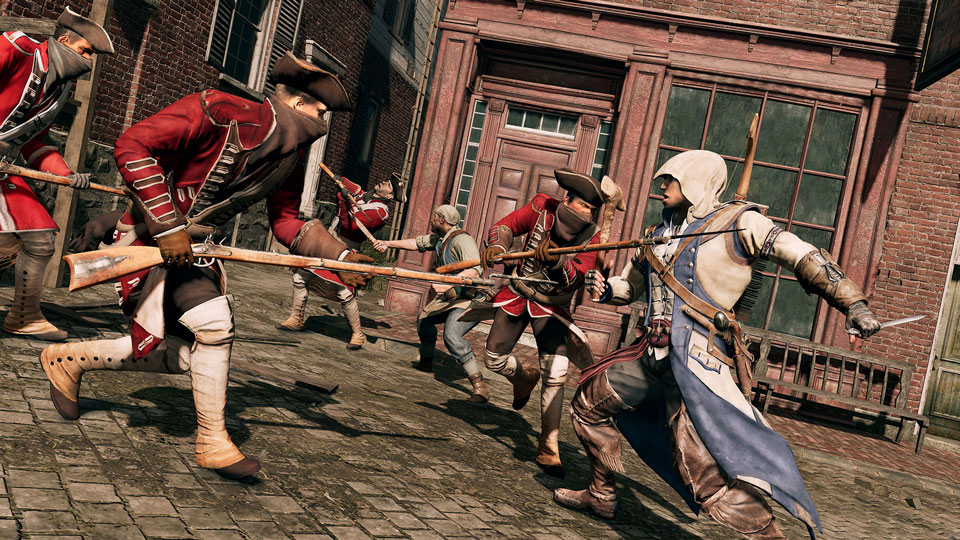
13. Assassin’s Creed III

I wanted to like Assassin’s Creed III. I REALLY did. After all, it was the culmination of the story Ubisoft had begun telling five years previously, a mission to save the world from total destruction, and an opportunity to revisit one of the most significant time periods in the United States’ history. And it came so, so close to being good.

Released in 2012, this game feels as old as it is. There are numerous graphical glitches, animation errors, framerate drops, and texture pop-ins. Navigation is awkward and combat feels too bulky, unlike the smooth and free-flowing movements Assassins are supposed to make. The majority of missions drag on, following the same rigid flow of gathering information, finding, and then assassinating your target. As well, Connor is, unfortunately, not as compelling of a protagonist. Much of the story happens around him and in spite of him, making him feel more like a glorified errand boy than anything else.

By an order of magnitude higher, the best addition this game brought to the series was the inclusion of ships. Naval combat is immensely fun, and this would eventually be the primary mechanic in a game of its own. In addition, AC3 introduces a more robust crafting system, dual-wielding weapons, and a dynamic weather system, which are all welcome, but this entry does not live up to the high standards of the franchise.

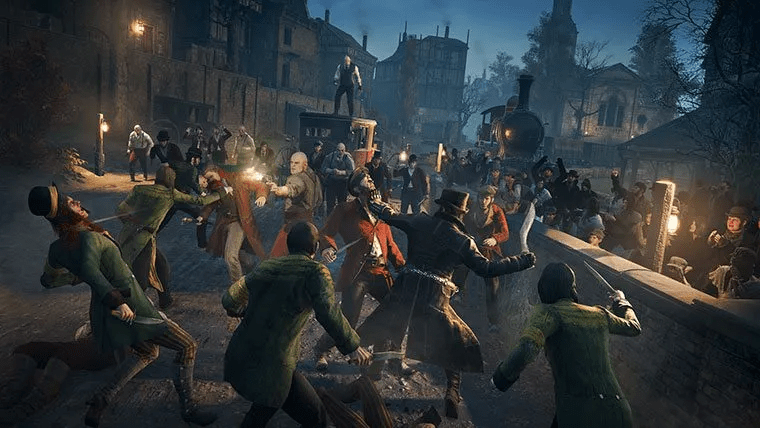
12. Assassin’s Creed: Syndicate

I feel like maybe I missed something when I played Syndicate a few years ago, instead of immediately following its 2015 release.

Maybe I didn’t fully appreciate the different skills and dynamics of the Frye twins, who’s personalities were one-note and followed the “patient sister/aggressive brother” trope to an almost painful degree. Maybe I didn’t fully understand the plot, in which the Fryes’ motivations is to build their own gang which ran almost-counter to their Assassin beliefs. Maybe I didn’t enjoy the repetitive side missions, or the strange semi-lighthearted tone the game tries to adopt.

What I do know is that Victorian London was fascinating to explore, the grappling hook revitalized the traversal system, and the assassination missions themselves stood out because of unique, context-sensitive kills the player could. The inclusion of the Time Anomaly and being able to jump time periods AGAIN and into London’s “future” during the 1940s was also a fun piece of side content that further expanded what Assassin’s Creed could be. Taking London back, ultimately, was not as fun as it could or should have been. I think part of what it comes to is memorability and personal impact, and Syndicate just didn’t have one on me.

11. Assassin’s Creed

While the original has to be heralded for being the starting point of a long-lasting franchise, this game has aged the worst among all its counterparts and sequels.

I accuse the above entries as having repetitive missions and clunky combat, but having been released in 2007, Assassin’s Creed had many leaps and bounds to make before becoming the memorable series it is. The investigation events are limited and lackluster, the flag collectibles are a PAIN to all find, and the characters, both in the past or the present, are neither engaging, nor have any depth of personality or range of emotion.

Some would argue that the parallel storyline reveal should not have been made at the beginning, but I think it sets up the “virtual” nature of the game’s world and gives players an additional motivation beyond hunting down Templars. Although Altaïr was not a particularly captivating protagonist, the world and situation we found ourselves thrust into was more than enough to compensate. It’s plodding pace and monotonous mission structure, however, drag this game down to feeling more like a tech demo than a fully-realized adventure.

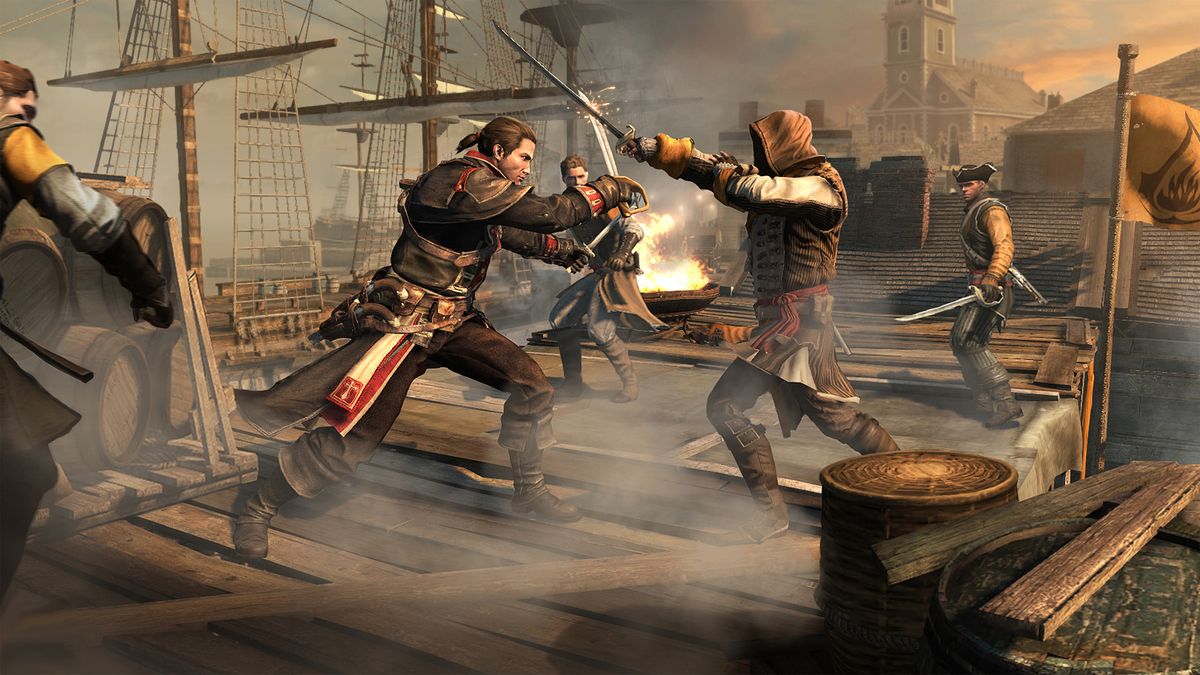
10. Assassin’s Creed: Rogue

I’m just going to put it out there: Rogue suffers from all the same problems as the above games, maybe even worse-so. It feels generic, the gameplay loop is repetitive, and the few additions are quality-of-life improvements to the missions. So why is it much higher on the list? Its story.

Rogue brings in an ambiguity that every entry before and since has been missing. The player takes control of an Assassin who becomes disillusioned and estranged from his cause by compatriots who were willing to put innocents’ lives at risk to further their own goals. As a result, he joins the Templar Order in order to prevent the Assassins from destabilizing the world.

However, this does not save the game from being far too short, having too little side content, and too little incentive to explore the North Atlantic. Ultimately, Rogue comes off feeling more like an expansion than its own fully-fledged game. There isn’t a whole lot more else to say about this entry, so just like when I played it, I won’t devote a lot more time to it.

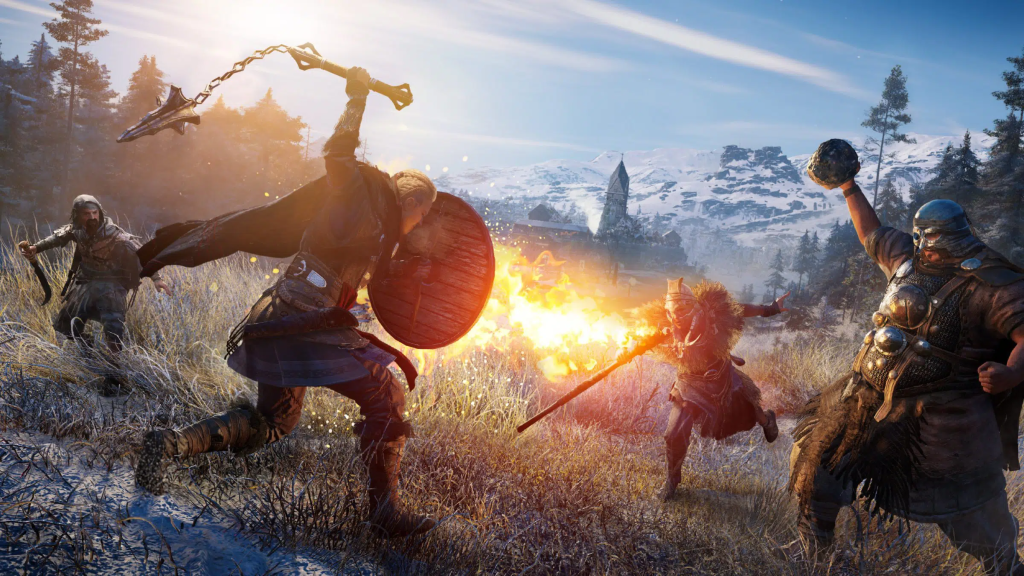
9. Assassin’s Creed: Valhalla

By the time it was released in 2020, Valhalla was supposed to be the culmination of every lesson Ubisoft has learned during the 15 years the franchise has existed. In the end, though, being a Viking raider wasn’t all it was cracked up to be.

I’ll just get the fact out of the way that the game is incredibly buggy, even still after two years. I know in this day and age, games can be patched way after release, but this still feels like an unfinished product in some places. While the game’s map is among the largest in the series, many other factors feel condensed. There are fewer gear options as compared to the other games following the franchise’s new action-RPG direction, traversal and travel become chores, and the few choices I can make in the game’s story don’t feel like they make much impact.

However, as a Viking, combat is exceptionally fun and particularly gory, and the raiding missions allow me to live out my fantasy as a raider. In addition, it was enjoyable to build up Ravensthorpe, deciding which upgrades to choose and how to make my town flourish. Not to mention, the segments where I could actually explore Asgard were some of the most fun in the entire game, getting to explore this strange and mythical realm. But compared to the other games following this new style, Valhalla doesn’t quite reach the heights as its predecessors.

8. Assassin’s Creed: Mirage

Mirage was envisioned as a return to the series’ roots, with a greater focus on stealth and assassination mechanics, in addition to returning to the Middle Eastern setting. In its execution, while some of these changes are welcome, the entry doesn’t satisfy my yearnings the same way as other entries do.

Maybe it’s the reworked combat, where the player can only take a few hits as opposed to the heavy tanking that other protagonists can handle. It could also be the total length of the story and side content. Sure, you’re paying less for the game in the end, which is a positive, but I want to be able to sink time into a title and really lose myself in it. What it comes down to is the sense of scale. Everything feels smaller, pared down; the bloat of something like Valhalla has been removed, for something more in-line with the very first entry in the series.

With this renewed attention to assassinations, however, come the more detailed investigations and numerous approaches to taking down your target. You have to find and even create the opportunities you will utilize in order to become a master killer. It requires planning, foresight, and a little creativity, which does play into the assassin fantasy the series has shifted away from. It may not be the most impactful, narratively or ludically, but for its value, it packs a punch.

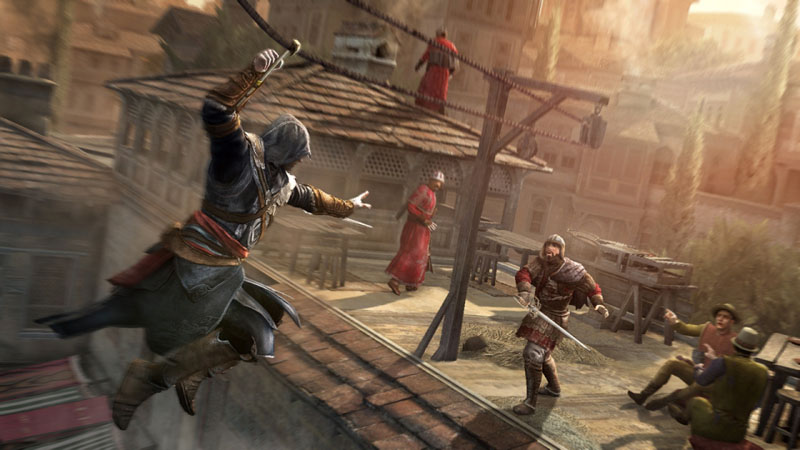
7. Assassin’s Creed: Revelations

The end of an era. Ezio’s journey comes to an end where our journey as Assassins began: in the footsteps of Altaïr.

Revelations brings our loveable Italian protagonist to Constantinople as he tries to enter the Master Assassin’s hidden library beneath the fortress of Masyaf. In some ways, it’s a fitting end to Ezio’s story, as he comes to terms with his role in history’s grand plot. We get to see how his and Altaïr’s stories intersect and parallel as we explore the unfamiliar territory of Ottoman Istanbul, introduced to ziplines for the first time in the series and a unique bomb-crafting mechanic.

However, looking past our love for the main character, the game’s shortcomings become easily apparent. The Desmond/Lost Archive missions are aesthetically pleasing, but ultimately filler. The aforementioned bomb crafting has potential, but is needlessly complicated and unnecessary. The lack of side content leaves me particularly wanting, with extremely few tombs or dungeons to explore, challenging missions to overcome, or anything new and engaging. Revelations does reveal much to us about Desmond’s journey, but it feels more like a small step as compared to the previous entries.

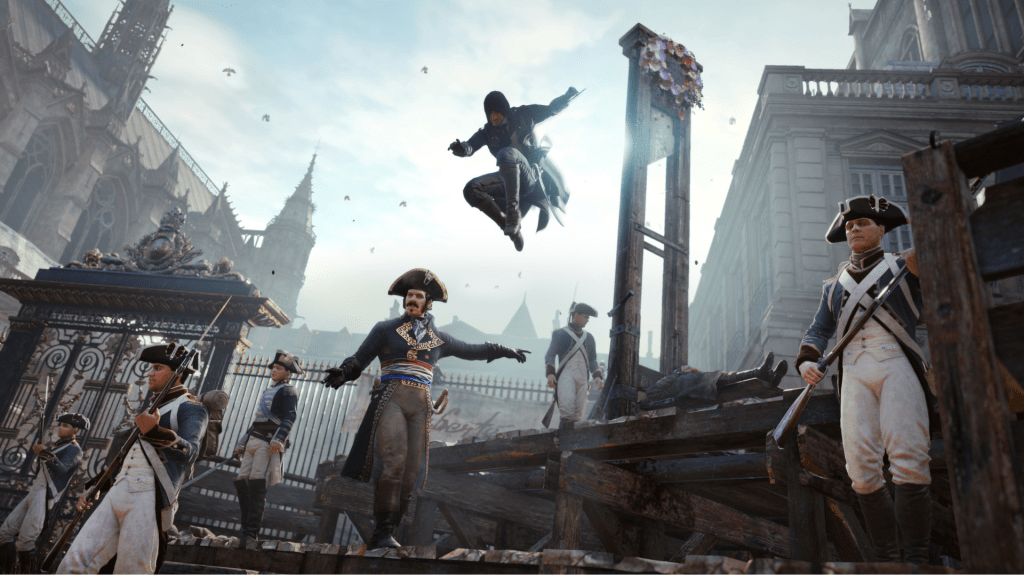
6. Assassin’s Creed: Unity

At the time of its release, it’s hard to imagine Unity would be remembered as one of the better entries in the series, but looking back, it was a real revolution.

Originally an extremely buggy mess, with complaints ranging from major graphical errors to connection issues on multiplayer cooperative missions, Unity is now fondly remembered for all of the major changes the series has now made to its current direction. This is the first game in the series to move from action-adventure to action-RPG. Players now can obtain gear to improve different stats beyond just an increase in health, and there’s a leveling system that allows independently improve your melee, ranged, and stealth capabilities. Freerunning was also adjusted to give the player more control of moving downward as well as upward, providing new parkour opportunities. There are also murder mysteries for the player to solve, each with clues to find, suspects to interrogate, and criminals to imprison.

While I love the idea of the coop missions, that means a significant portion of the content is locked out to people who don’t want to pay monthly for multiplayer services they only occasionally use, leaving some of the most fun parts of the game gated from entry. Regardless, this is something which remains in the series to this day. Not to mention the numerous controversies that plagued it, including the previously-mentioned technical issues, criticism by the French government for its depiction of the French Revolution, and deliberate exclusion of playable female characters in the multiplayer. Despite all this, in the end, I can’t help but think about everything Unity did to enliven and modernize the franchise in this engaging new direction.

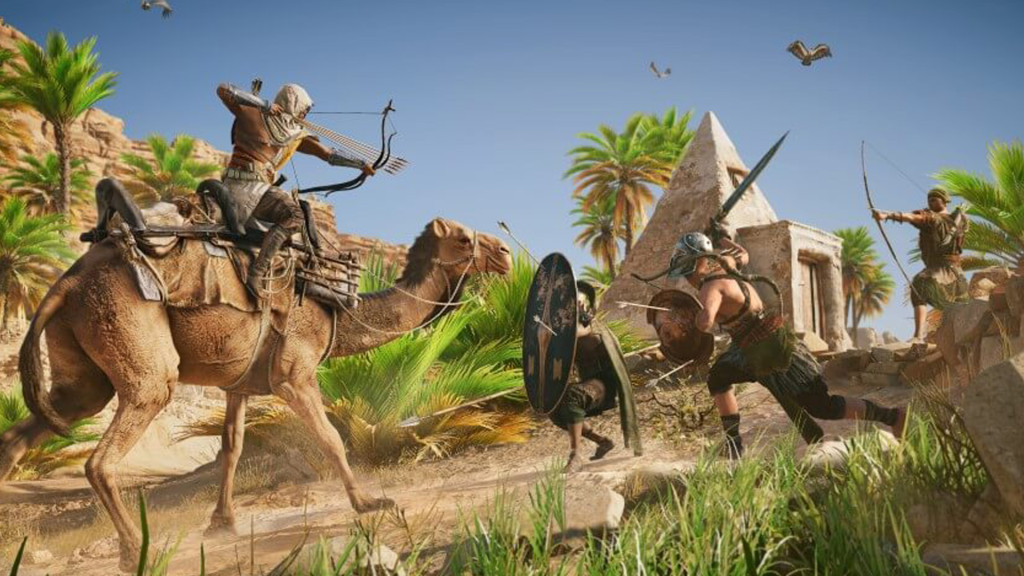
5. Assassin’s Creed: Origins

Whereas Unity takes the first step toward the series’ current place, Origins takes the largest leap from its predecessors, redefining the franchise to its current place.

Although not the first action-RPG in the franchise, Origins overhauls many of the core mechanics. The combat has been revamped to be much more fluid and dynamic, with new abilities and tactics available to the player. With the plethora of weapons, you had numerous playstyles you could select, and they would all be valid. Your Eagle Vision has been replaced by an actual eagle that can mark and even distract targets. Unity may have leaned slightly into the RPG elements, but Origin embraces it fully. Plus, Egypt was one of the most amazing settings to explore yet. Each region felt unique, with different architecture and environments to explore.

Moving away from more stealthy elements does greatly change what it means to be an “assassin,” however, so while the new freedom to complete missions as you see fit is welcome, it’s a divisive choice. Unfortunately, the game also feels purposely padded out at times, with artificial level barriers in place to force players either to grind their level up or purchase a boost from the game store. I love being able to soak time into a game, but not because it’s been extended by developers or publishers looking to make an extra buck. It feels more like an MMORPG at that point, and I want to avoid that kind of play-cycle. Origins deals with the founding of the Hidden Ones, later to be known as the Assassins, and this game marks the start of a new course for the series.

4. Assassin’s Creed II

Before sitting down to write this, I never made this connection before: Assassin’s Creed II is about and is the birth of a new era. It’s funny. Not only does this game take place during the Italian Renaissance, a period of significant change in the world and ushering out the Dark Ages, but with this game, Ubisoft was able to capture what people loved about the first game and run with it.

Everything we knew from the first game has been exponentially expanded upon. Now, there are shops and items to buy, different weapons and armors to equip, two hidden blades to wield in new ways. Renaissance Italy is a beautiful environment to explore. Ezio is infinitely more charismatic than Altaïr. The conspiratorial plot uncovered over the course of the game unravels everything we thought we knew about the world. I could go on and on.

This game definitely feels its age, though. The parkour and freerunning can be janky at times, and the mission design hasn’t quite reached its pinnacle. But with one-off inclusions like da Vinci’s flying machine or infiltrating the Vatican, the memorable moments more than make up for these deficiencies. AC2 set the high standard that the rest of the series would come to be known by from that point further, redefining what being an Assassin meant.

3. Assassin’s Creed IV: Black Flag

Pirates. Need I say more?

Fine.

While Assassin’s Creed III was the entry to introduce the naval battle mechanics, it isn’t until the next entry, Black Flag, where we see the best concept of AC3 fully realized as its own game. Exploring the Caribbean Sea, boarding enemy ships to duel captains, and befriending pirate legends like Blackbeard and Charles Kidd is exhilarating. It’s almost like a 3D realization of Sid Meier’s Pirates!, one of my all-time favorite games. From digging up buried treasure to assaulting forts single-handedly, Black Flag fully lets you live out your pirate fantasy and investigate every little island you come across.

Edward Kenway is the series’ first antihero protagonist, bringing himself into the Assassin/Templar conflict for selfish reasons and forced to correct his mistakes. Alongside him, we learn and grow and come to understand that a man cannot be an island, and cannot look out for himself and short-term gains alone. Seeing as this runs counter to the personal philosophies of piracy, Edward learns how to navigate this cognitive dissonance as he sails across the sea, and we join him in that journey. It isn’t long before you find yourself humming along with crew singing shanties.

2. Assassin’s Creed: Odyssey

This might be somewhat of a controversial pick, given how much the series has deviated from its roots, but Odyssey managed to be one of the most fun open-world action-RPGs I’ve played in a while.

Building off what Origins began with, Odyssey is an expansion on every concept. There are plenty of different gear and build options, along with the inclusion of saving presets, allowing you to switch playstyles on the fly, from stealthy to full-on combat. Exploring the Peloponnese doesn’t feel exhausting, with the numerous fun distractions, like fighting in an arena of champions, hunting beasts and mythical creatures, and exploring long-lost tombs. The story is one of, if not the, most involved yet, providing the player with choices that will affect their experience. Even choosing your character’s gender has consequences.

One of the major complaints about the series’ new direction is the inclusion of the more mythical elements, like fighting cyclopes and gorgons, straying away from the historicity that the games had spent so long situating. To which I say: the first game in the series reveals that a precursor race created humanity and controlled them with various artifacts, a global war is being fought in secret over the course of thousands of years, and a company has built a machine that allows them to relieve ancestors’ memories. Total realism has never been at center of Assassin’s Creed, and that’s okay. Odyssey strayed from the franchise’s roots, but it’s such a great game that it more than makes up for it.

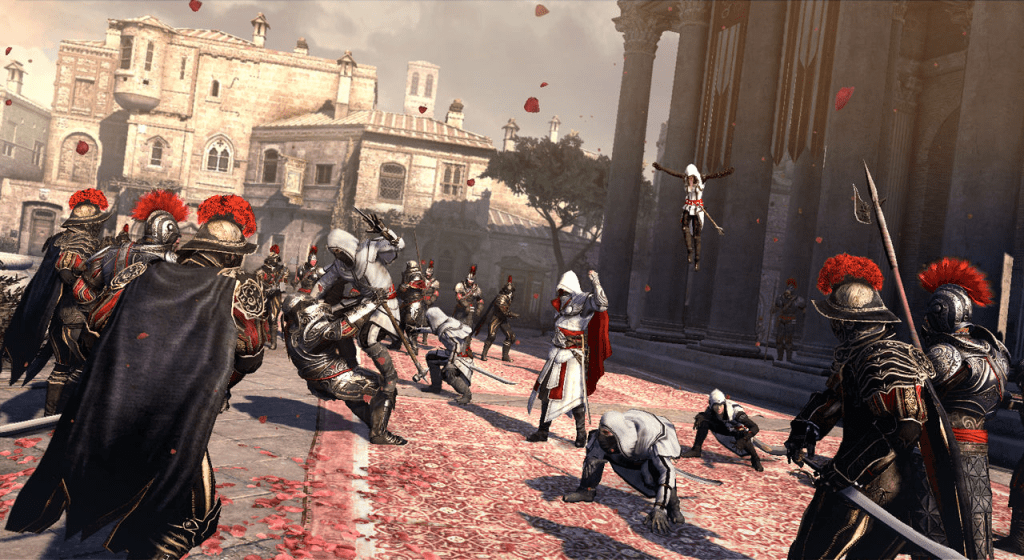
1. Assassin’s Creed: Brotherhood

“Laa shay’a waqi’un moutlaq bale kouloun moumkine. The wisdom of our Creed is revealed through these words. We work in the dark, to serve the light. We are Assassins.” This is the promise of Brotherhood.

Everything AC2 took, Brotherhood ran with. Everything has been expanded upon and fine-tuned. The combat is more fluid than ever, with a wide variety of tactics and combo kills with the new sub-weapon system at your disposal. Rome is a rich and fascinating city to explore, with plenty of secrets to uncover in the forms of Lairs of Romulus, da Vinci’s War Machines, Templar agents, and guild missions. One of the biggest additions, however, is the inclusion of Full Synchronization. These additional challenges, whether to complete a mission in a certain amount of time or taking no damage, bring a new component to how you complete a level. While some of them can be exceedingly difficult to the point of being unfair, for the most part, they are fun little tasks to solve and overcome.

Another major inclusion to the series with Brotherhood is multiplayer. Using the Animus to train Templars against Assassins, players are assigned to hunt down targets, while they themselves are hunted, all while completing different game modes. It’s a fresh take on competitive multiplayer, as the most bold and quickest person isn’t the one who is rewarded, but the one who utilizes the full skills of a Master Assassin to accomplish their mission.

Brotherhood adds a new level of depth to the series, taking everything that was already great about AC2, improving upon it greatly, and bringing the franchise to the peak of its quality.
Persona 4 Golden

My introduction to the Persona series was a little unusual. Before playing any of the games, before seeing the anime, I was part of a tabletop RPG group that made a custom Persona campaign. Each player juggled academic and social life during half the session, and the other half was dedicated to fighting massive spirits and unraveling a conspiracy. The concept intrigued me, to say the least, to the point where I temporarily took over writing the story for the campaign. That’s when I really began to be immersed in the franchise, discovering rhythm games and popular parody comics. Although Persona 3 was the first game in the series I witnessed, P4 was more current at the time, so that became my main entry point. It wouldn’t be until years later, however, that I would actually play the game, once the enhanced Persona 4 Golden was released on Steam.

After being sent to the rural town of Inaba while his parents are working abroad, the unnamed protagonist (canonically known as Yu Narukami) becomes wrapped up in a series of murders plaguing the area. All the while, a mysterious television channel that only appears on rainy nights. The player and his friends soon learn they can hop into the TV World, battling shadowy figures and overcoming deep, repressed internal struggles, eventually manifesting their self-realization into the eponymous Personas. Along with a growing cast of characters, the player investigates disappearances all related to the murders, discover the truth, and eventually save the world from destruction. You know, typical high school fare.

Atlus really goes all-out for their rereleases. When I say, “enhanced port,” I don’t just mean some graphical changes, maybe some new difficulty levels. I’m talking all that AND more. I’m talking new social links, multiple endings, a secret final dungeon, new events, new voice actors, fast travel, new music, online mechanics, a completely revamped battle system, and additional bonus content outside of the main game. Seriously, it’s so much, it might as well be a new game entirely. Speaking of, I probably should go back and replay the original P4, once I find my break out my PlayStation 2. The experience is bound to be different, and I’m looking forward to comparing equivalent scenes from each part.

While I was first introduced to the cast through the above-mentioned Hiimdaisy comics, I didn’t really get to appreciate them until my playthrough of the game. Some characters come across just fine. Chie Satonaka or Nanako Dojima, while dynamic in their own right, can be caricaturized without losing much. Others, like Ai Ebihara or Marie, have a level of complexity to them that can only be fully delved through an actual playthrough of the game. My personal favorite is Kanji Tatsumi, voiced by the incredible Troy Baker. (Story time: my first encounter with the voice actor was actually in Mass Effect 3, where he played the one-dimensional and quite-possibly worst character in the franchise, Kai Leng. Because of how much I hated the character, I thought I wouldn’t be able to stand anyone else Baker played. Boy, was I wrong.) There are a total of 23 social links for you to explore, meaning hundreds of individual character interactions and events for you to explore. And these aren’t just for character development; deepening your social link will unlock new talents and abilities for you and your party. Completing all of these is impossible to do blind, or potentially even on a single playthrough, but if you’re a JRPG fan like myself, then it’s also impossible to not at least attempt it.

Speaking of, you will likely need at least one guide to make it through the game. The Shin Megami Tensei series has been notorious for its difficulty, and the Persona games are no different. This goes beyond the social links. You need to learn how to balance interacting with other characters, exploring Inaba, attending school, and completing dungeons in the TV World. You need to increase your own social stats to unlock certain character interactions and content. You need to know which Personas are compatible and what bonuses each day brings when fusing them to create even more powerful Personas. You need to balance the strengths and weakness of your party, compensate with the lineup of your own Personas, and consider whether it’s a good idea to use that health potion and make it to the next level or go home and try again another day. It can be a lot to handle, to say the least.

Gameplay itself is what you can typically expect from a JRPG. Each character has a different class, and with it, different abilities. When exploring the dungeons, each designed around the kidnapping victim you’re attempting to rescue, you can collect items and encounter enemies. The player and enemies take turns hitting one another or slinging spells until one is declared the winner. Unless you’re a fan of this kind of gameplay, most will believe it unengaging and even boring. However, I find it strategic, taking the time to consider my enemies’ weaknesses before knocking them all down to perform an All-Out Attack. Something Persona does differently than other RPGs is allowing you to set tactics for the party, letting the AI control their moves, as well as being able to speed through combat via a fast-forward mechanic. It may seem cheap at first, to be granted an ability to skip the majority of gameplay interaction, but when farming lower-level dungeons or when trying to power through to the end, being able to quickly push through combat can be quite helpful. At the end of each combat comes Shuffle Time, where players pick from a set of cards to determine bonuses, including increased experience, gold, or even a new Persona to use. Sometimes, this mechanic became easy to exploit, whereas at other times, it felt as though the game were trying to purposely screw me over.

This is a phrase I might end up repeating, but this game just oozes style and personality. The graphical style of the original game really took advantage of the PlayStation 2 hardware, and it looks even better now in full HD resolution. Even the GUI is stylized and suits the aesthetic tone the game is building throughout. More so than these, however, the soundtrack stands out as particularly phenomenal. Every track is memorable in its own right, whether groovy and upbeat, or tense and dramatic, or invigorating and exciting. Before long, I found myself bobbing my head and even singing along with “Heartbeat, Heartbreak” and “Reach Out To The Truth.” Just hearing the titles of these songs don’t do them justice, give them a listen for yourself. You can blame me if they get stuck in your head like they have with mine.

To date, Persona 4 consistently ranks among the greatest games of all time, and it’s easy to see why, with a dynamic battle system, catchy soundtrack, loveable cast of characters, stylish art design, and poignant exploration of narrative themes. Playing it after all that time made me realize I had spent years missing out on this fun RPG, a mistake I know I won’t be making again. Although not my favorite JRPG (Final Fantasy IX takes that spot without question), nor even my favorite Persona game (more on that later), Persona 4 Golden has helped to set a bar for the types of games I find myself preferring more and more: ones hundreds of hours long, with an emphasis on character interaction and tactical gameplay. Hopefully that 100+ hour gametime doesn’t scare away any potential players, because while it does take a healthy chunk of time between starting up a new file and really being able to freely explore the game, it’s a wait that’s worth while.

This is part one of three entries for the Persona franchise I am completing. Next up is a double-feature on the latest mainline release in the series along with its own enhanced port. Dedicate enough time to it all, like I have, and these games will Take Your Heart.

Meltdown at Blizzard, or: A Titan’s Fall from Grace

When I started this blog, I wanted it to be a place for me to record my thoughts, somewhere to share the constant flow of ideas spilling from my mind, an account of what I’ve come to understand and what I still have yet to truly know. Of course, part of why is that I can evaluate whether something’s changed and, if so, why.

I used to know that Blizzard Entertainment was one of the most outstanding game developers around. Their software was top-notch, well-maintained, and had thriving societies around and within them. One of the things that set Blizzard out from the rest was their community management. They seemed to listen to and care about the fans, recognizing the people who helped them reach the greatness they would be known for. I essentially grew up on World of Warcraft, playing it regularly off-and-on from its original release in 2004 all the way to the Legion expansion in 2016. Diablo II was one of the first games I explored the depths of in my youth; between my brother and I, we had multiple level 99 characters, geared out with ethereal items and maxed with the best runewords. StarCraft, Hearthstone, even The Lost Vikings… Blizzard was one of the most influential developers from my childhood, and one of the reasons they stuck around for me was their consistent quality.
Blizzard Entertainment President steps down; new co-leadership announced -  Charlie INTEL

And then something happened. Maybe it was the acquisition by Vivendi, and later Activision, turning it into a conglomerate alongside King, Major League Gaming, Treyarch, and others. Maybe it was founder Mike Morhaime stepping down as president and CEO, shortly followed by co-founder and CDO Frank Pearce and lead writer Michael Chu, with J. Allen Brack temporarily attempting to fill the void as the new leadership of the company, who shortly thereafter was replaced. Hell, maybe it had always been this way, bubbling just beneath the surface before it ever-so-recently erupted. But things started to boil over.

The 2018 announcement of Diablo Immortal was a bad sign. Literally millions of fans had been anticipating the announcement of a new mainline entry to the franchise. It isn’t awful that the expectation wasn’t met, but the way Blizzard tried making it up to the community fell flat on its face. Missing a lot of requested features for the PC and console game Diablo III, people were asking whether the game would be made available for either platform. “Do you guys not have phones?” will forever cement Wyatt Cheng in infamy. Not to mention the fact that the game very clearly resembles the free-to-play Crusaders of Light, developed by NetEase, a Chinese company who just-so-happen to have rights to distribute Blizzard games in that country. People saw it as a lazy cash-grab, that Blizzard used to cancel games like StarCraft: Ghost and Titan for not meeting the company’s high standards of quality, only to now outsource and reskin games for profit.

2019 wouldn’t be any better. In February, 8% of the company’s staff, roughly 800 people, were unceremoniously terminated, despite the 2018 fiscal year earning them record-setting revenue. Yet they still didn’t manage to meet posted expectations. I wonder if that had anything to do with stock prices dropping following the announcement of Diablo Immortal? The year closed out just as badly, after they banned grandmaster Hearthstone player Ng Wai “Blitzchung” Chung. During an interview following one of his matches, he wore a mask reading “Liberate Hong Kong, the revolution of our times.” The interview was shortly thereafter cut off, his prize money (totaling $4,000) was forfeited, he was removed from the tournament, and would barred from future tournaments for one year. Not to mention that the two streamers conducting the interview were fired as well. Things got so heated, the US Congress was prompted to write a letter to Blizzard concerning the ban and how its decision “could have a chilling effect on gamers who seek to use their platform to promote human rights and basic freedoms.” Blizzard later returned the winnings and reduced the bans for both Blitzchung and the casters. Reduced, not eliminated. Regardless of your stance on international policy, it’s just not a good-looking move.

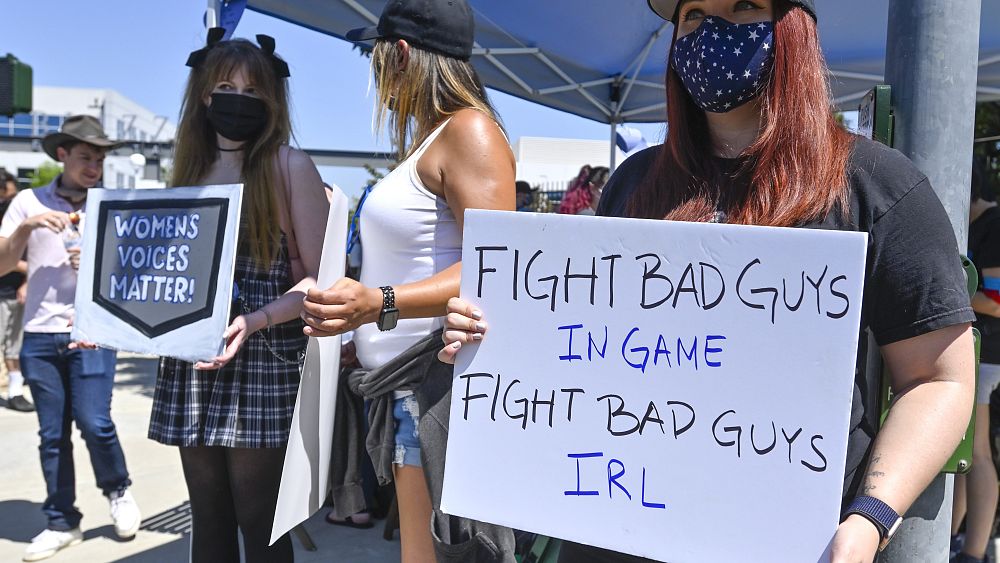
What prompted this reflection, however, was the recently-filed lawsuit by the California Department of Fair Employment and Housing following a two-year investigation into the company’s practices. Their complaint found that female employees were discriminated against in numerous ways, from lower compensation rates to being passed up for promotion. Male employees were often drunk at work and engaged in frat-boy practices, essentially harassing their female coworkers. Responsibilities were unfairly delegated to women, while the men got to play video games and make sexual banter. The suit points to one specific instance where a female Activision employee took her own life while on a company retreat, after nude photos of her had been shared around at a company party a few days previously. Blizzard denounced the suit as meritless and claims that the DFEH’s filing contains outright false accusations.

Blizzard Entertainment boss leaves company rocked by sexual harassment and  discrimination scandal | Euronews

What happened to the company that used to stand up for its community members? Is it possible that, when I was younger, I simply didn’t notice all of these issues and controversies that now seem to plague the once-lauded developer? Or has the situation gotten worse over time, an avalanche increasing in mass and speed before becoming an uncontrollable force? And how can I continue to support them? Should I boycott their products until there is significant change in-place? Is it right of me to give up playing some of my favorite games, potentially harming developers who may not have anything to do with the malevolent tactics practiced by upper management?

I legitimately don’t have an answer to these questions. It’s somewhat uncomfortable trying to go back into Diablo III knowing what I know now. I haven’t made a decision as to whether I will eventually play Diablo IV, or whether I’ll even buy any of their future titles. I don’t know what the right thing to do is. I have friends working in Blizzard, kind-hearted and good people that I know would never tolerate these kinds of things. And yet, the environment still exists, the allegations have had their impact, and now, there are consequences to be meted out.

I had hoped writing this piece would help me reach some conclusion, that by the time I reached the end, I’d be able to figure out what I should do. The truth, like life, is messy, complex. There aren’t clear-cut decisions with their ultimate eventualities neatly laid out before you. It’s hard to sit by and watch these kinds of things happen to one of the biggest influences in my life, a company I looked up to, a place, at one point in my life, I wanted to work. Now, here I sit, passively taking in every new source of information I can, trying to figure things out for myself, trying to determine my own moral culpability for wanting to level up another Necromancer.

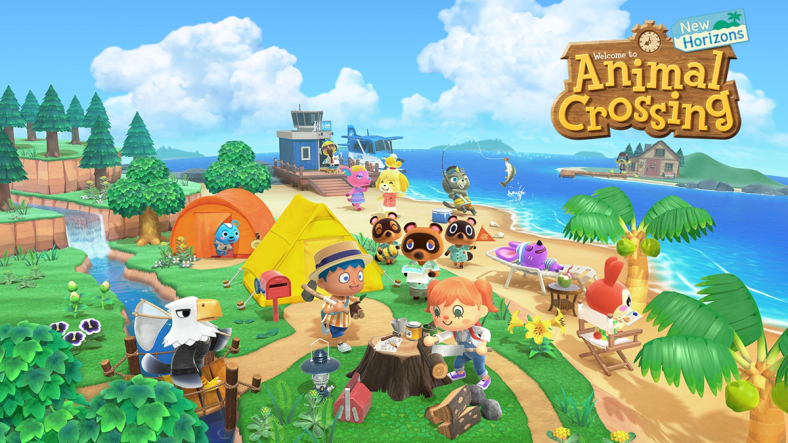
Animal Crossing: New Horizons

Animal Crossing has been one of my favorite game series since I played the first entry on the GameCube back in 2001. At that time, I was playing games like Super Smash Bros. Melee, Diablo II: Lord of Destruction, and Conker’s Bad Fur Day. (I was probably way too young to play some of them, looking back, but those were still good times.) In other words, games with action and violence. It’s a little odd, then, that I trended toward this game about building a home and being a friendly neighbor, but it soon became my escape from reality. I loved fishing along the coast to earn bells and pay off my home loan. I loved wandering around the police station and recycling areas looking for new items. I loved the villagers, friendly or otherwise, that would come and go and create long-lasting memories. Most importantly, it taught me the value of taking time, just going about my day, being a good and productive person. Luckily for Nintendo, their latest entry, Animal Crossing: New Horizons, came out at just the perfect time.

With everyone stuck at home because of the pandemic, people were looking for an escape from the stressors of the real world. Lo and behold, here comes New Horizons, where your only worry is what you want your island to look like. Players start off having won a contest to develop a deserted island into a tropical community. You’ll only begin with two villagers and the ever-present Tom Nook and co., but in short time, you can transform the island in ways beyond imagining. Between gathering materials to craft furniture, creating custom designs for clothing and art panels, and (eventually) terraforming the ground and water entirely, the potential for creative expression is limitless. I’ve been to islands mimicking Hogwarts, the Mushroom Kingdom, even Joe Biden’s campaign HQ. My own home, Lazuli, I’ve transformed into a tropical resort community, with a marketplace, hot springs, and even a lavish hotel.

The best parts of these games are the villagers themselves, the “people” you’ll be interacting with every day. There are currently 397 villagers in the game, each an animal with its own unique design, birthday, catchphrase, and personality. If you’re lucky, you will start with some villagers that you might want to keep for the rest of the game (I’m looking at you, Audie). Personality types include jock, snooty, lazy, and preppy, but everyone is more than friendly enough to say hello. And if you’re anything like me, you might have spent hours using Nook Miles Tickets to find the perfect inhabitant to invite over. Which reminds me: there are two currencies. Bells, which are used to buy most items, and Nook Miles, which are earned by completing small challenges in the game and can be redeemed for all kinds of prizes, one of which is being able to travel to small, deserted islands. You may find a villager you are looking for, or you may end up on an island populated entirely by venomous scorpions. Traveling to Nook Miles Islands is a great way to gather resources, collect things to sell, and to potentially find a new friend.

As for what you can actually do in the game, the player’s job is to build up the island and make it renown enough for famous musician K.K. Slider to visit and perform a concert. As the Resident Representative, you get to decide where the stores and museum are located, where villagers can live, and even what items decorate the island. Doing all of this will cost lots of bells, however, which is why you can sell crafted furniture, fruit, bugs, fish, fossils, and just about everything else to Nook’s sons, Timmy and Tommy, who run the local store. Anything you don’t sell, you can donate to the museum, give as gifts to villager, or keep for yourself. With all of the items you collect, you’ll also want to expand your house, increasing its size and adding on rooms. This is a game that takes time and patience to play, since the game world follows real world time. Rome wasn’t built in a single sitting, or something like that. However, some players often use “time traveling” by adjusting the Switch’s internal clock and calendar to advance or retreat through time. There’s a wide debate among the AC community about whether this is a legitimate way to play the game. I say: let people play however they want, so long as they aren’t harming anyone else.

The community is actually one of the best I’ve interacted with, among gamers and fandoms alike. I’m not kidding in the slightest when I say everyone I’ve spoken with or heard about has been extremely polite, helpful, and want you to have an island that you are proud of. There’s an online trading market, where players can spend bells or dollars to purchase furniture, villagers, rare fossils, you name it. People have developed tools that help you keep track of daily tasks or upload a picture as a custom design. I’m sure there are people out there who enjoy scamming and trolling other players, but it’s so rare that it’s almost unheard of. Knowing how fans for other franchises can act to insiders and outsiders alike, it’s very heartening to know that there’s at least one gaming community that cares about its members.

Once you pay off your debt, arrange your island to your liking, and have filled up the museum, there really isn’t a whole lot to do. You can check in with your villagers daily, or craft something, or visit a Nook Miles Island, but by the time you create a five star island, you’ll have experienced most of what the game has to offer. After eight or so months, I realized that I was just about done with my island. I was as satisfied as I was going to be with it, without having someone come in and redesign the layout for me. Unfortunately, because of this content drought, you only get so much out of the game before it sits on the shelf, collecting dust while your island collects weeds. I used to look forward to what each new day would bring, but I haven’t returned to the island since the one-year anniversary in March. As of the most recent announcements, though, it looks like there will be new content coming at last. With the long-awaited return of The Roost café, new house customization options, cooking and farming, a new marketplace, and the Happy Home Paradise expansion pack, it seems like I’ll be sucked back into Lazuli before long.

Sometimes, some of the most fun I would have was just walking down the shoreline at night, gazing up at shooting stars, and enjoying the dulcet tones of the excellent soundtrack. And that’s ultimately the point of Animal Crossing: New Horizons. As I mentioned at the very beginning, this is a series that taught me to appreciate the little things, take time, and enjoy life. With everything going on in the world, and with all of the brutal and heavy story-centered games I usually play, it’s nice to be able to kick back at the beach every now and then.

Hades

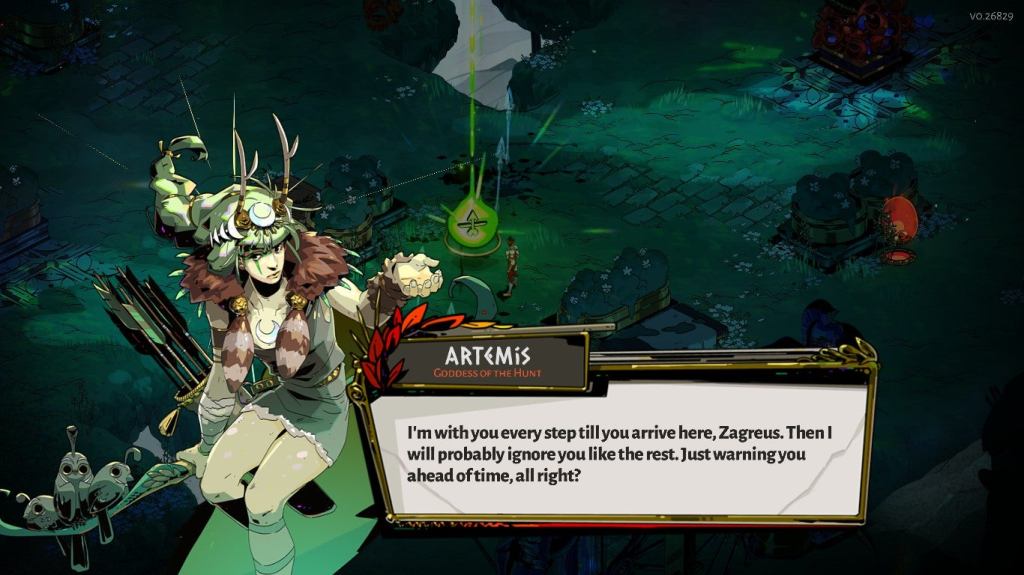
Dungeon crawlers and roguelites are a particularly favorite genre of mine, behind anything RPG, and that’s because of their near-infinite replayability. With procedurally generated maps, randomized enemies, benefits that disappear upon dying, and piece after piece of epic gear to loot, some of these games can last the test of time. I find myself going back to Diablo III (less so after the uncovering of Activision-Blizzard’s legal and ethical problems) or The Binding of Isaac every now and then. Hell, Diablo II was released over 20 years ago, and it still has a base of passionate players keeping it going and exploring the corners of Sanctuary. Speaking of hell, however, there’s another game which my friend turned me onto, involving traversing the depths of the underworld and fighting champion enemies. Little did I realize, however, that Hades would become one of my favorite games of the last few years.
As Zagreus, the Prince of the Underworld, you’re tasked with two responsibilities: maintaining your family’s household, and trying to escape to the surface. After learning the truth about his birth, Zagreus makes it his mission to break out from the Underworld to find his birth mother, living somewhere in Greece. The only thing that’s stopping him are the armies of the dead, waiting to send him home. Assisting him are the Gods of Olympus, who believe Zagreus is trying to flee to their haven. You’ll hear from Athena, Poseidon, Aphrodite, and Hermes, just to name a few. Also along the way, Zagreus builds bonds with the many servants of his palace and denizens of the Underworld. It’s hard to whittle down the cast to determine my favorites, but ones that particularly stood out to me were Achilles, Megaera, Sisyphus, Dusa, Eurydice, and Skelly.

Each room of the various levels of the Underworld (Tartarus, Asphodel, Elysium, and Styx) are built as a constantly-shifting labyrinth, preventing anyone from attempting to escape. I like how the developers created an in-game reason for the rooms to be randomly generated; that’s attention to ludonarratology. Because Zagreus is a God, death is only a minor inconvenience, sending him back to the palace. Every attempt allows for new combinations of active and passive abilities, leading to seemingly limitless options with which you can approach the souls of the dead. You might find a Daedalus Hammer that alters your weapon’s attack, boons from the Olympians, darkness and gemstones, or encounter a level-specific NPC who will provide you with a special item of your choice. Add onto that the Pact of Punishment, which lets you customize your escape attempts even further with new challenges, and it won’t be long before you’ve sunk hours into aiding Zagreus on his mission.

Speaking of weapons, you only get to choose one for your entire run, but you can switch between six unique weapons, which each have four Aspects (three normal, one secret), giving you a total of 24 different playstyles to choose from. Each weapon itself handles differently, with some attacking faster while others are more powerful per strike. Sometimes you’ll want to fight enemies up and close, or other times, you might want to pick them off from afar. Every weapon and aspect is viable, so you can figure out the ones that work best for you. My favorites for each weapon are the Aspect of Chaos for the Shield of Chaos, the Aspect of Lucifer for the Adamant Rail, the Aspect of Rama for the Heart-Seeking Bow, the Aspect of Achilles for the Eternal Spear, the Aspect of Talos for the Twin Fists, and the Aspect of Arthur for the Stygian Blade. Whether you want to pick one of the higher-tiered weapons or experiment with a new style, there’s plenty to pick from.

I just love this game, flat out. Everything has been finely crafted and detailed to create a tidy, charming, difficult, and heartwarming game. The writing is phenomenal, to say the least. Every character feels unique, with their own personalities, backgrounds, and motivations. The dialogue is entirely contextual, too. Depending on what weapon you’re using, what trinket you’re wearing, whether a certain enemy killed you on the previous run, each character will have something unique to say. I don’t even think I’ve seen any repeated lines, except for when I started a new file. You may end up liking some characters more than others, but even the hated ones are ones we love to hate. You’ll see what I mean when you get to Elysium. Along with the writing, the voice acting is fantastic as well, bringing each character even further to life. Whether hearing the sorrow in Orpheus’ ballads or the disapproving tone of your father Hades, it really does feel like every character brings something different to the table. No one feels ancillary, even ones hanging out in the background, because you’re always interacting with them, running errands or helping them out with something. Developing deeper relationships with the cast isn’t just for the benefit of storytelling, either. Each character will give you a little trinket which aids you during your run, and you may even find some pets to join you along the way. Neatly wrapping it all together is a gorgeous soundtrack. Each song brings different emotions with it, whether the excitement of battle or the calm of a respite. I often found myself just standing around the levels and listening to the music, especially in Eurydice’s chamber. Seriously, anyone who doesn’t sit through “Good Riddance” is committing impiety.

None of this is to say that your escape from the Underworld will be easy. On the contrary, this game starts off extremely challenging before you learn enemy attack patterns, how your weapons work, what boons do what, etc. It took me almost 20 attempts just to beat Megaera and advance from Tartarus to the next level. After that, however, the difficulty curve gets really wonky. I found Asphodel and the boss there, the Lernaean Bone Hydra, much easier than the previous level. I initially chalked it up to getting better at the game, but then Theseus and Asterius smacked me down from Elysium and straight back to the palace. But after completing each of these planes and making it out of the Temple of Styx, there’s one final challenge waiting for you. I don’t want to spoil any surprises, but needless to say, you will find yourself consistently surprised by it.

The message this game is trying to tell is really touching, about the importance of family and to persevere even when things seems insurmountable. I grew to care about the fates of these characters, all trying to escape what seems inescapable. And yet Zagreus persists, returning to the surface each time despite never being able to stay there permanently. It’s a lesson we can all learn something from. By the way, I can’t believe I waited this long to mention that there’s a fishing minigame, and that’s why Hades is a near-flawless masterpiece.

Danganronpa Another Episode: Ultra Despair Girls

When I left off last time, I had mentioned the third Danganronpa game I wanted to discuss was very different than the others. The first ones had elements of visual novels, but they were still undeniably games. Again, this is not the time for a debate on what constitutes a game. This conversation is actually completely irrelevant to the entry I’m about to slash through. With Ultra Despair Girls, there’s no question at all about whether this is a game.

Moving away from the more linearly-driven path of the visual novel, UDG is a third-person shooter with a ton of arcade mechanics. Truth Bullets return, but they’re less of a metaphorical concept and more of an actual piece of ammunition. Players are given a hacking gun with tons of different ammo types, from your basic Break to more gimmicky ones like Paralyze or Dance. Of course, you don’t get to keep all of these powers and have to unlock them again throughout the game, but after getting a small taste of your abilities at the beginning of the game, you’ll find that each ammo type can be helpful depending on the situation. Otherwise, it’s your standard shooter fare, which is fun but a little basic at times. Although there are quite a few different enemy types, they’re all Monokumas (which can get a little boring) and they can usually be dealt with using the default Break ammo.

Other than your shooting segments, there are stealth segments which require you to find a kid without being caught, Monoku-Man arcade machines that act as security cameras for challenge rooms, and riddles to solve to progress in the level. You’ll have plenty of opportunities to not only experiment with your Truth Bullets and find ones which work best for you, but also to collect Monocoins, which are used to purchase upgrades in the form of adjectives for your guns. It’s a strange concept to wrap your head around, but combos like Furiously + Ornately can augment the ammo’s strength and total ammo count. It’s things like this which really make UDG unique, especially among shooters. What other game allows you to improve your guns with the power of language?

Without spoiling too much from the other DR games, players can also temporarily switch characters. This second character has extremely powerful melee attacks and special moves that allow them to slice through enemies like fabric, but is limited by a meter that determines how long they can be used for. It’s honestly a blast to play as this character, weaving and dicing through waves of Monokumas, and their special ability takes the form of pretty sadistic automated segments that can bring a twisted smile to your face.

The story is a lot more personal this time around. Instead of the large cast of high schoolers slowly being picked off by each other, the narrative follows Komaru Naegi, the sister of the DR1 protagonist, who was captured and imprisoned during The Tragedy. After escaping an attack by a vicious Monokuma, she finds herself in a world far different than the one she remembers. A ruthless group of children calling themselves the Warriors of Hope have taken over the city and are killing all of the adults to create their own paradise. Working alongside her partner and DR1 veteran Toko Fukawa, the two have to destroy multitudes of Monokumas, escape the city, and defeat the Warriors of Hope.

There’s a greater focus on Komaru finding within herself that she’s more than just a normal high school girl. She and Toko are trapped in this incredibly hopeless situation, and the story follows them working together in order to overcome it and both become stronger because of their partner. It follows the same arc as the other games, with Hope overcoming Despair to save the world, but you can see real character development between Komaru and Toko. They both rise to the occasion and, despite whatever differences they may have in the beginning, they learn to become friends and partners. It really gets to expand on Toko’s character, who was only somewhat touched upon in DR1, and we get to see why Komaru is distinct from the other protagonists, Makoto and Hajime.

When I said that UDG is very different than the other DR games, I wasn’t just talking about the gameplay. The story is more personal to the protagonist than the entire cast, and because of that, there isn’t the same overall emotional impact. We don’t get a chance to develop emotional connections to many of the characters thrown through the game, but come to really understand Komaru and Toko on fundamental levels. The side characters, while all nods and winks to the cast of the mainline games, can be very forgettable beyond a few lines of dialogue. And the villains, although driven by legitimately disturbing events in their past, come off as over-the-top or outright ridiculous. I suppose that’s the kind of flair to expect in these kinds of games, but on reflection, so much of it felt different than what I experienced in the other games. I guess that’s the point, though; as a spinoff, they could include ideas that might not otherwise fit in the mainline series.

To be honest, the voice acting is probably my favorite part of the game. That may be strange, that the acting is what I enjoy most about an interactive experience, but the performances you get from some of the actors are amazing. You’ll probably get the biggest kick out of Kurokuma, the foul-mouthed and hyper-talkative Monokuma variant, who is voiced by Erin Fitzgerald. That name might not mean much on its own, but she also played Chie in Persona 4 (another game I plan on covering), as well as a handful of other characters in UDG. There’s actually a really huge crossover between Danganronpa and Persona voice actors: Cassandra Lee Morris (Aoi and Morgana), Erica Lindbeck (Kotoko and Futaba), Cherami Leigh (Komaru and Makoto), Grant George (Shuichi and Shinjiro), Johnny Yong Bosch (Hajime and Yu AND Adachi); just to name a few. It’s actually really incredible how small the voice acting community is for these kinds of games, when you really investigate it.

Going back on track, I’m not sure what else I can really say about Ultra Despair Girls. If you’re looking for a wacky yet depressing arcade shooter, your choices are either this or CarnEvil. It’s fun overall, but unless you want to get a complete understanding of the story behind Danganronpa, it’s mostly skippable. You face the same waves of enemies over and over again in slightly different configurations. If you aren’t playing on the higher difficulties, there really isn’t any strategy involved other than “don’t miss.” That’s not even mentioning that outside the development of the main characters and one or two of the villains, there isn’t a whole lot going on plot-wise other than “adults bad, kill them.”

For the most part, however, it works, and as a fan of Danganronpa, it’s a welcome addition. But I can’t help but feel that it lacks some of the charm of the main games. Maybe it’s the more concentrated cast or maybe it’s the action-driven gameplay, but some indefinable element is missing which separates this game from the others in my mind.

Danganronpa 1 and 2

Visual novels are a controversial inclusion to the world of video games. Depending on the amount of interactivity, some amount to nothing more than clicking the mouse to advance text, while others can include divergent choices, minigames, and even multiple endings. It can easily lead to the question: “What even is a game?” This is a discussion for another time, but I bring it up because there’s no measurable mark at which a visual novel becomes a game and vice versa. The distinction is our own personal Kármán line, a loosely-defined point at which game mechanics and play are introduced to the narrative. Danganronpa: Trigger Happy Havoc treads this line, while its sequel, Danganronpa 2: Goodbye Despair, takes a Logic Dive-esque leap further into the ludic realm.

(Note: I have yet to play Danganronpa V3: Killing Harmony because I promised a friend I’d let him play it first for his stream)

Much like Battle Royale or The Hunger Games, with a hint of Highlander and a dash of anime flair, Danganronpa‘s story consists of groups of high school students gathered together against their will to take part in a brutal killing game, murdering each other until only one remains. Every student has a special talent making them the Ultimate in their field, but when they’re imprisoned and forced to kill each other, their skills might not help them survive. The mysterious Monokuma manipulates events to provoke the students into action, taking glee in their despair, but it’s your job to stop it. While uncovering the enigmas surrounding the strange bear-like creature and the state of the world, players take part in Class Trials to uncover the culprit behind each murder.

This is where the main gameplay elements of DR1 take place. After investigating various areas of the school (the setting in which the first game takes place), collecting evidence, and hearing testimonies, the students gather together to try to figure out whodunnit, with the killer being able to walk free if they are not discovered. Each bit of info you collect takes the form of Truth Bullets, which you use to literally shoot down others’ arguments during the debates. Other times, you’ll play Hangman’s Gambit, where you have to spell out a hidden clue by selecting letters, or Bullet Time Battle, a short one-on-one rhythm game. My personal favorite is the Closing Argument, during which the player assembles puzzle pieces like a comic book to describe how the crime occurred. While the trials increase in difficulty as the game progresses, these gameplay modes remain simple throughout. Even if you run out of influence and are on the point of losing, the game allows you to refuse to give up. I never once found myself having to redo trials or surprised by the twists (except for the mastermind), but there were definitely points during the debates where I couldn’t find a suitable answer. Reminiscent a standardized test, sometimes it comes down to the least-worst choice.

Before each murder and subsequent trial, you can explore the school and spend time with other characters, responding to their conversations in particular ways, and giving them gifts. This isn’t just to add dating-sim elements to the game (although you can romance them, and they’ll give you special “gifts” of their own), but also to unlock new abilities that can make the class trials even easier, like increasing your Concentration meter or reduce the damage you take for an incorrect answer. The later editions of the game also include a School Mode for the post-game, which allows the player to hang out with the other students, but without the threat of killing one another. I played the PC version, but if you picked up the original release on PSP, you’d have to wait all the way until DR2 to be able to partake in extra curriculars.

Some of your favorite characters will die, and there’s no way around that. Oh sure, you’ll meet plenty of characters you absolutely abhor, like Hifumi Yamada (ESPECIALLY HIFUMI), but I found myself really liking Aoi Asahina and Kiyotaka Ishimaru. Each character feels unique, with their own goals, interests, and most importantly, distinctions. They all have personality, making them memorable, for better or worse. Unfortunately, though, until you get to School Mode, the cast will be slowly whittled down over time. Will someone else I really like be the victim? Or will I have to reveal them as the killer?

As mentioned earlier, however, DR2 takes the foundation of what the first game built and tries to build a skyscraper on top of it. The plot goes even further than before, with much more unexpected and unpredictable twists. The minigames have more depth and complexity to them. There’s more exploration, character interactions, and additional content to unlock. It’s bigger and (supposedly) better than ever, and yet, I find myself drawn more to the first one.

Although tropical settings are my favorite locations in games, it felt really out of place in DR2. I guess that’s the point, juxtaposing the beautiful landscape with vicious murders, but there’s something about the taken-over school that works more for me. It felt like there were more secrets to uncover within the school, even if that’s not really the case, but the creepier atmosphere was right at home with the game’s tone. And even though the characters I love in DR2 are more of my favorites than ones from DR1, I still prefer the original cast overall. The characters in DR2 didn’t feel as unique, some of them having little-to-no personalities at all beyond their Ultimate talent, and some of them being extremely similar to characters from the first game. In addition, Monomi didn’t work as a foil to Monokuma, instead regularly being the butt of a joke. But like I said before, Chiaki Nanami and Fuyuhiko Kuzuryu are probably my favorites from the casts of both games, and they’re both in DR2.

The trials are tougher than before, but not entirely due to the challenge of solving the mystery. The debates are more complicated, now having you reinforce certain statements and refute others, which means there are more pieces to parse. It’s extremely rewarding catching someone in a lie and clarifying the truth, but more than a handful of times, I had to look at a walkthrough to know what clues and evidence to put together. Sometimes, the answers made sense, and sometimes, I was just glad to get pass the bullshit.

Island Mode is unlocked upon beating the game, and if you played the later versions of DR1 that have School Mode, it’s essentially the same. There’s also Magical Girl Miracle ★ Monomi, a bland interstitial subgame to be played between chapters. It’s mainly the trial minigames that take the biggest hit. In my opinion, they are way worse than in the predecessor. Apart from Panic Time Action, which is almost the same as the Bullet Time Battles from DR1, the only fun gameplay element is the Rebuttal Showdown. Part hack-and-slash and part-debate, you combat with another character until you can point out the flaw in their argument. The other two are just plain awful. Logic Dive has you snowboarding down a tube and choosing routes in order to reach a logical conclusion. However, since you have so much health and going down the incorrect path does very little damage, you can guess your way through, making this minigame mostly a waste of time. The absolute worst, however, is Hangman’s Gambit. Letters will fly across the screen from all sides, so you have to combine them before they hit another letter, and once combined, they can be used to spell a letter in the clue or destroyed. It’s needlessly complicated and very easy for this chaotic minigame to get out of hand. It’s less of a puzzle and more of a bullet hell. Luckily, the clues are easy to figure out, so it’s mostly a matter of overcoming the mess on-screen.

Like most other games, however, it’s mainly the characters, their interactions, and how they overcome the challenges of the story that draw me into its narrative, and that’s where Danganronpa and Danganronpa 2 shine. You’ll laugh, you’ll cry, you’ll fall in love. Maybe not as cheesy as that, but it’s very easy to find yourself enamored by the characters, and by then, you’ll want to help them overcome their struggles and survive.

I’m already running on way longer than I anticipated, and I’m not even done; I still have one more Danganronpa game to talk (sans V3), but that game is so dissimilar to the others that I feel like it needs its own section. Consider this a part one, then, and part two will follow.

ArtStation - Dangan Ronpa 1 and 2 Wallpaper, Matt Rampino