Historicity in Gaming

Are games purely meant for fun, or can they be used as tools to educate and inform? Once the backlash toward the digital demon of interactive entertainment died down following the initial popularization of video games (an attitude which has never fully gone away), this question rose to the surface of the minds of teachers, psychologists, and numerous other experts. Rather than shun this new form of play as a mere distracting pastime, there are those who saw the impact and merits games can have on those willing to put the time into studying and deconstructing them. Just in narrative terms, a game with a strong story can leave players thinking about it for months or even years following. Just consider the thesis I wrote on Mass Effect. But this can be the case with gameplay, too, as seen with the Tetris effect. With such an ability to impart and impact, an important question, similar to the initial one I raised above, comes to mind: what responsibility, if any, do games have toward the truth? Or, rather, what is the role of video games when it comes to representing a verifiable event or once-living individual?

A short answer, in two words, is simply: it depends.

For the most part, games tend to care more about verisimilitude than veracity. It is more important to create a world that seems true to the player and does not tear them away from the experience of the game than it is to be authentic and real to the experience being represented. It’s easy to argue that there isn’t any inherent obligation to here-and-now, to what was, or to what will be; that entertainment exists inside of a vacuum and, once something leaves a creator’s hands, it’s up to the audience to create meaning. While it can be comforting to separate art from the artist, it’s important to not entirely deny the context in which something was created. That context can be valuable in understanding why something was created or how it will impact those who are exposed to it. To that end, historicity, the quality of something being authentic or based in fact, may not appear at first glance to have anything to do with digital entertainment, especially when the main pillars of gaming right now involve hijacking cars, partaking in warfare, or carefully maintaining a fictionalized world. However, there are three general groups of games which deals specifically with what could be historical, which I term: educational games, historical fiction games, and “what if?” games.

As the name entails, educational games are first and foremost about instructing and teaching the player a certain slice of actual happenings. The whole point is to impart this factual knowledge, so ensuring the information’s accuracy is imperative. When something claims to be an educational game, it’s essentially stating that what it’s presenting can be confirmed with additional sources and is agreed upon by scholars at large. However, that doesn’t mean it has to be something boring or meant only to tutor. While something like Mario Teaches Typing has just the veneer of gaming draped over it to distract children from the game’s true goal, the Carmen Sandiego series has players following the crimson criminal across time and space, learning about the places and eras in which she’s committing heists in order to solve puzzles and nab the perps. Personally, I still share information I learned from Where in Time is Carmen Sandiego? when it applies to my conversations. Learning about the origins of the world’s first novel, The Tale of Genji, or the Mali Empire’s trade routes made renowned by Mansa Musa as a young kid vastly supplemented and enhanced my own education, preparing me with knowledge many of my peers did not have. The Oregon Trail would even count as an educational game, in its portrayal of the settlers’ attempts to cross west across the United States. By wrapping this sort of information in a fun and engaging game, players are more motivated to persevere through, and thereby retain that information, than attempting to glean it from a textbook.

Then, there are historical fiction games. Much like the name would suggest, they are fictional stories that take place within a historical context, so even though the stories being told may not have actually happened, the events surrounding them most certainly did. The characters and what they do may be original and unique to the specific story being told, but the setting has to be, at the very least, verifiable. Valiant Hearts: The Great War, as an example, tells the story of four people, a French farmer, his German son-in-law, an American soldier, and a Belgian nurse, as their lives intersect during the First World War. Another fantastic example would be Ghost of Tsushima, transporting players to the 13th century off the coast of Japan and taking control of a samurai fighting against an invading Mongol warlord. Or LA Noire, which depicts Los Angeles in the 1940s from the perspective of a hotshot detective. While these characters never actually existed, what happens to them throughout the game is reflective of the lived experiences of real men and women. Therefore, they do not represent any one person’s life but rather the lives of many, showcasing to players what may have happened in the time and how those who were there may have responded, along with transpiring within a real-world place and time.

Lastly, “what if?” games take some historical tidbit and then layer it in fictionalization and gameplay for the sake of keeping the player entertained. History may be the background for the stories, but that’s generally about it. Otherwise, the developers mess with the timeline and play with history as much as they see fit, whether creating an alternative universe or an original one with only elements taken from our world. This allows the creators to take their story in wildly different directions while maintaining a core historical foundation which gives the player familiarity. By taking that with which the player may be familiar, the developers can invert that thing on its head, presenting to the player something new or a new way of looking at something old. The Assassin’s Creed games are all set during famous historical eras and even involve famous people from those times, but between the inclusion of an extinct forerunner race and being able to dive into a person’s genetic memory, no one takes what they teach as outright fact, but that doesn’t mean they don’t have value. The newer entries include a gameplay mode that lets players explore the world and learn about the actual history of the cities they climb around, but even just watching the cutscenes and wandering through the streets made me want to learn about Renaissance history when I first picked up Assassin’s Creed II in high school. Then there are the Civilization, Age of Empires, and Europa Universalis series, which allow you to take control of a nation or famous leader and influence the direction of history. Literal alternate timelines are being played out, ones where Gandhi can be scarily aggressive with his nukes or the Ottoman Empire colonizes Hispaniola. They really make you wonder, hence the name of the category.

I ask my question once again: what responsibility do games have to the truth? And I answer yet again: it depends. The responsibility comes from how or why history is being used. Educational games are meant to teach, and so they have to use the truth as much as possible in order to get their point across. Historical fiction games are meant to inform, to use the setting as a way of initializing those teaching moments without forcing them upon the player. “What if?” games are meant to intrigue, getting players to ask questions and consider how small changes could drastically affect their experience with the media. Ultimately, when you use history to tell a story, you can’t help but ground it in fact and truth, even if you then go off the wall with it. While truth is becoming a rarer commodity in today’s world, we can’t help but draw upon what we know to try to make sense of what is yet to be understood.

I Have No Mouth, and I Must Scream: Story and Adaptation

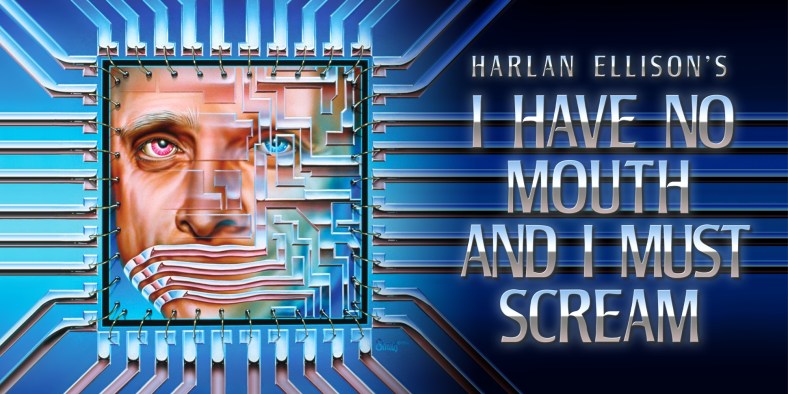
Between audience reception and interpretation in Mass Effect and Jungian archetypal philosophy in Persona 5, I have argued for the literary merits of games many times. Interactive storytelling has become one of the best methods for engaging audiences, due to active participation being necessary for advancing the plot. Taking this to the next level, developers have actually reimagined novels in a digital form. Some famous examples include the classical Journey to the West or the more modern The Witcher, but there are surprising inclusions as well, like The Hunt for Red October or Dante’s Inferno, which, while not necessarily faithful, are creative in how they bridge the gap between the original form and something more palatable for a gaming audience. In fact, one of my favorite short stories of all time received a similar treatment, resulting in 1995’s often-overlooked I Have No Mouth, and I Must Scream.

Contrary to popular belief, the public’s fascination with post-apocalyptic media didn’t start with Fallout, The Terminator, or even The War of the Worlds. Two of the earliest English language examples can be attributed to Lord Byron’s “Darkness” and Mary Shelley’s The Last Man in the early 1800s, and if we’re looking even further back, most ancient religions, civilizations, and cultures have some kind of tale foretelling the end of the world. Humans have long been captivated by these kinds of stories as a way to elude problems in their own harsh realities, to spread an agenda or belief to a larger audience, or to hope for a new beginning after a cataclysmic event. Our morbid curiosity about what comes after “the end” is inherent, so whether contemplating a final judgment between good and evil or the potential implications of our presence affecting the planet, post-apocalyptic fiction can act as both an escape and as a dire warning.

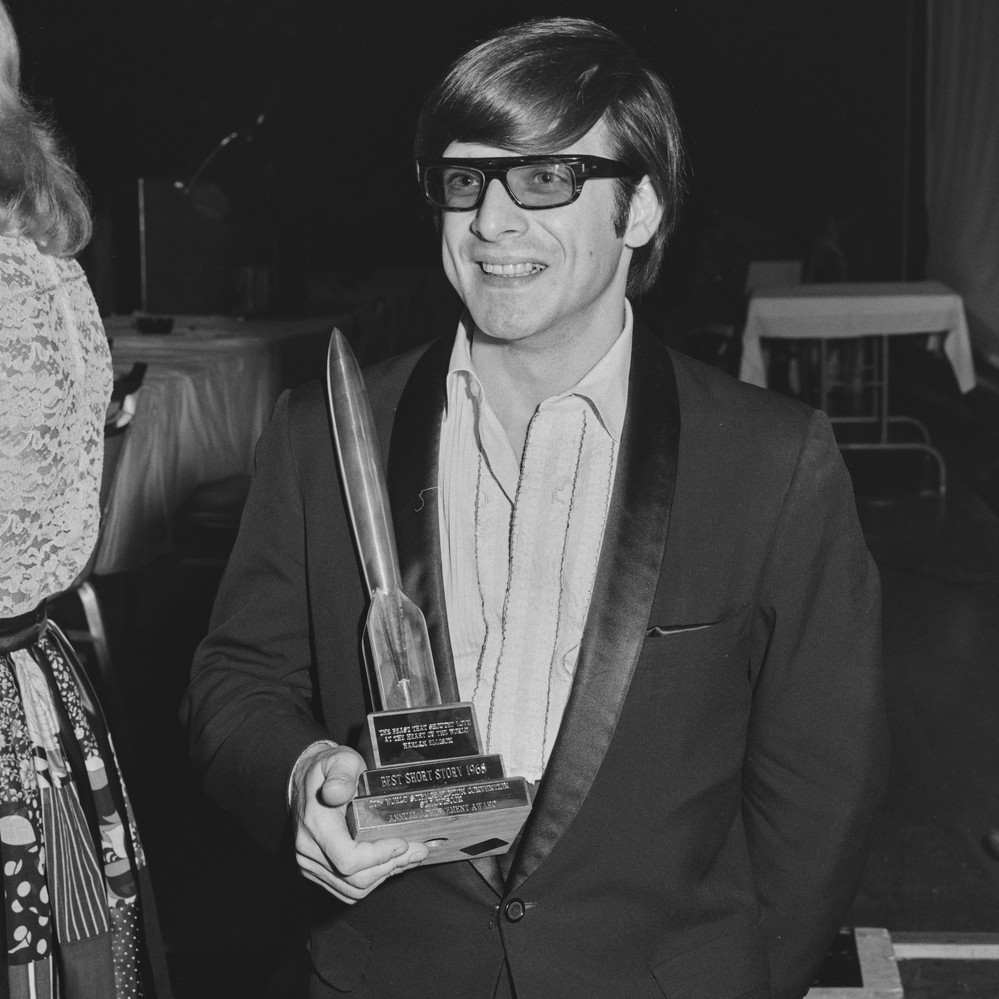
Harlan Ellison was one of the most prolific authors of speculative fiction, having won eight Hugo Awards, four Nebula awards, five Bram Stoker Awards, and two Edgar Awards across his nearly-70 years of writing. His Star Trek episode “The City on the Edge of Forever” is often cited as one of the best across the entire franchise, and he was a regular consultant for The Twilight Zone and Babylon 5. To say this man was influential on the field of science fiction is to understate the impact the highly-controversial writer left across prose storytelling. Despite his abrasive personality, his less-than-tactful approach to certain topics, and his sometimes-hawkish protection of his intellectual properties, the indelible mark Ellison left on this genre can still be seen today and will continue to be felt for generations to come.

1967 was a tumultuous year for the world, a year of violence and unease. America was still ankle-deep in the Vietnam War and would be for another eight years. The Apollo I test launch ended in tragedy, all three astronauts passing away due to an accidental fire in their spacecraft. The Six-Day War broke out in the Middle East, Israel under attack by the allied armies of Egypt, Jordan, Iraq, and Syria. But that’s not to say the entire year was fated for disaster. In that same time, The Beatles released two full-length albums, the Butler Act at the center of the Scopes Monkey Trial was finally overturned, and interracial marriage was made constitutionally legal in the United States. It was a crossroads era, a time when it seemed society could start taking steps in a number of different directions. Would we give into our baser instincts, let violence and chaos control our lives? Or would we move toward tolerance and cooperation, fighting for what we hold most dear? The existential fear of utter destruction by nuclear fire in the Cold War coupled with major advances in computing technology that threw the world into a new era loomed over Ellison’s head as he completed and published his new short story in a special edition of IF: Worlds of Science Fiction magazine.


“I Have No Mouth, and I Must Scream” follows five characters living in a literal hellscape over a century after World War III. The three major factions in the Cold War, the United States, the Soviet Union, and China, each build a massive computer rooted deep within the planet, capable of coordinating and calculating plans too vast for human understanding. At some point, one of the Allied Mastercomputers becomes sapient, absorbs its counterparts, and enacts the extermination of Earth. It decides to rename itself, eventually settling on AM as a reference to Descartes’ principle “Cogito ergo sum,” “I think, therefore I am.” AM captures five people and keeps them alive in order to torture them for eternity, harboring a deep hatred for humanity, while wiping out the rest of the world. One of the five has a vision of canned food in ice caves far away, forcing the group on a journey that compromises the majority of the story.

It is in the undertaking of this tortuous trek, along with suffering the consequences of AM’s constant nuisance and meddling, where we learn about the characters and how the world ended. The group consists of Ted, our narrator and the youngest member of the group; Benny, shapeshifted into a hideous simulacrum by the machine god; Gorrister, a pacifist who was turned apathetic by AM; Ellen, the only woman and person-of-color; and Nimdok, an older man so frail and confused, he only responds to the nickname AM gave him. One of AM’s more twisted methods of entertaining itself is by distorting the humans into malformed reflections of their former selves. Benny is described as having once a handsome, gay scientist. However, after AM mutated him, Benny is now an ape-like creature, long having lost its sanity, using its enlarged sexual organs to repeatedly copulate with Ellen, who herself was a victim of sexual violence that was forcibly given an increased libido by AM. (If you think that was a vile sentence to read, imagine having to write it out.) Ellison’s unadulterated, caustic personality comes out in full force through these characters: hyper-exaggerated, tactless, and with stereotypical aspects that render them caricatures. But if we can look beyond his corrosive psyche, what Ellison is doing becomes quite apparent. AM is able to take anything and everything from the humans and pervert it, turning them into complete opposites of themselves, showing how it has total domination over their minds and bodies. They have no control over their own lives, only AM has that capability. Parallels can easily be drawn to the unchecked powers of an aggressive ideology or to the role of an abuser in a relationship. AM must, at all times, remind the survivors of who is in charge, who controls every aspect of their lives, because without them, it is a god of only wastes and corpses.

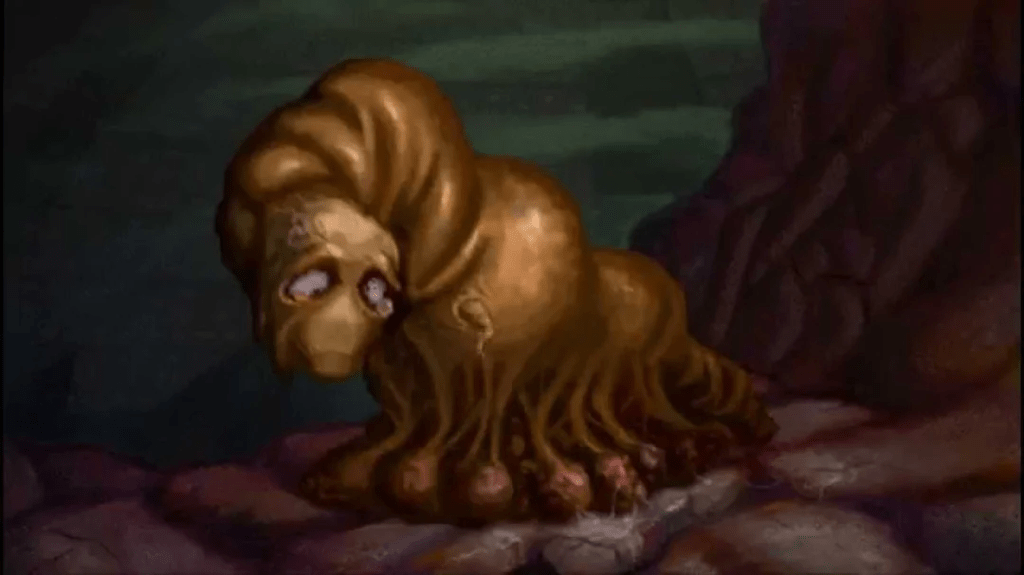
Ted eventually learns that AM’s resentment toward humanity stems from its inability to use its truly take advantage of its sapience. It could not create, only destroy. It could not move, despite its immense power. Immortal and confined to the prison of its body, AM tortures these five as an outlet for the rage burning within, to treat humans the way it feels as if it has been treated, to inflict on others even a fraction of what it believes it has experienced. In the end, the five eventually reach the canned goods, but in AM’s devilishly ironic fashion, there is no way for them to actually open the cans. As Benny begins to go wild and attack Gorrister, Ted experiences a flash of inspiration: although AM prevents them from killing themselves, it cannot stop them from killing each other. Ted kills Benny and Gorrister while Ellen kills Nimdok, leaving Ted to kill her, freeing the four of their eternal torment. But Ted, in an act of self-sacrifice, could now never escape AM, the computer furious at having four of its playthings taken from it. In revenge, AM has transformed Ted into an ambulatory pile of goo, blind, unable to act, unable to speak, unable to even perceive time. Only his mind is intact, purely to comprehend the horrors AM spends the next centuries putting him through. The story ends with Ted reflecting on his ultimate fate, thinking to himself, “I have no mouth. And I must scream.”

Chilling in its presentation, abhorrent in its language, ominous in its tone, “I Have No Mouth” set the standard for post-apocalyptic prose to date. Ellison’s use of horrific imagery helps underscore the sheer grotesque, unrivaled power of AM, describing gore and suspense in the same ghastly breath. However, not only is it a masterpiece of science fiction, it is also one of the most reprinted in the entire English language. Ellison himself is one of the most republished authors in the entire genre, behind only such monoliths as Ray Bradbury and Isaac Asimov.

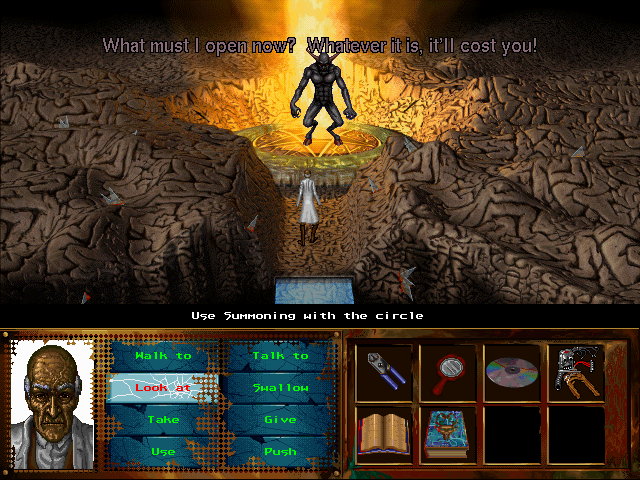
In a strange turn of events, this inspiration behind an entire genre of fiction and gaming became the very foundation of a game itself when, in 1995, developer Cyberdreams worked directly with the author to adapt “I Have No Mouth” into a point-and-click adventure game. Ellison himself was both a co-writer for the game’s script, rewriting the entire story on a typewriter as a 130-page screenplay alongside co-writer David Sears, and provides the voice for AM, giving life to his creation. I Have No Mouth, and I Must Scream hit store shelves in November of that year, ultimately a commercial flop but a critical gem.

Instead of following the original plot, the game tells a new story split into multiple parts, with each character contributing a piece to the puzzle. AM decides it wants to play with his human toys, so it throws each of them into a psychodrama of their own fears and insecurities. Each of the five must go on a personal mission to overcome their own failings, ultimately beating the machine at his own game. Weakened by this unexpected turn, AM becomes vulnerable, and with the assistance of the Russian and Chinese supercomputer subconscious personalities, the characters travel into AM, learn of a colony of humans in cryostasis on the moon, and attempt to disable the malevolent computer once and for all. After entering AM and solving some more puzzles, players reach the multiple endings of the game. Likewise to the plot, the cast has undergone extreme revisions, some to the point of being entirely different than their original counterparts.

Gorrister, originally a conscientious objector turned into a shoulder-shrugger, is now a guilt-ridden mess after having his wife sent to a mental institution. His section has players exploring a rusted zeppelin and worn-down diner, with the goal of trying to find a way to end Gorrister’s life. Eventually, he confronts his mother-in-law, discovers she feels guilty for her daughter’s insanity despite blaming Gorrister, and ultimately learns to forgive himself. Not much there overall, but to be fair, there wasn’t much to his character in the source material.

Ellen, before the apocalypse, was an up-and-coming engineer who suffers from extreme claustrophobia and xanthophobia (fear of the color yellow) after being raped in an elevator by a man wearing a yellow jumpsuit. She defeats her fears while exploring AM’s underbelly (stylized as an Egyptian tomb), searching for his original components and, potentially, a way to destroy the machine. For a game to depict sexual violence at all can be considered scandalous; I Have No Mouth literally has a character explain in graphic detail how he enjoys overpowering women. It’s one of the few games I’ve seen address the subject, let alone allow you to deck a rapist in the face. Whether it’s the most considerate approach is up for debate, but subtlety wasn’t necessarily a strong aspect of game writing in the 90s.

Benny is perhaps the character most drastically changed in the game. This time around, he’s a military officer who killed his own soldiers, displaying extreme racism and gluttony the whole while. Still in the form of an ape-esque creature, he is teleported to a tribal community that worships AM, sacrificing people to their god via a lottery system. By the chapter’s conclusion, Benny learns how to show compassion by rescuing a mutant child from being sacrificed and offers himself in the child’s place. The developers later regretted this choice to change the character, reflecting that there was an opportunity to tell a story of a man struggling with the challenges of being homosexual in the 1990s.

Nimdok is an ex-Nazi doctor and former colleague of Josef Mengele who returns to a concentration camp in order to find the missing “lost tribe,” despite his failing mental faculties. He eventually comes to realize that not only did he give up his own Jewish parents to be eliminated by the Nazis, but he also helped to develop the technology that AM uses to sustain their lives. His redemption comes when he helps the Jewish prisoners escape and gives them control of a golem. Considering my family also had members who perished in the Holocaust, it’s an intriguing angle to explore a man realizing the absolute repugnance of his actions. The game pulls no punches in showing some of the atrocities committed by the Nazi regime, such as medical experimentation on prisoners and children, making it all the more satisfying when you drive fictional-Mengele to suicide. Interestingly enough, this entire level was cut from the German and French releases of the game due to displaying Nazi imagery, rendering the best ending much more difficult to achieve.

Ted’s section feels the most out of place. He’s given the opportunity to find a path to the surface world and must get through a fairy-tale dark castle, replete with a wicked stepmother, demons, and Ellen as a princess in distress. This ties back into the source material, where the characters alternated between feeling protective of Ellen and lustful toward her. The paranoia he experiences in the original also appears. In his former life as a con artist, he would seduce rich women out of their money and constantly worried about being discovered. In the game, this translates to all the characters in this segment giving confusing, contradictory commands and requests, making Ted unable to trust anyone, even himself. Through some crafty spellwork and deals with subconscious personalities, Ted finds the door to the surface, only to discover that Earth is still uninhabitable.

The conclusion you receive is based on choices made throughout the game, resulting in either the last character played being turned into the aforementioned blob creature and reciting some variation of the ending soliloquy, or defeating AM and terraforming the Earth for eventual habitation by the lunar colony. Quite the stark difference from the source material, having such an optimistic conclusion, but it was originally envisioned by Ellison that the game could not be beaten. He advocated for the pursuit of morality and decency even in the face of unstoppable adversity, saying, “The more nobly you played it, the closer to succeeding you would come, but you could not actually beat it. And that annoyed the hell out of people too.” From a design standpoint, playing a game you can never win is unsatisfying, forcing the player to even question the purpose of pursuing such a Sisyphean labor. It works in a philosophical context, but as I will iterate on later, he did not fully understand the medium in which he was working.

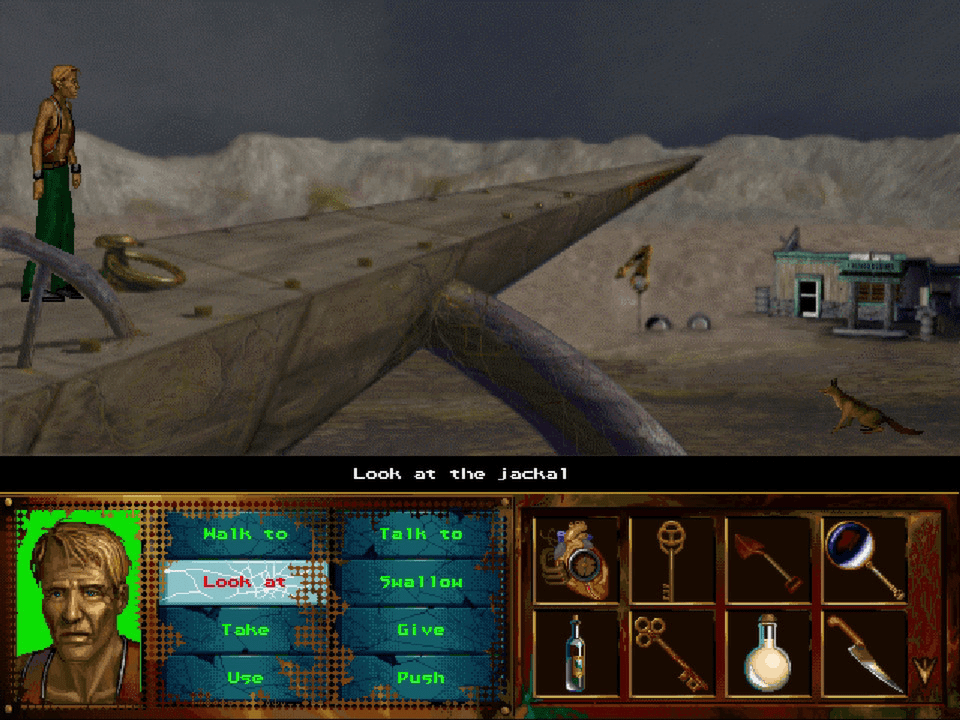
Anyone who’s familiar with Space Quest or The Secret of Monkey Island will instantly recognize I Have No Mouth as a point-and-click adventure. Picking up objects, using them on the characters and the environment in various fashions to solve puzzles, and exhausting every option of dialogue with all the NPCs was a staple of computer games in that era. Sometimes, the combination of verbs and items may make little-to-no sense, such as hiding a jar of eyes in a cardboard box or wearing a blindfold to defeat a Sphinx, which was also typical of the time. It requires out-of-the-box creativity, a willingness to try anything and everything to determine the solution. A mechanic that made this game unique for its time was the inclusion of the spiritual barometer, essentially a little meter that measures morality. Good, positive actions will increase the meter, and evil, immoral actions decrease it. This is meant to act as a “health” system in the final segment of the game, where you defeat AM. The higher your spiritual barometer, the more trial-and-error puzzle solving you can perform. This mechanic is likely meant to reinforce Ellison’s belief of goodness in the face of calamity, that, through your actions, you can overcome a great deal more than you realize.

This game would be the perfect melancholic, misanthropic masterpiece if it weren’t for the weird, goofy elements which take you out of the experience. I’m sure many of you are familiar with ludonarrative dissonance, but this isn’t even a case of that. Over-the-top voice acting, wacky animations, and strange narrative choices make for a wild amalgamation. It’s strange enough having to torture small animals to solve a puzzle, now you’re having me make deals with talking jackals? Then there’s Ted’s whole fairy-tale-inspired section, where there’s so white knighting, you could mistake it for an albino jousting tournament. Ellen’s terrifying image of her attacker is a pile of clothes with an angry face on it. Among jukebox tracks of being berated, there’s one of a man mumbling. AM literally makes a Wizard of Oz reference at one point. This may have just been a problem of the times, when corniness seemed to seep its way into everything, but it harms the nihilistic tone the game is attempting to set.


Adaptations are notoriously difficult to execute successfully. What makes something like The Last of Us a critical masterpiece, while Halo is universally despised? A proper adaptation requires respect for the source material, to attempt to reproduce the same themes elicited by the original, to use the new perspective to enhance the way the story is presented. It is not enough to just bring the plot, characters, and themes to a new medium; there has to actually be something done with it that couldn’t be accomplished in its original form. Retelling the same story in the same way isn’t engaging for the average audience, and it won’t attract non-gamers curious about the property. Stray too far from the source material, however, and you wind up with a product that may not be just unfaithful to its original, but downright spiteful toward it. It’s a careful balance that only rare exceptions have managed to achieve.

With a short story, you are limited in how much of the narrative you can expand upon. It’s in the name; “short” story. While you can deeply introspect from the point-of-view of one character, you don’t have as much space to fully develop every character or investigate items which builds the world more. Even writing from the perspectives of multiple characters can be challenging for some readers, attempting to keep track of all these separate plot threads. With a game, however, the audience can interact with the media in a far more active manner. They can explore the levels, admiring the literary landscapes brought to visual reality. They can speak with the characters and learn more about their pasts and personalities through individual dialogues. They can even influence the endings, depending on the kind of game. The page and the screen are completely different modes of engaging with media. It is up to the adaptor to channel the source material and present it in such a way that it takes advantage of the medium. I Have No Mouth, and I Must Scream is one such attempt, and whether it succeeds or fails as an adaptation is up for debate. While missing the mark in the mood it’s attempting to set, the sheer creepiness of AM, the unsettling environments you find yourself delving through, and the otherwise bleak theming of the game help to transform what was already a quality story into a slice of history.

Stellar Blade and the Gamer’s Gaze

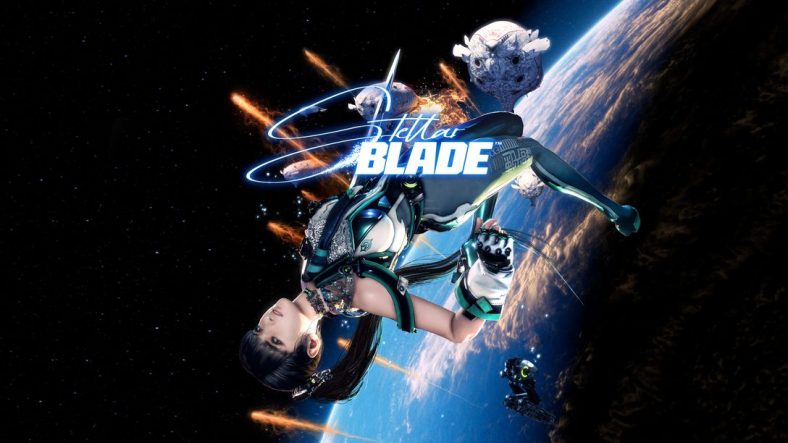
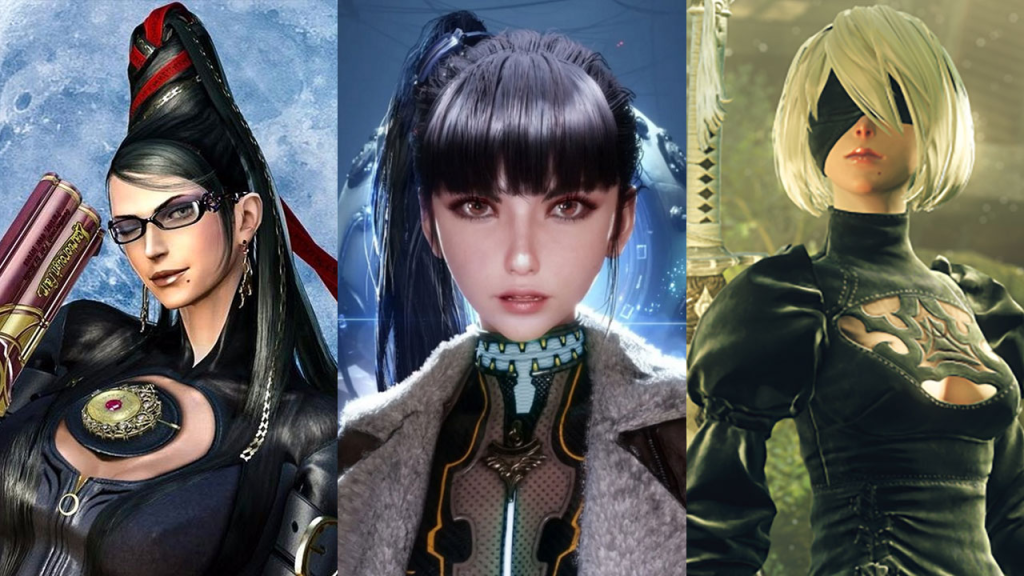
Hack-and-slash, combat-focused, over-the-top spectacle. These terms are all used when describing the wide catch-all net of character action games (CAGs), which prioritize mastery of melee combat, usually contain a massive variety of combo attacks players can use, and often evaluates those techniques with a score or points system. Within this field is an emerging subgenre of what I call sexy action games, where the protagonists of these combat-driven games are attractively designed women. This wasn’t supposed to be a discussion on whether games like Bayonetta, Lollipop Chainsaw, and Nier: Automata should be made, or the design philosophy behind creating a purposefully beautiful woman as a protagonist; rather, my intent was to introduce you to the topic at hand as a prelude to why discussions about Stellar Blade‘s merits as a game exist, and from there, focus solely on the game itself. Unfortunately, the two topics go hand-in-hand in today’s ever-charged world.

Eve, a member of an airborne squadron of cybernetically-enhanced fighters, is dispatched to the remains of Earth to fight the Naytiba, a parasitic alien race that have taken over the planet and wiped out humanity. With her squadmates being slaughtered around her, Eve is saved by the appropriately-named Adam, a human living in the last known major settlement on the planet. Eve needs to discover the true source of the Naytiba, why Earth became a warzone, and the purpose of her own existence as she takes on the threats to humanity’s legacy. She carves her way through enemy minions and monstrous bosses in order to save humanity from dangers that seek to rewrite history.

As with other character action games, combat is the primary focus of the gameplay. Using a unique hair ribbon that doubles as a sword and a drone which can convert itself into a gun, you start off with only some basic attacks, a parry, and a couple of special moves. Through understanding the back-and-forth clashes between enemies, you open yourself up to new abilities and movesets that widely expand your approaches to defeating Naytibas. Sometimes, you’ll want to sneak up on one to take it down in a single attack, or try to fire at it from range to draw it out from the group its sticking in. Like other CAGs, combat is ultimately where the game shines brightest, although the gunplay itself is limited and feels more like an afterthought. Dueling a boss one-on-one is where the game feels most alive, blocking attacks to whittle away the stamina meter until you can blast away a chunk of its health all at once. Akin to Jedi: Fallen Order or Sekiro: Shadows Die Twice, combat feels like a relationship between the player and their enemy. Unlike those games, however, Stellar Blade is much easier overall. Although I certainly didn’t make it through without dying, I felt as though I began to breeze through the game by the end, massively over-leveled and with every upgrade. It takes a while before you really feel like you’re able to dance in battle, pirouetting between enemies, leaping with graceful slashes into ostentatious finishers, but it’s worth spending the time to get a feel for it all.

Objectively speaking, Stellar Blade is just gorgeous. The environments really capture the various settings, whether the overtaken ruins of a megacity, the futuristic remnants of lost technological advancement, or the sprawling carcass of the planet, now a vast desertscape devoid of life except for the parasitic Naytibas. Even these creatures are wondrous to look at, monstrous and creative in their designs. Likewise, the NPCs we meet, although humanoid in appearance, are somewhat grotesque, having cybernetic implants replacing major parts of their bodies. Much like in Cyberpunk 2077, it represents both how far humans have advanced as a species and also how much of our “humanity” we’ve lost in the same attempt. Not everything is made to be vile or melancholic to look at, however. Eve herself is given a large number of costumes, hair styles, and accessories with which players can customize her aesthetic, enabling the ability to create wildly different avatars. I found it amusing to try and give her a new outfit every time I earned a trophy, so my PS5’s media gallery would be turned into a fashion show. Some of these outfits made sense (contextually speaking), while others were gratuitous to the point of being purely fan-service. Whether that is a positive or a negative is entirely up to personal preference.

While exploring the vast swaths of land of the open world, you have plenty to do other than gaze at the environments or at Eve. Other than the main storyline, which, while predictable at times, does contain multiple endings, there are plenty of side quests and activities populating the post-apocalyptic world. Very few of the side characters who offer additional missions stand out as memorable, most falling into the same combination of cyborgs. However, the aforementioned multiple endings rely on whether Eve completes these ancillary tasks. In addition, the numerous hidden chests and caches throughout the environments can provide Eve with crafting materials and upgrade components to further increase her combat capabilities, from strengthening her Blood Edge blade to increasing special ability meters.

As an aside, I always appreciate when a game contains a fishing minigame. From Animal Crossing to Like a Dragon: Ishin!, fishing games are a welcome addition. Even if it feels wildly out of place, these moments can break up the traditional gameplay loop, providing the player a moment to wind down and focus on a less intense endeavor than saving the world. Many modern games now walk the line between linearity and open exploration or fall somewhere in the middle. By including little pastimes like this, players are incentivized to not solely focus on completing the story, but to discover what the (end of the) world has to offer.

All in all, this is a genuinely fun game, with a combat system easy to jump into but taking time to master, additional activities and minigames to occupy the player, and customization options to make Eve your very own. Nothing that might cause controversy, correct? I mention all this, spending the time to justify why this game is fine on its own, simply to contextualize things before explaining why this game became so infamous leading up to its release.

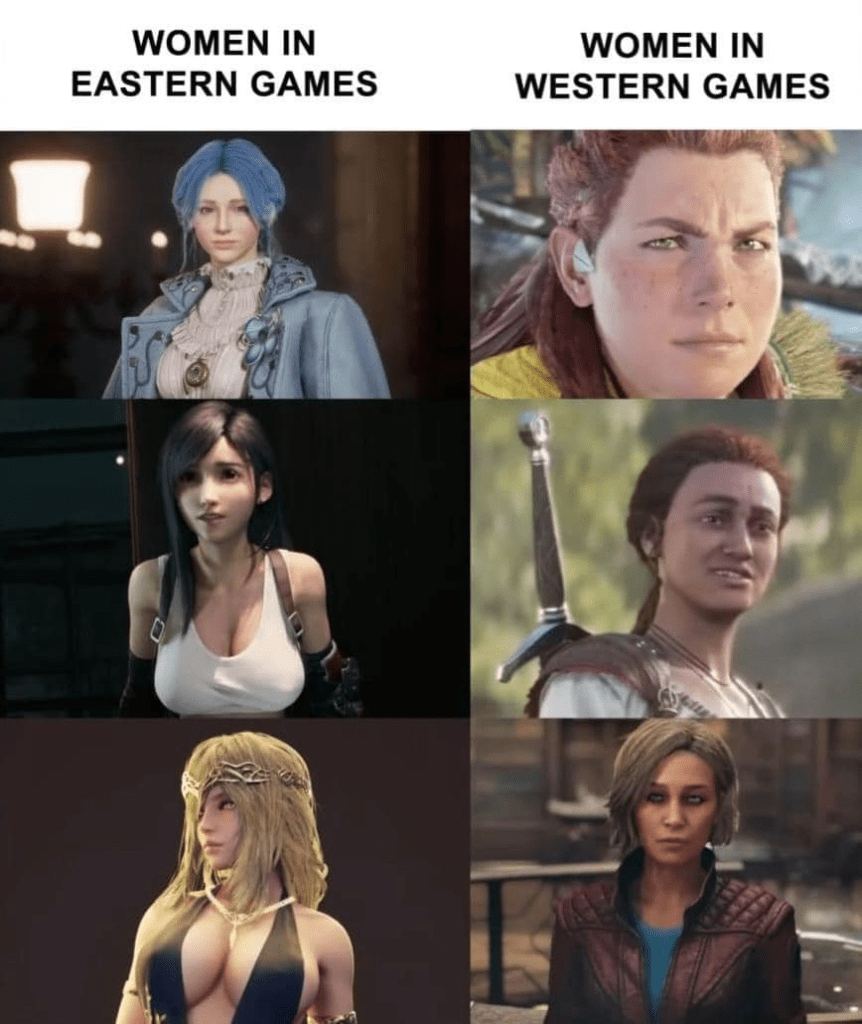
A cross-section of the western gamer population has, over the last few years, began to decry the “uglification” of video game characters. Blaming the trend on “woke culture” and “DEI practices,” there are many who believe western game developers are purposefully making female characters unpleasant to look at, as some GameFAQs users write, “so that they can be empowered with confidence, so that ugly people dont think they are left out in society”, or that “Japanese dont care about what SJW or feminist groups have to say”. They create a contrast between western developers’ character designs (Mary Jane Watson, Kay Vess, Abby Anderson, etc.) versus eastern developers’ (Tifa Lockheart, Mai Shiranui, Jill Valentine, etc.). Instead of a conversation about the objective qualities of the game, the world has been focused more on the character’s appearance than her abilities. I’m not going to pretend to try to get into the minds of game developers and why one design is chosen over another. Weren’t we taught to judge books by their covers, that beauty is only skin-deep (or polygon-deep, in this case)? Beyond just the observance of women’s bodies, some of these squabbles are filled with ignorance, like not knowing women can also have peach fuzz; or outright creepiness, like toward a character’s juvenile design; the meme below alone proves my point. Sure, I enjoy looking at beautiful women as much as anyone else, but that won’t determine whether or not I play a game. There’s nothing wrong with enjoying the artful nature of the female form, but there’s also nothing wrong with just wanting to play a game.

Although I keep repeating myself, Stellar Blade is a solid experience. The combat is fast-paced and takes some patience to master, there are plenty of exploration options and hidden collectibles to keep you searching the maps, and the mystery of the world and how humanity reached its current state are genuinely intriguing. In fact, out of all the games that came out in 2024, this was probably one of my favorites that I played. And that’s part of the problem: I don’t think it would be controversial to make that claim if it weren’t for the discourse around the protagonist. Conventional femininity, whether you consider it a positive or a negative, should not be a factor in judging the quality of the ultimate product, unless that’s literally the whole point of the product. Though now considered to be a prime example of the genre, Bayonetta was simultaneously decried and praised for the eponymous protagonist’s inherently sexualized design. Although designed with the male gaze certainly in mind, Bayonetta herself can be an empowering figure, flaunting her attractiveness as a distraction against her foes.

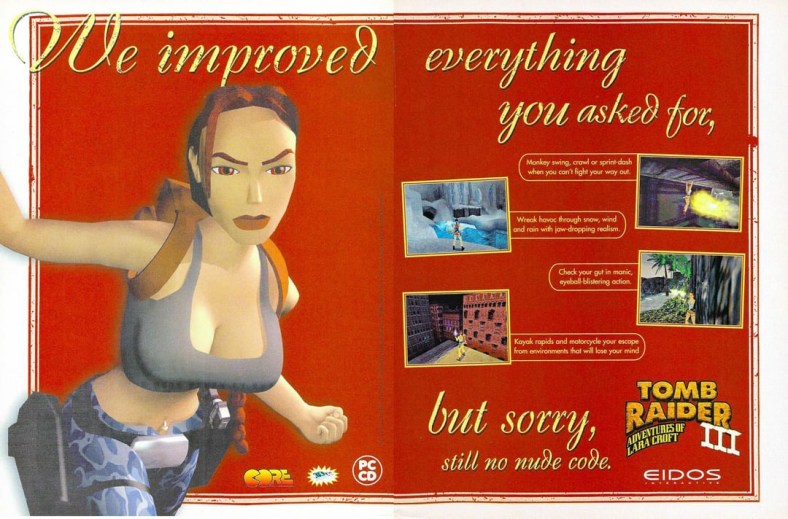
In fact, this whole discussion is entirely reminiscent of one concerning the 90s’ most popular female protagonist in games, Lara Croft. The topic of the quality of her face and body as both negative and positive-only-in-terms-of-sexuality is, in the end, a distraction and deflection from the conversation about the quality of the actual game. One element of her original design which received plenty of player focus was her large chest, a design choice which was an accident at first: “While making test adjustments to her girlish figure, a slip of his mouse turned an intended 50% increase to her breast size into a 150% gain. It met with instant approval from the team before he could correct it.” Eidos and Sony made that central to marketing the game, and so for many players, it became integral to her design. After the series rebooted in 2013, large sections of fan discussions online centered on her breast size once again, not whether the gameplay was an improvement or the changes to her character made for a more engaging story. Instead of talking about the merits of Lara Croft, we have to talk about her design and whether sexiness should be inherent in female video game characters.

This is an actual ad from the Official PlayStation Magazine, Vol. 2 Issue 1, from October 1998.

Which brings me to my main point: this was originally meant to be just a blog piece about Stellar Blade; what works, what doesn’t, what I enjoyed, what I would want to see more of. However, talking about this game cannot exist in a vacuum any longer. It will always be tied to discussions about Eve’s design, fairly or unfairly justified. This is a good game, but I can’t focus on it alone because any conversation about the game will lead back to the topic of its protagonist’s aesthetics. So now, I have to take time out of my day to talk about why it’s okay for everyone, whether masculine or feminine or feminist or anything else, to play a game with an attractive female protagonist.

Among the countless controversial topics concerning the game industry is the consideration of whether men should have to play as women protagonists in games. Discounting the fact that women have had to play as men for years without any say, video games are a form of fictive entertainment. They can enhance our comprehension of our own world around us while also being an escape into an alternate reality. If you can suspend your disbelief long enough to play as the sole hero saving the universe from total destruction, you can suspend it just a bit longer for that hero to be a heroine.

RetroSpective: Luigi’s Mansion

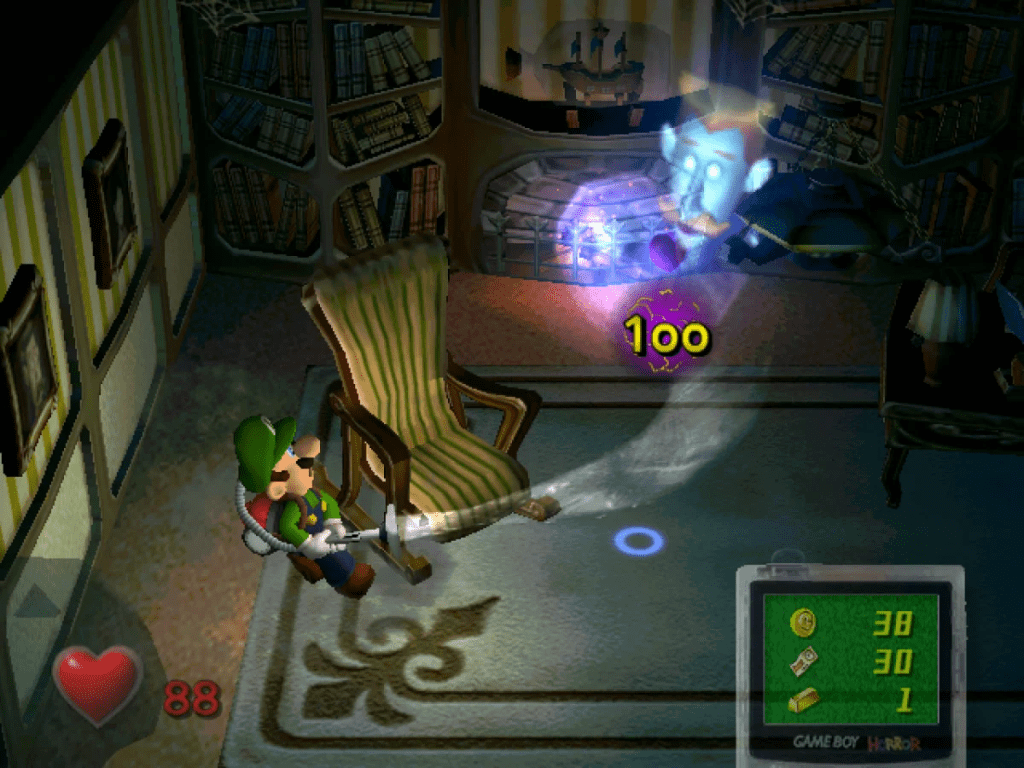
Over the last 20 years since I started getting into video games, I’ve probably played well-over 150 separate games, everything from action-packed shooters to choose-your-own-adventures. Every so often, I find myself yearning to play one of these classics again. Modern games have many quality-of-life improvements and many more hours’ worth of content, but there’s a reason that some titles stand the test of time while others are only good for a single playthrough. This is part of a series of entries wherein I talk about games I’ve already played numerous times over the years, but now taking an even closer examination into them. While some of the games I’ve written about before are just as old, it was my first time playing them when I wrote about them. These games, I’ve beaten multiple times and tried to experience everything the game has to offer.


I’ve always had an affinity for Mario’s green-clothed sibling. As the youngest of four in my own family, I naturally assumed the role of the “little brother,” even with three older brothers to bicker among themselves concerning the pecking order. And even when we played Mario Party and the like, I tended to select Luigi as my avatar. Unassuming, not in the spotlight, ready to prove himself, supportive of his family. I believe those describe both myself and the junior plumber quite accurately. Not counting the 1990 LCD watch game Luigi’s Hammer Toss, nor the 1993 officially licensed educational game Mario is Missing!, Luigi has never had his own starring role. (Look at that, the first game in which he’s the main character, and it’s the year I’m born. Yet another connection I just realized while writing this.) Even in Mario is Missing!, his own name is missing from the title! It wouldn’t be until 2001, with the launch of the GameCube, that Luigi finally earned the lead part in a fully-fledged game: Luigi’s Mansion.

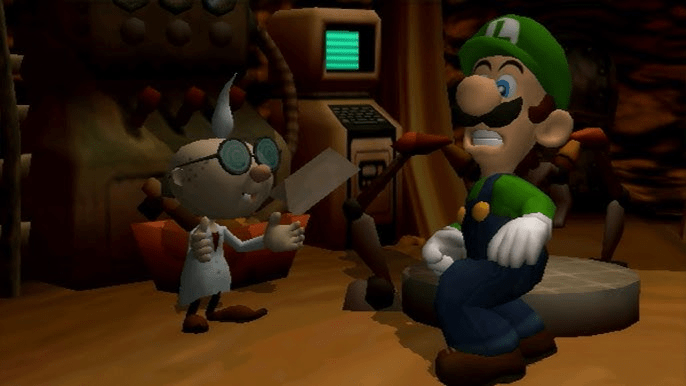
The eponymous character is notified that he has won his own mansion in a contest he never entered, and so he and brother Mario agree to meet up at Luigi’s new digs. Not far inside the sinister and spooky-looking estate, he’s attacked by ghosts and saved by the pint-sized Professor E. Gadd, who tells Luigi he witnessed Mario disappearing into the building along with the spirits he had converted into paintings and which somehow escaped. The mad scientist equips Luigi with the Poltergust 3000 vacuum cleaner and a Game Boy Horror and sends him off into the manor to find his brother and capture the ghosts inside the Poltergust’s containment chamber. Luigi learns that King Boo manifested the mansion in order to catch both him and Mario, and must defeat the inhabitants of the haunted abode in order to reach King Boo and rescue his captured brother.

Nintendo tries to innovate with each new game or console they invest their time in, and Luigi’s Mansion is a true iteration of that philosophy. Unlike previous Mario games in which you might be expected to complete platforming challenges, you stun specters with your flashlight and suck them up with the vacuum, clearing the mansion room-by-room of ethereal villains. The Poltergust can be finnicky to control at times, but once you start to master it, you’ll be taking on entire rooms without much challenge. You’ll even acquire upgrades to the Poltergust that allow you to wield the elements, blowing fire, water, or ice from the vacuum and enabling new methods of taking on what the game puts in front of you, an approach to game design I always appreciate. Occasionally, Luigi will have to face a portrait ghost, a special enemy that requires solving a small puzzle or fulfilling particular conditions in order to capture, breaking up the arcade-like pace of the normal ghosts you encounter and regularly asking you to think outside the box. Each one needs a unique solution in order to defeat, making each memorable in their own ways, apart from their more humanoid forms compared to the majority of other enemies you meet.

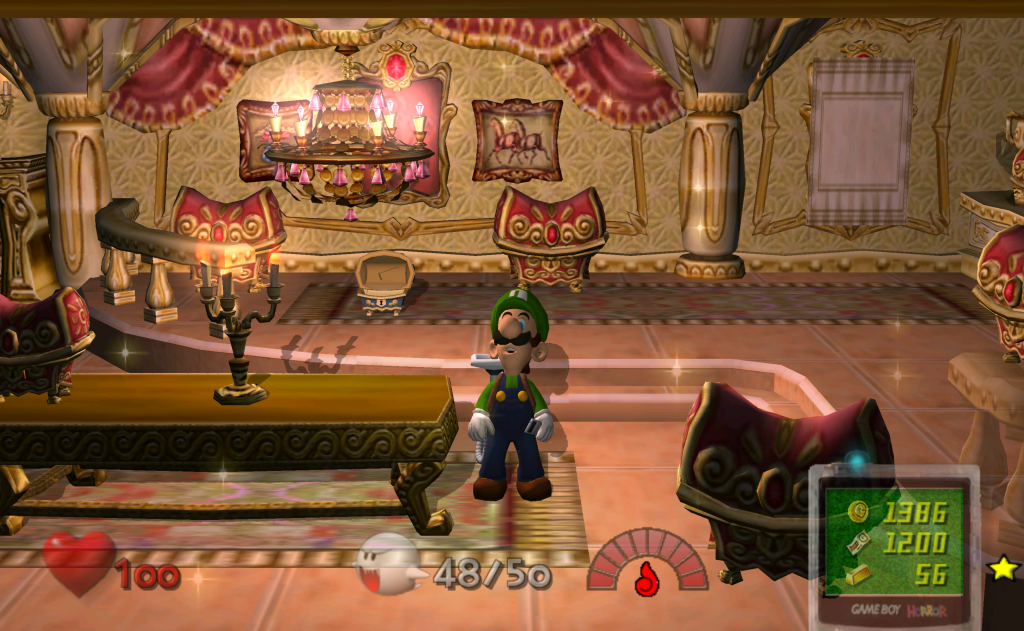
As you make your way through the haunted house and capture more ghosts, you can find treasure in the form of coins, bills, bars, pearls, and gemstones, which add to your total score and determines what kind of home you end up with upon the game’s conclusion, whether a meager hovel or an even more mammoth chateau. You can search for stashes or secret chambers throughout the game, finding ways through small holes or hidden entrances, or capturing rare ghosts that occasionally float throughout the mansion. These treasures, while ultimately unnecessary in order to beat the game, provide you with yet another additional measure of how successful you are in exorcising the mansion. That’s one of the many things games can be about, friendly competition, playing against one another, comparing scores and completion times. That kind of spirit can be found in today’s Forntite or Call of Duty, but the original arcade games of the 1970s and 1980s paved the way for competitive gaming to become a mainstay of modern culture.

Your goal is to recapture all of the portrait ghosts, fully unlock the mansion, round up as many Boos as you can find, defeat King Boo, and find your missing brother. Sounds like an overwhelming task, right? Part of the strangely sadistic charm of this game is Luigi’s fearfulness adds to the atmosphere and reflects the state of his current location. Humming along to the main soundtrack of the game, Luigi will chatter when ghosts are nearby in a haunted room, or peacefully whistle when in a lit area. As mentioned, the music of the game is infections. I find myself absentmindedly humming it even today. The ghosts’ designs are colorful and unique, giving them a sense of character that I feel are lacking in the modern designs of more recent entries in the series. The mansion itself is a character, with distinct and themed rooms scattered throughout, including a ballroom, a gymnasium, a pool hall, and even a psychic reading room. One fun recurring trope is the naming convention of the Boos, all puns using the word Boo, like PeekaBoo, Bootique, or even Booigi. These are all part of the comedic charisma Mario games contain, oozing character and style, making them immediately recognizable even when they break the foundations of whatever genre they’re experimenting with.

Having played its sequels, I can certainly say that I enjoy them, too, with their more solid gameplay improvements and the new mechanics and challenges they offer. Maybe it’s just the nostalgia talking, but Dark Moon and Luigi’s Mansion 3 are missing that special something, that rare confluence of elements that makes a game have a lasting impact. I know I’m incredibly harsh on sequels of games or narratives, often arguing they don’t have the same “oomph” that the originals had. I might also be just yearning for new intellectual properties, chasing the next big thing, the next innovative idea, but again, that isn’t to say I don’t like the later entries; you should see the number of hours I invested in Luigi Mansion 3‘s multiplayer. But games like the original Luigi’s Mansion are why I write these articles, why I’ve pursued gaming as both an entertaining hobby and academic field.

Hybrid genres, especially the intersection of horror and comedy, have become ubiquitous in pop culture, attempting to take the best of two separate fields and combine them into something which can elevate the product beyond its base ingredients. I’m not necessarily comparing Shigeru Miyamoto to Oscar Wilde. My point is that, sometimes, taking chances with something different can pay off. If this game came out the same but sans Mario elements, it might have some niche popularity in the same vein as CarnEvil or Illbleed, even being compared to Ghostbusters for their similar ghost-capturing devices, but the Mario charm is what helps to make the game stand out. The care of craft and attention to detail Nintendo is known for show themselves time and time again when they are allowed to try creating something new, and Luigi’s Mansion is a testament to that experimental ingenuity that’s made Nintendo internationally recognizable.

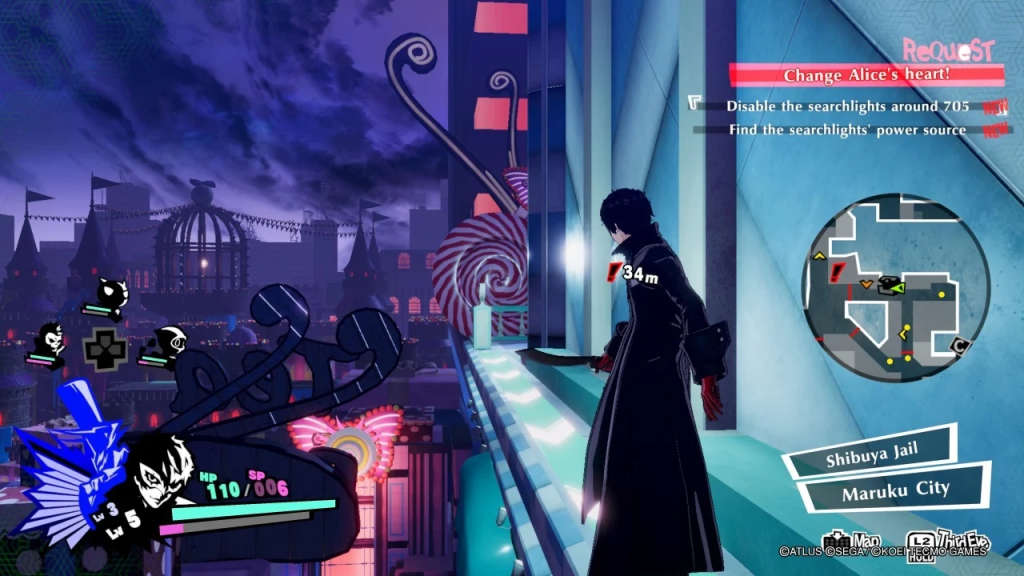
Persona 5 Strikers

JRPGs are a genre I’m more than familiar with, having grown up with Final Fantasy, Chrono Trigger, and Ogre Battle 64. Hack and slash games like Bayonetta, Diablo, and God of War came later for me, but soon became a staple of my gaming habits. However, I had never played a hack and slash RPG until Persona 5 Strikers. I was really only familiar with the Dynasty Warriors games by name, never having played any of the series entries, but when developers Omega Force and P-Studio teamed up to create a Dynasty Warriors-esque action game set in the Persona 5 universe, I was intrigued, to say the least.

Taking place following the events of the vanilla Persona 5 (sorry, Kasumi), the Phantom Thieves reunite for a summer road trip across Japan, planning to visit places including Sapporo, Kyoto, and Okinawa, and simply enjoy each other’s companies without worry of some supernatural threat. That is, until they are sucked back into the Metaverse and must deal with Jails and Monarchs, distinct from the Palaces and Rulers they had dealt with over the past year. Joined by an AI named Sophia and followed by police investigator Zenkichi Hasegawa, the Thieves must discover what is corrupting Japan and creating these new Shadows while also ensuring they have enough downtime to enjoy their summer vacation.

Gameplay is an interesting hybrid of the real-time action of Dynasty Warriors and the turn-based strategy of Persona. Throughout the Jails, you smash your way through massive hordes of enemies, using Command skills to tactically position your attacks and unleash abilities based on Shadows’ weaknesses or tendencies. These battles are appropriately epic in scale, each attack demolishing handfuls of enemies at a time or special abilities clearing the field. It allows you to fulfill a power fantasy, essentially, and there’s nothing wrong with wanting to feel powerful in a game, especially when there’s also the option to increase the difficulty. Apart from being able to control the other Phantom Thieves and their iconic Personas, Joker’s Wild Card ability, much like in Persona, allows him to capture, fuse, and control Shadows and turn them into Personas as well, using their strengths to turn the tide of battle. One mechanic that has been completely changed, however, is the Confidant system, which is now the Bond system. By handling your teammates’ requests and completing side objectives for them, you increase your Bond, which can increase their basic stats, add passive bonuses, or improve the loot you get after battles. Perhaps the largest change is that time no longer progresses based on your activities. You can exit the dungeons to explore the cities and buy more recovery items without any drawbacks, perfect for when you need to make a tactical retreat and lick your wounds.

The levels all seem much more “open” than in the original Persona games. The cities are about as wide as they in the RPG, but the Jails are much larger than their Palace counterparts. There’s more area to explore, more hidden loot to find, more enemies to fight, more ways to approach battles. This may be in virtue of the fact that battles in Dynasty Warrior games are massive, with the player literally taking on hundreds of grunts or captains at a time, but because of that, it really feels like you’re investigating an entire dungeon. Much like the originals, though, each city and Jail also has a unique and memorable aesthetic and atmosphere, whether the Shadow Wonderland of Shibuya or the technocratic utopia of Osaka. With how the regions are being affected by the presence of the Jails, they become much like their own characters with their own personalities. As of writing this, I’ve recently returned from my own trip to Japan, I can attest to how accurate this is. Protracted though my experience may have been, Kawaguchiko felt distinct from Shinjuku, from Kichijoji, from Dotonbori, and so on.

As with the previous game, the quality of writing shines through, accompanying the entertaining gameplay. The camaraderie between the characters is consistent with the other Persona entries, the Phantom Thieves feeling like a real close group of friends. Although that may be a trope in some media for “the power of friendship” to save the day, there’s something to enjoy about seeing the gang back together, each using their talents to complement one another, and working as a team to overcome astronomical odds. The inclusion of the new characters, Sophia and Zenkichi, are extremely welcome, each bringing both comic relief and serious narrative arcs. Zenkichi’s cunning is what stood out to me in particular, perfectly blurring the line between genuine stupidity and Machiavellian brilliance, and his journey of self-discovery leads to some extremely satisfying moments. Not to mention, his voice actor, Tom Taylorson, plays the male player character in Mass Effect: Andromeda, and anything Mass Effect will get a thumbs-up from me.

One new mechanic I enjoyed in particular was the addition of cooking. Having worked at Leblanc for almost an entire year, Joker became quite familiar with preparing coffee and curry, and since you’re on a road trip, you’ll want to make meals for you and your friends to savor together. You’ll acquire ingredients shopping around the cities or online and put together a snack or a feast for your squadmates. The first time you prepare a recipe, like jingusikan, crab hotpot, okonomiyaki, or sushi, you get a little cutscene of the team praising Joker’s culinary skills and describing the flavors and sensations they’re experiencing, adding to the sense of fellowship among the Thieves and literally increasing the team’s Bond levels. Of course, there is a gameplay benefit to making these dishes as well as the narrative zest. Food is used as a consumable when in the Jails, replenishing health and magic power or providing temporary stat boosts. I always enjoy when game mechanics can tie into the story and vice versa.

Even though Persona is a relatively new franchise for me, only having started with the original Persona 5, it’s quickly become a favorite of mine, and Strikers easily adds to its reputation in my mind. It oozes the same kind of style and character that its namesake is famous for, and even with the new style of gameplay, it manages to feel like a Persona game nevertheless, between the aesthetic and the writing. The story of the Phantom Thieves continues on, much to the chagrin of some of the series’ fans who desire to see a sixth mainline entry, but I’ll definitely be along for the ride as long as the band stays together.

Hogwarts Legacy

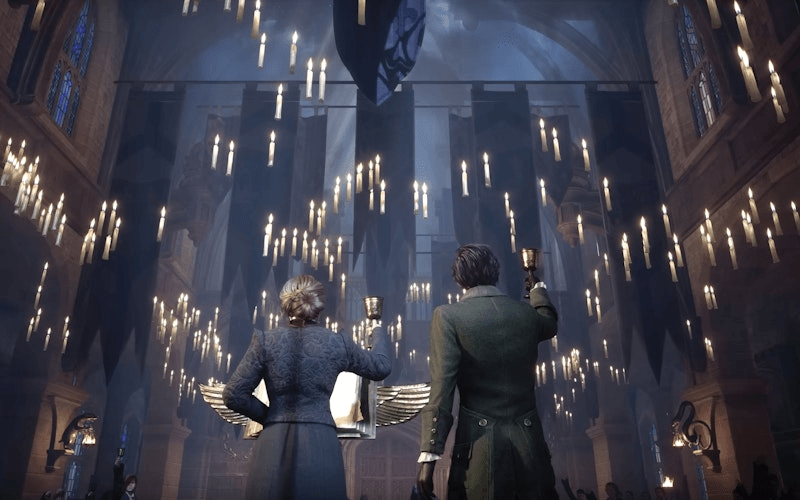
If you’re like me and you were a child in the late 1990s/early 2000s, you were probably also a fan of Harry Potter. What was there for a kid to not like? A wondrous wizarding world, replete with magical creatures, enchanted everyday items, and the promise of a spellbound education. It was more than enough for kids to start drawing lightning bolt scars on their foreheads (me included). Despite the horrendous attitude the author now has toward certain populations, the franchise still holds a special place in my heart. Any person my age would have loved to have been transported to England and attend the mystic academy of Hogwarts School of Witchcraft and Wizardry. All these years later, Hogwarts Legacy allows me to vicariously fulfill that dream even to a small extent.

Under unusual circumstances, the player begins their magical education as a fifth year. With the guidance of Professor Eleazar Fig, you discover an innate ability to sense a kind of ancient magic in the world around you as you are swept up in an ongoing conflict between wizards and goblins. As you try to discover what the rebellious Ranrok is trying to uncover, you must also devote your time to your classes, learning new spells, developing friendships, and expose centuries-old secrets that could upend the balance of power in the world.

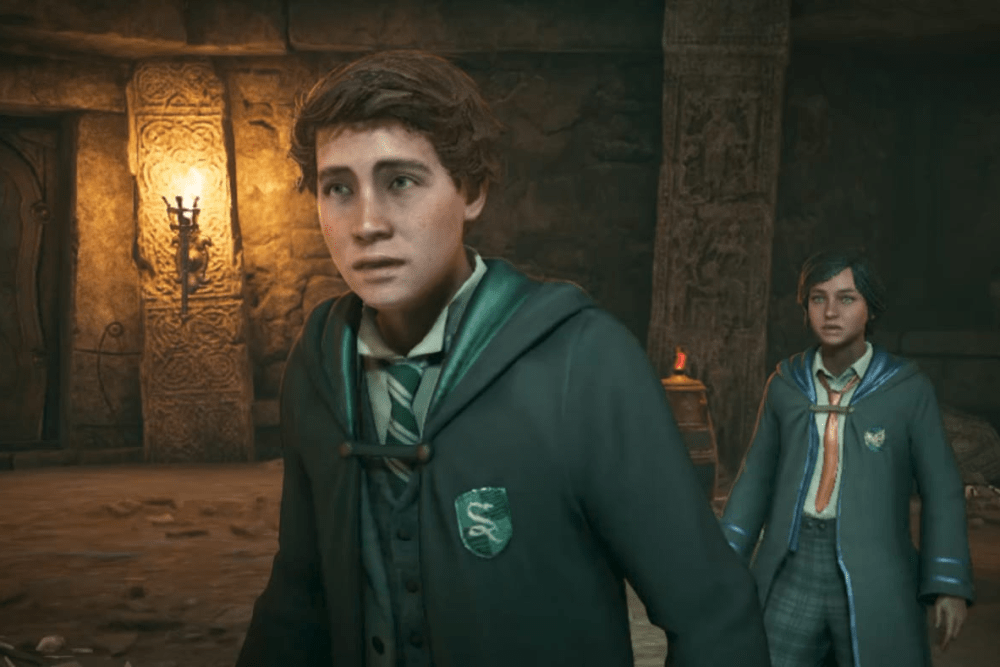
After a short tutorial on basic spellcasting, you finally arrive at Hogwarts and are sorted into one of the four houses: Gryffindor, Hufflepuff, Ravenclaw, and Slytherin. Each house’s common room is vastly different and suited toward the different types of students: Ravenclaws have a vast arcane study, Slytherin slink in the depths below the castle, and so on. While each of these rooms are gorgeous and unique, you won’t be spending much time there, which is a somewhat-wasted opportunity. Instead, you spend the following days familiarizing yourself with the castle layout, learning new spells, concocting potions, and supplying yourself with magical accessories, including your own wand. The level of customization and cosmetics available is quite impressive, allowing you to create individual avatars that will have their own special experiences throughout the school year. The character and wand creators have vast options, ensuring that your time and experience in Hogwarts is unmatched to anyone else’s.

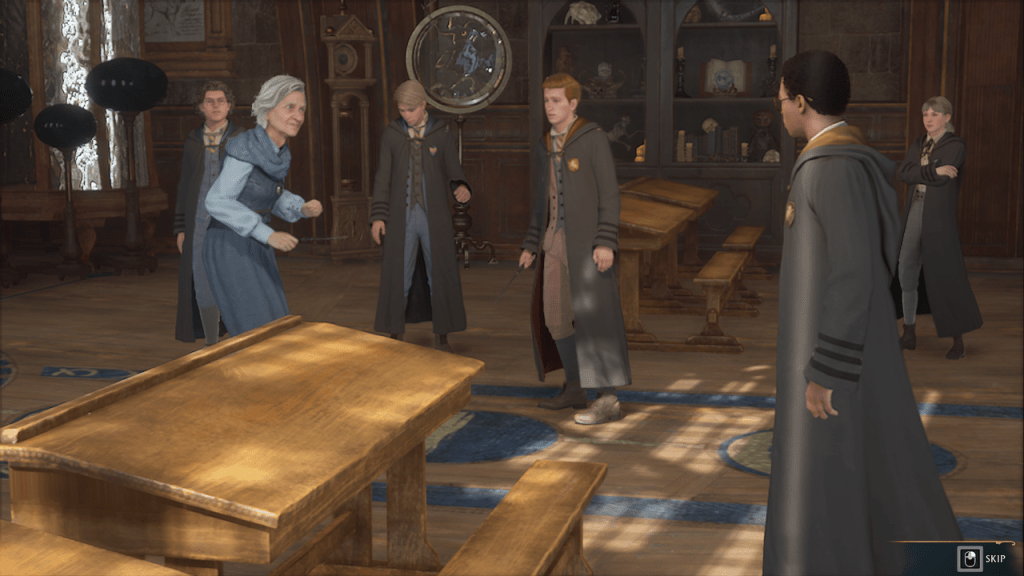
In order to catch you up to the other students’ levels, you’re given a Field Guide, essentially a magical codex that gets filled with more and more information as you find new pages or items. There’s no purpose to filling out your guide, other than for completionist’s sake, and there are an inordinate number of challenges to complete and items to acquire to fully complete it. It takes a lot of busywork to fill out all the pages, but I suppose that’s also part of the point, to help amplify your magical repertoire and bring you to where a fifth year should be. As you complete your guide, however, you’ll find yourself journeying through the massive game world. The best part is being able to explore the castle grounds, the village of Hogsmeade, and the sprawling Scottish Highlands outside the castle. Mysteries are hidden around practically every corner, with puzzles to solve and treasures to find. You may find yourself face-to-face with the poltergeist Peeves, harassing students at every opportunity, or you may find a secret passage that requires clever thinking in order to uncover the enigmas within. Once you unlock flying mounts, like the broomstick, you’ll find yourself soaring through the air, across the forests and lakes, and simply taking in the beautiful locations around you. Each section of Hogwarts and Hogsmeade is beautifully rendered, providing you with hours of wandering from class to class. The courses themselves should all be familiar to fans of the series: Charms, Herbology, and, of course, Defense Against The Dark Arts. Each professor has special spells to impart upon you, widening your array of abilities that will aid you in your excursions and adventures.

Likewise, you’ll meet many fellow students during your time in Hogwarts: bold Gryffindors like Natsai Onai, loyal Hufflepuffs like Poppy Sweeting, or conniving Slytherins like Sebastian Sallow. These three students in particular will offer their own relationship storylines, enabling you to help them grow and overcome their shortcomings while taking you across the Highlands. You may find yourself requesting assistance from centaurs in the Forbidden Forest, rescuing dragons from underground fighting rings, or battling dark wizards and goblins trying to use the land’s resources for their own selfish benefit. These moments are when the writing really shines through, exploring the complexities of living in a world where magic is an everyday occurrence. Other students and citizens will offer side quests of their own, further allowing you to delve into the landscapes, solving riddles or battling beasts. These may not offer the same depth of reward or story arcs as the main relationships, but they help to further establish the lore and mythos of the wizarding world, if you can get over the obnoxious nature of people like Arthur Plummly or Zenobia Noke.

The main story, however, does not scratch many of these same itches. For an ancient mystery with conspiratorial plots, I was hoping for more twists and turns that would give me a sense of uncovering the truth of what took place centuries ago. Unfortunately, it’s a rather basic and straightforward plot. The villains are one-note in their motivations, you never have to worry about whom you can trust, and the tale of the Keepers ends up being rather predictable. Maybe this is meant to reflect the somewhat simplistic nature of the narratives in the Harry Potter books, but even in those, you couldn’t take for granted everything that was put in front of you. There would be unexpected moments that would make you question your perspective up to that point, like what Sirius Black is really up to or who put Harry’s name in the Goblet of Fire. Ranrok and Rookwood simply want to gather power for their own ends, and you’re simply trying to stop them.

Between missions, when you need some down time or want to do some crafting, you eventually have the Room of Requirement at your disposal. Instead of your House common room, you will get to use a magical chamber that provides the user with whatever they may need. You can customize its appearance and features to your liking, decorating it according to your own preferences and filling it with potion tables, potting stations, magical looms, and creature vivariums. Throughout the world are all sorts of conjurations that allow you to further tune its characteristics with small items of flavor, like game tables, artwork, and bookcases, to name a few. These conjurations don’t add any new attributes or abilities, but allow you to alter the room to your own liking. I primarily found myself using it to identify items or gather materials from the beasts I saved, but for your own private hideaway, there are quite a number of options available to make it your own.

My experience with the Room of Requirement actually is a strong summation of my overall time with the game: there is a ton of ancillary content you can access if you wish to dedicate the time to it. None of it is wholly necessary, but it adds to the character of the game’s world. Whether you’re taking in everything the wizarding world has to offer, or you just want to get every achievement or trophy, the sheer amount of content can be quite staggering. However, Hogwarts Legacy is what you decide to make of it. If you just wish to go to classes and complete the main story, that’s fine. If you want to complete your Field Guide, more power to you. Or if you just want to fly on the back of a hippogriff, go right ahead. The magic, I guess, is in the experience.

Diablo IV: Then and Now

I know what I’ve said in the past about Blizzard Entertainment and Diablo, about not knowing whether I would continue to support the company. You have your answer, I suppose.

Blizzard games have been a major facet of my life, from being frightened by my older brother’s taunting of me by saying, “Diablo’s coming to get you,” to literal months spent on World of Warcraft characters over the course of twelve years. Perhaps my anger toward the company had faded, or perhaps my nostalgia for their past hits made me hopeful for the future, I purchased Diablo IV, played it thoroughly, and stepped away for a while, complete but not satisfied.

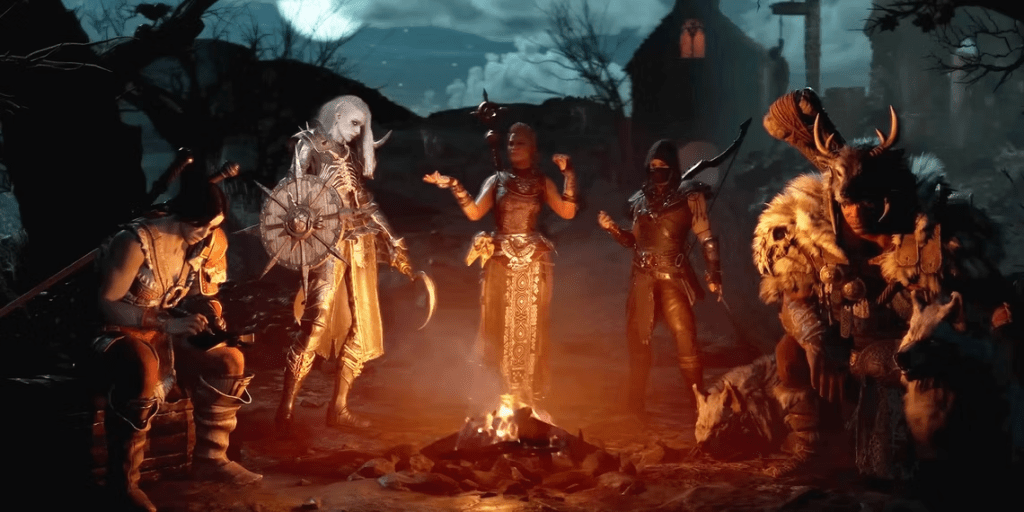
The latest in the series of angels warring against demons, Diablo IV brings players to the continent of Estuar, across the sea from Khanduras, where the first three games mostly played out. By random chance, your fate is tied to that of Lilith, a demon who helped create the world of Sanctuary that humans inhabit. As she plots a way to destroy the Prime Evils by empowering humanity through hellish rituals, the player chases her and her conspirators down, all while begrudgingly assisting the Lord of Hatred and father of Lilith, Mephisto. Slaughtering their way through scores of monsters, demons, undead, humans, and more, players gradually become more and more powerful and acquire better and better loot in order to face increasingly difficult challenges, culminating in battles with god-like beings.

It seems as though the original intent was to create a game more similar to Diablo II than III; slower paced, a deeper and more methodical leveling system, and large swathes of land to explore. However, some of the initial choices, while appearing to be a return-to-form, makes one scratch their head in confusion as one thinks deeper about the mechanics. Combat is supposed to feel strategic, a back-and-forth with groups of enemies, but my characters always felt too sluggish, even when they were built toward agility. It always felt as though the creatures would be running circles around me while I’m wheezing and puffing just trying to keep up. This wouldn’t be the worst thing, if the attacks felt weighty and significant and could greatly damage my opponents. Apart from feeling slowed down, my characters also felt supremely weak. Being outfitted with legendary equipment all modified toward specific playstyles didn’t help much to increase my capabilities either. Even in Diablo II, which utilized a stamina system allowing players to temporarily sprint, meaning you would be moving much slower otherwise, as you increased in level and acquired new gear, these mobs of enemies would just crumple into piles before you. Diablo IV made combat feel like an always-uphill battle, but never in a good way where you feel as though you’re overcoming challenges and getting better at the game, but more as though you’re slogging through mud, just trying to get a little further.

The continent of Estuar is one continuous, open, traversable environment, where players can cross all the way from the southern reaches of Hawezar to the northern shores of Scosglen without interruption. As a result of having a single map for all players, however, this meant the random generation of zones which had come to characterize the series thus far had been all but eliminated, with the exception of the dungeons. Unfortunately, this critical aspect of the game had been stripped down to the barest level possible. None of the levels varied in layout very much, all using the same tilesets and graphics; castle-like areas, cave-like areas, basement-like areas, with no variety or changes in design. Each had the same objective: kill a certain number of enemies or gather a certain number of items, reach the next floor, repeat, and then kill a boss creature. Couple this with a loot system where players never felt empowered, and the reward of completing these dungeons would lead to tepid excitement at best, and indifference at worst. Exploration had been majorly restricted, and there were now no real prizes to be earned from exploring, apart from the occasional stat-increasing Lilith statues.

That’s not to say that it was all bad upon release. In keeping with the attempt at a more Diablo II-esque tone, the graphics and visual style were much darker than in III, with a focus on the horror and demonic elements of the franchise’s roots. Gore was highly detailed, the atmosphere was utterly bleak, while each environ felt unique and memorable in their own rights. The narrative had also been given a substantial overhaul, with far more cutscenes showcasing interactions between players, companions, and various other characters, emphasizing these moments and scenes as meaningful as opposed to the basic dialogue windows otherwise experienced. Overall, Diablo IV was a step in the right direction for Blizzard, but at least for me, it still felt lacking. That doesn’t mean I didn’t take the game as far as I could during my first time with it. I tried every character class, finished the main story and epilogue, even fully completed the first limited-time season journey shortly after the game’s release. But once I had done so, I felt no reason to return to the game. I felt as though I had exhausted my desire to play and would move onto something else. And so, I did, for a while at least.

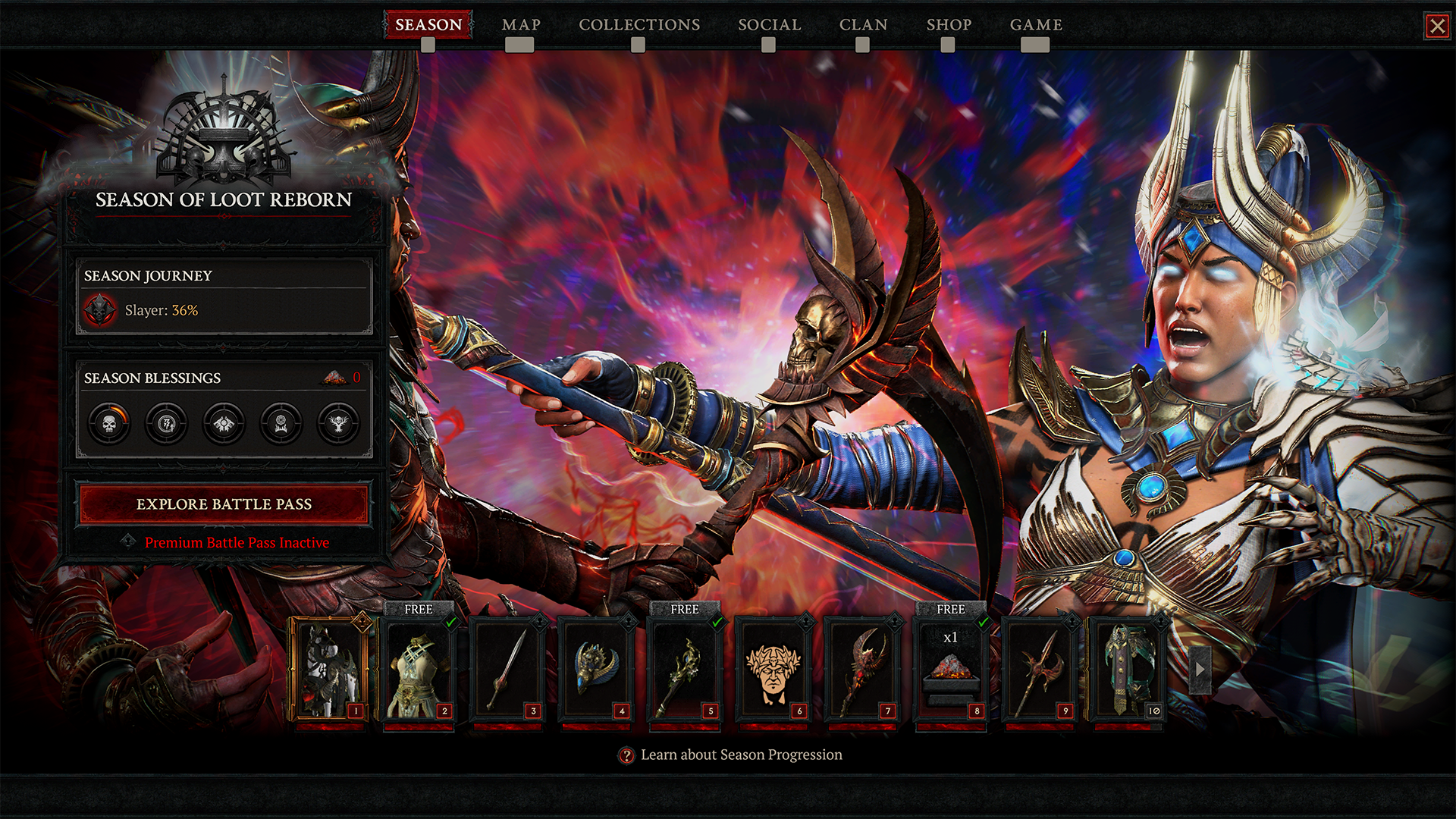
Season IV of Diablo IV, starting on May 14, just weeks before the game’s one-year anniversary, was named “Loot Reborn,” bringing about perhaps the most colossal and considerable changes to date. The stat system was streamlined in order to make selecting quality gear much easier, in addition to the rare Greater Affix weapon with even higher bonuses. Enemies spawned in much larger groups and more often. All of the player’s abilities were given more power, making it actually satisfying to fight through these hordes. Equipment could be customized even further, allowing players to modify them at blacksmiths and further tune them to unique builds.

This is what I had been hoping for and expecting when Diablo IV first came out. It felt good to fight through enemies, it felt good to find loot, it felt good to level up and acquire new abilities and talents. For the first time, the game truly “clicked” for me, and that was a moment of profound realization.

Although I dislike the idea of game publishers releasing titles too early, before they are really completed, have been tested, are free of any glitches and technical issues, and are, most importantly, fun and enjoyable to play, something which happens far too often in today’s market, developers still have the opportunity to fix and fine-tune the games until they are a gratifying experience. It happened with Final Fantasy XIV, it happened with No Man’s Sky, it even happened with Cyberpunk 2077 (another title I will have to revisit), and now it’s happened with Diablo IV. One can say it’s in order to satiate investors and board members, patching issues that should never have been present in the first place just so executives can make their profits. But it’s also possible for one to say that this shows developers never losing hope in their projects, that even if something isn’t perfect upon its initial release, it can become something better, provided it’s given the opportunity.

Imagine if ET: The Extra Terrestrial for the Atari 2600 had been given a 2.0 version. Wait, no, nevermind, forget I said anything.

God of War: From Ascension to Ragnarök

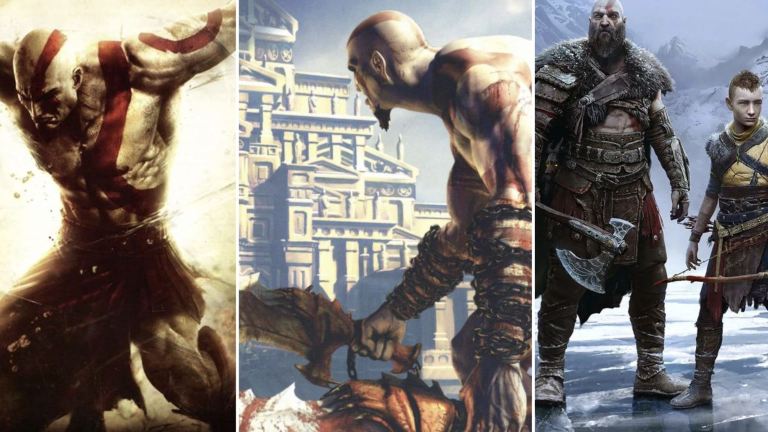
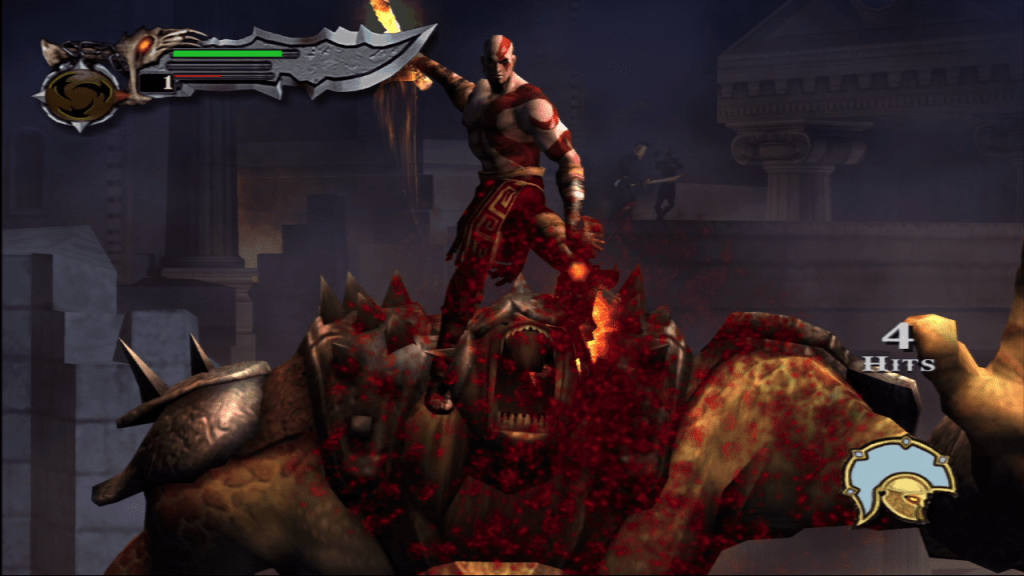
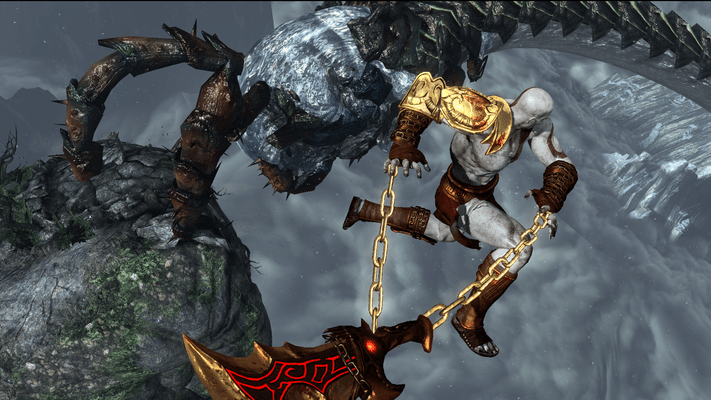
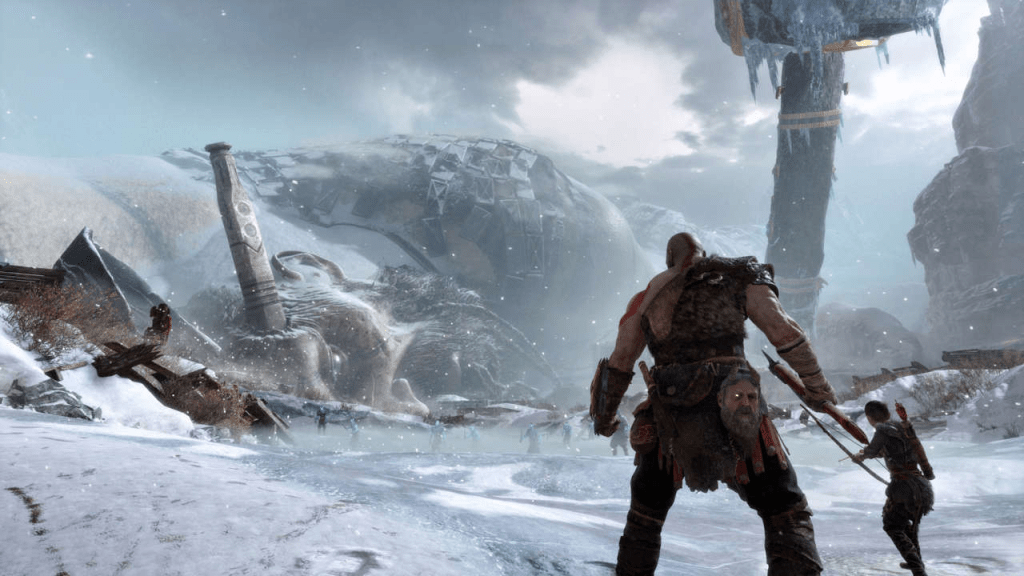
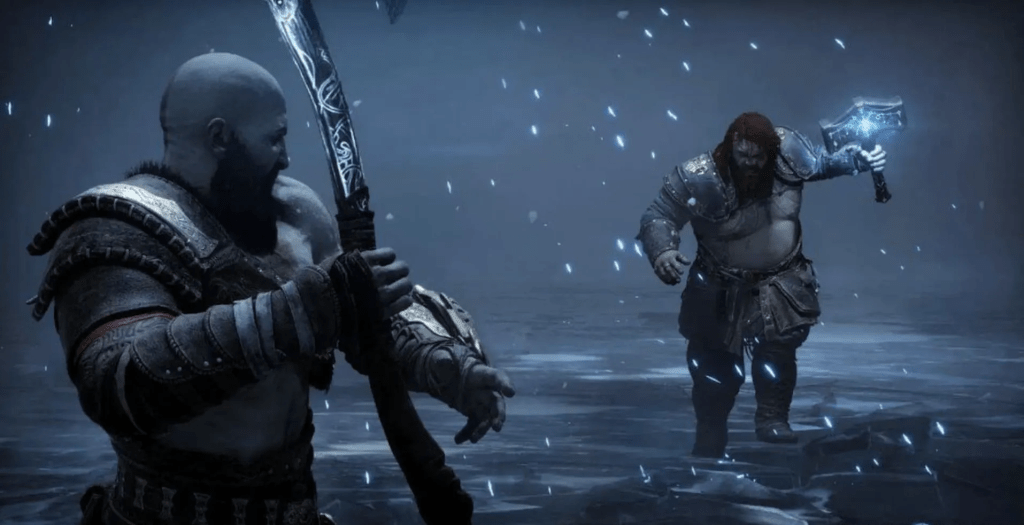
I probably started playing the God of War games when I was way too young. When the first entry in the series was released on March 22 nineteen years ago, I was only 11 years old. By that point, I had already been exposed to enough graphic media that one more piece couldn’t hurt. Apart from being blown away by the behemoth brutality on display, this was the period in my life when I was obsessed with other culture’s mythologies. Greek, Egyptian, Norse, it didn’t matter. The combination of a rich and (at the time) unique story with difficult combat and puzzle-solving, plus all of the creative ways to mutilate enemies, made me instantly a fan. It had been quite a long time since I had played any of the older games, and after finishing the Valhalla story DLC in God of War: Ragnarök, essentially wrapping up Kratos’ arc, I felt like it was time that I experienced the whole series, back to front, including the entries I had missed when I was younger.

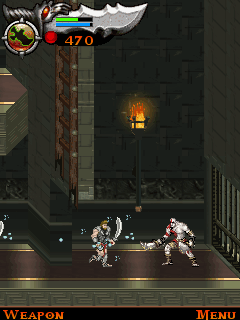
So, after digging an old PS3 out from my closet, purchasing a couple games missing from my collection, and figuring out how to get an old Java Platform Micro Edition emulator running properly, I was ready to begin.

Two quick caveats before I begin: firstly, all of these games have been beaten on Hard difficulty. Easy and Normal are good for speeding through, but Hard gives enough of a challenge without wanting to throw the controller across the room (most of the time, at least). Secondly, I did not go out of my way to find all of the canon media, like the comics or novelizations. I only wanted to play the actual games themselves.

Oh, and obviously, there will be spoilers for the entire series.


God of War: Ascension (2013)

This was only the first of three games in the entire series I had never played the first time around, so it was fascinating to play the game that was considered to be the cause of the “God of War fatigue” of the early 2010s.

By the time Ascension came out, people were tired of the formulaic gameplay and uninformative narrative that the game was considered to contain. The antagonists, the Furies, don’t feel quite as strong villains as future enemies do. The primary conflict can be summarized as “Furies help Ares and have a son who helps you, kill them or they’ll haunt you,” greatly lowering the stakes. The entire story itself, told in a confusing non-linear fashion, centers on Kratos’ memory having been lost as a result of betraying his blood oath to the god of war. Upon defeating the avatars of vindication, the memories of Kratos killing his own family return to him. If this was your first entry in the series, that would come as a surprise; however, veteran players already know this at this point, and Ascension‘s narrative does little to add to that struggle.

As with every other game across the entire franchise, the combat is fluid and dynamic, incentivizing the player to try out different techniques to take on the hordes of enemies. This time, instead of numerous special weapons and magic, Kratos wields the elemental powers of the Olympians, which grants him his special abilities, along with two combat utility items. Because of this system, magic isn’t immediately available for some of the elements, requiring you to become proficient at dodging and parrying. The Rage meter has also been completely changed, granting you a single powerful attack as opposed to temporary super strength.

All of these combat changes are a result of rebalancing due to the addition of a multiplayer mode. Players take on the role of a warrior aligned with one of four Olympians, Ares, Zeus, Poseidon, or Hades; each patron deity provides different powers and combat roles. Whether cooperating with or competing against other players, the goal is almost always the same: kill, kill, kill; making the mode seem somewhat repetitive. Each of the arena locations, however, provide unique mechanics, like a cyclops that can attack players, helping each backdrop feel more than just a change of scenery.

The boss fights, as with every entry in the series, feel sufficiently epic and massive, and enemy executions are particularly savage this time around, especially with the elephantine Juggernauts or the serpentine Gorgons (who add fuel to the fire of the great “sniddies” debate of 2021). Ultimately, had this game been released before God of War III, it might have done much better. However, the “paint-by-numbers” nature of it makes it, perhaps, the worst in the series. Don’t get me wrong, however; “worst” is a stretch. This is still a really good game worth the time to play.


God of War: Chains of Olympus (2008)

Chains of Olympus was the first of two PSP games in the franchise to be developed. I played it back-and-front as a teen, trying to experience everything it had to offer.

The inclusion of this game does throw a wrench into the overall narrative of the series. Following a semi-predictable story in which Kratos has to rescue Greece from the clutches of Morpheus and Atlas, the game ends with our hero killing Persephone, Queen of the Underworld. It should be more greatly emphasized that Kratos has now officially killed a god, as well as the primordial Furies, by this point. It’s supposed to be a big deal when he uses the power in Pandora’s Box to kill Ares in the next game because a mortal is killing a god, but “oh well, he’s done this before, and just with his normal weapons.” This is never acknowledged across the rest of the games, and yes, I know this game was released after the original, but the retcon just creates more confusion.

For being a handheld game, it delivered as much of an experience as any of the PS2 games. The graphics actually held up to console standards, which is extremely impressive for a handheld device. Each of Kratos’ new abilities feel unique and powerful. I especially liked the Fist of Zeus and am sad it only appears in the last third of the game. Surprisingly, the combat could be frustratingly difficult at times, and when coupled with unforgiving checkpoints and unskippable cutscenes, repeated boss fights or combat encounters become increasingly exasperating. What comes to mind in particular is the parrying. I don’t know why, but I had more trouble reflecting attacks in this game than in any of the others; I could never get the timing right on it.

That is not to say this is a long game. In fact, I have been able to beat it in a single sitting. There aren’t any puzzles or platforming sequences for players to get stuck on. You simply move from one area to the next, defeating enemies along the way. Overall, it’s just a portable God of War game. I wouldn’t consider it to be anything special other than the fact that you can carry it with you in your pocket. It’s also notably deflating that, while saving Greece should be a good bargaining chip for Kratos against the gods, he ends up unconscious and all his goodies taken away, ultimately caught with his pants down and nothing to show for it. No wonder he has such ill will toward them.


God of War (2005)

The one that started it all, the first game in the series, the rise of the new god of war.

This is the explanation of how Kratos, in service to the gods, gained the power to slay Ares and ascend to his throne. As he explores the labyrinthine Temple of Pandora, more of his story is revealed; his beginnings as a Spartan general, his tension with his wife and child, his pledge of loyalty to Ares to prevent being killed by the barbarian king Alrik, his accidental killing of his family, and his curse to forever be the Ghost of Sparta. Everything that the future games would build upon are established here, the foundations to the altar of violence.

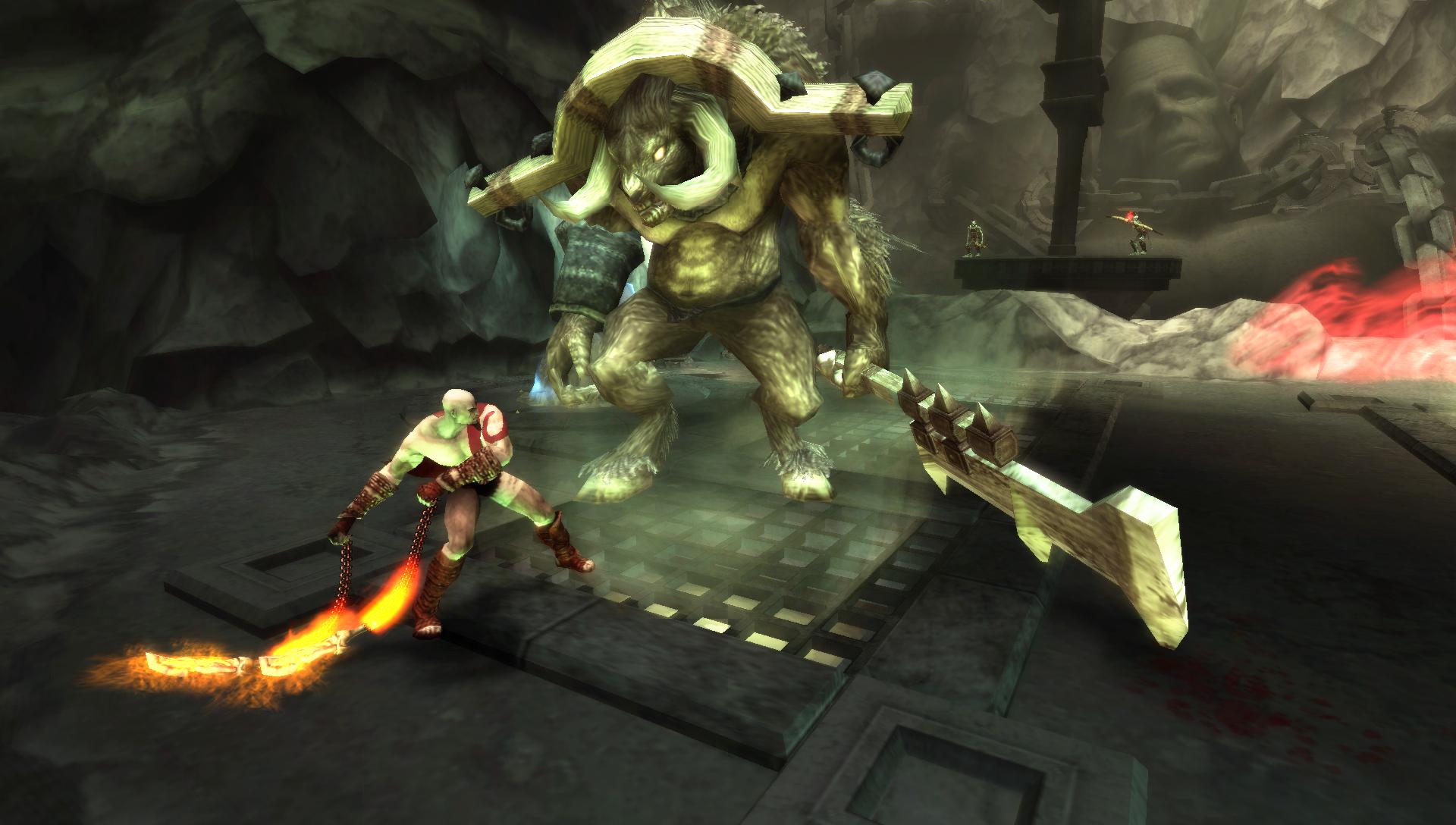
If there’s one word that can summarize this game, it would be “gratuitous.” There’s blood and nudity galore, an almost excessive amount by today’s standards. The combat feels equally epic as a result. It’s very easy to feel powerful when you’re literally tearing legionnaires in half with your bare hands. Just imagine what it must feel like to defeat a giant armored undead minotaur by staking it in the heart with a massive ballista. On the other hand, this is definitely the hardest game in the entire series. Enemies really soak up the damage and Kratos, for being a demigod, can get knocked over by a slightly errant breeze. One of the hardest segments of the game, as a result, are the rope-pulling segments, where legionnaires can very quickly surround you and pull you off, while you can only slowly pick them apart. The platforming can be equally unforgiving, as demonstrated by a certain, infamously difficult area within the Temple of Pandora: the Blades of Hades. Balance beams plus spinning blades equals not a fun time; I stopped counting after 17 deaths.

In the end, it’s indescribably satisfying to defeat Ares because it is the absolute hardest boss fight in that generation of console gaming. There are three phases of fighting him, each with unique movesets or constraints: one where you have all of your abilities available, one where you have to protect your wife and daughter from ever-spawning manifestations of Kratos’ wrath, and one where you duel with longswords. He can easily take you out with a single combo if you aren’t careful. It took me hours to finally bring him down, and I still have unpleasant dreams about the second phase.

I find it strange that Hades would assist Kratos and grant him magic powers, fresh after he had just murdered the King of the Underworld’s queen. Likewise, if the Temple of Pandora was 1,000 years old, how is there a statue of Atlas carrying the world on his shoulders, when Kratos only made that happen sometime within the last 10 years? Did Pathos Verdes know something the Fates had told him? I’m going to try to avoid nitpicking retcons, but it’s hard when so much of the base story begins to fall apart because of the newer games.

All in all, this is an excellent start for the rest of the franchise. Everything we have come to know, expect, and love about the future games originated from here, setting the high standard for which every other entry would attempt to surpass.


God of War: Ghost of Sparta (2010)

This was my first time playing Ghost of Sparta, for whatever reason being unable to purchase it at the time.

As the newest Olympian, Kratos uses his newfound power and influence to lead a force to the (not-yet-sunken) city of Atlantis, attempting to find the source of strange visions which plague him. What he does not yet realize is that he will rediscover the missing memories of his past, including a brother who was taken away by the gods and is chained within the Domain of Death, ruled by the primeval Thanatos. Upon learning this, however, Kratos makes it his priority to save Deimos and hold onto the last vestiges of his mortality.

Upon seeing the slaughter of Ares by the hands of the once-mortal Kratos, did the rest of the Olympians not ask, “Why are we still screwing with this guy?” Yes, it is later revealed exactly why Zeus and the rest of the higher gods turn on the newly-crowned god of war, but still, have they just not seen what this mortal is capable of? No wonder he’s so antagonistic toward them by the start of God of War II, and why the Olympians become paranoid enough to try and kill him. It also explains why Poseidon is so furious toward Kratos at the start of God of War III. Instead of retconning story elements and creating plot holes, this game is attempting to weave the overarching narrative together. Still, I like how everything that goes wrong in Greek mythology is Kratos’ fault. Atlantis’ destruction? Kratos. Atlas holding up the world? Kratos. Apollo stubbing his toe? Kratos.

Even though I was using the upscaled PS3 version, the visuals were still impressive. If that is close to how they appeared on the original PSP version, the quality of the graphics would have been equal to games on home consoles. Kratos’ varied facial expressions and rain slicking on characters’ bodies are extremely remarkable on a portable system. In these versions of the game, only really the textures and resolution are updated, otherwise the work would have to be put into remaking and rigging all of the models, which is absolutely ludicrous to consider. Watching captured footage of the PSP version only solidifies my point: these graphics are excellent.

What is less impressive, however, is the inflated level of challenge. There were numerous times where I found myself stunlocked by an enemy’s combo, unable to roll or block, only to end up completely obliterated when I started with a full health bar. There were certain encounters that required multiple replays in order for me to learn the monsters’ attack patterns, dodge preemptively to avoid taking even slight damage, and combo-break the enemies whenever I could. If the game is going to be cheap, it’s only fair that I use the game’s systems to be cheap myself. Ultimately, it was not that hard, but it just felt more tedious to get past certain challenges.

Other elements just left me unsatisfied, like the new Fire Meter mechanic, which would appear again in God of War III. Hold down a button during your attacks to temporarily boost their power, and letting go of the button allows the meter to quickly refresh. However, I felt like it didn’t add much complexity to the combat, just something additional I had to look out for. And it might just be me, but the red orb chests were in extremely predictable places this time around. Maybe it’s because I’ve studied game development or maybe it’s because I’ve played these kinds of games many times before, but I never found the “secrets” to be all that secret.

In the end, I thoroughly enjoyed this entry. Callbacks, like the Callisto boss fight, and foreshadowing to future games, like with the sinking of Atlantis, make Ghost of Sparta an excellent tie-in.


God of War: Betrayal (2007)

The last of the God of War games I had never played before, this one was a little difficult to acquire. Primarily compatible with old Nokia and Sony Ericsson cellphones, Betrayal had never been released for any other platform, hence my necessity to find a Java ME emulator and a working JAR capture.

As Kratos and his army kill their way across Greece, an unknown assassin attacks and kills the creature Argos, framing Kratos in an attempt to turn the gods against him. He chases this assassin across Greece, and eventually, Ceryx, son of Hermes, attempts to stop Kratos and warn him of the consequences of his rampage. However, the god of war kills Ceryx, the assassin escapes, and the Olympians are further distressed by Kratos’ actions, hastening their eventual retaliation.

It’s an old mobile action-platforming game; there’s not a whole lot more to say. The controls were finicky, with Kratos sliding around the screen, perhaps a symptom of the emulator, but also perhaps poorly-designed. Some of the design choices were puzzling, in particular allowing the minotaur execution minigame to be canceled out by the environment. If part of the attack is blocked by the ceiling, the attack animation simply stops, leaving the player literally stunned and unable to move. The actions available to the player are extremely constrained, limited to back-and-forth movement, jumping, a basic attack, magic spells, and a sub-weapon, but you’ll never need to use most of these. Your regular blades will often do the trick the vast majority of the time; I was able to beat the entire game without upgrading anything other than the Blades of Athena and mashing the attack button. The story is ultimately insignificant, with the identity of the assassin never being revealed and the Olympians already having animosity toward Kratos. The music, which is almost always a core staple of the franchise, is negligible here, severely lacking in this important regard.

I don’t want it to seem like I have nothing positive to say about this game, however. The sprite work is very good for 2007, with each character, enemy, and background element standing out. I could see myself having used these sprites in old, now-long lost comics I once made. I was also appreciative of the forgiving checkpoints, the game seeming to auto-save every few steps I took. This was helpful, as the game itself isn’t particularly difficult but I still found myself dying a lot anyway, primarily because of the platforming and being stunlocked during the minotaur execution.

It only took me around an hour to beat this game. There really isn’t anything else to write other than that. I’m glad I played it, but the juice was not worth the squeeze.


God of War II (2007)

If there’s anything that sums up my experience with God of War II, it’s this little factoid: I had been playing and gotten to about halfway-through when I realized I hadn’t taken a single note yet. I was just having too much fun playing the game. God of War II was always my favorite of the original games, and I think it still is.

At last, Kratos’ crusade through Greece has gone too far, and Zeus traps and kills the god of war after an epic battle in Rhodes. However, he is rescued from death by the titan Gaia, who aids Kratos in finding the Sisters of Fate to change his past and defeat Zeus when he is vulnerable. While killing his way across the Island of Creation, he fights mythic heroes like Theseus and Perseus, monstrous creatures like the Gorgon Euryale and the undead Barbarian King, and eventually encounters the Fates themselves: Atropos, Lakhesis, and Clotho. When they refuse to change destiny, the god of war does what he does best, returns to the past, and nearly kills Zeus, but because of Athena’s interference, she is instead killed, revealing to Kratos that Zeus is his father. The game ends with Kratos returning to the distant past, to the Titanomachy, recruiting the titans to the present in order to lay siege to Olympus. I have no time to get into the plot holes caused by this game with the inclusion of time travel. Suffice to say, as with all time travel stories, you have to just either accept it or else let the premise completely fall apart.

The balance of challenging combat and elaborate puzzles is at its peak in this game. I never felt stuck for significantly long, even on the hardest difficulty. That’s not to say I prefer easy games, but I enjoy them more when the challenge is fair. As an example, the boss fights in this game are nowhere as frustrating as in the original. Euryale and Theseus are supposed to be the two hardest enemies, and yet, I managed to beat them in roughly five attempts each. Just to compare, it took me twice as long to beat the Cerberus Breeder in the first game. Likewise, as hard as the fight with Zeus was, I still was able to take him down much more quickly than Ares, an encounter that I had to spread out over days to overcome.

Maybe it’s just me, but I never loved using the sub-weapons in these games. This time around, we have the Barbarian Hammer and the Spear of Destiny. Reading about them online indicates that they’re both effective weapons once you invest experience into them, but after putting so many into the Blades, it feels like a waste to use the other weapons. I was also not as big a fan of the magic this time around. I don’t know why, but they did not feel as iconic nor as powerful as the abilities from the first entry. However, upon beating the game and unlocking Bonus Play, you are able to use the Blade of Olympus, by far the best weapon and one of the most recognizable across the series. There are a number of emblematic designs that originate from this game, in particular, Kratos wearing the Golden Fleece or in his God Armor. One neat inclusion that doesn’t necessarily affect anything, and yet I found myself enjoying, was the addition of the Status Screen in the pause menu, which tracks how many enemies you’ve killed, times you’ve died, times you’ve saved, and other statistics. I always found those to be a neat way of tracking progress.

Even though this game was developed before prequel entries like Chains of Olympus, it’s really great to see them setting up elements they would explain later, like Atlas blaming Kratos for being forced to carry the world on his shoulders. It’s nice to see them setting things up that they would explore later, emphasizing how impactful and important this game is to the rest of the franchise.


God of War III (2010)

The end of an era, the culmination of years of bloodshed, the desolation of the gods. This is what is promised to players within God of War III, and that is exactly what we get.

Betrayed by the titans and denied his revenge, Kratos has to climb from the Depths of Tartarus to the very peak of Olympus, dismembering deities as he makes his way up the mountain. It is during this ascent that he encounters the homunculus Pandora, a creation by the god Hephaestus, a girl trapped by Zeus as the key to reopening her eponymous box. Only by plumbing the hidden caverns of the gods’ home will Kratos discover not only the means to defeat the Olympians, but also reclaim the missing remnants of his humanity. Despite this game focusing on the twilight of Olympus, it was the most thematically hopeful game yet, a sentiment I thought felt didn’t belong at the time. To this day, I’m still not sure whether its current execution fits.

Both the PS3 and PS4 versions of this game look gorgeous, from the detailed environments to the goopy and jam-like blood, to the unique character models of humans and creatures you encounter, and beyond. Everything has to look and feel just right for a gratifying conclusion. Because you’re fighting the most legendary of beasts and gods at this point, it’s only fair that the boss battles feel sufficiently big, and God of War III excels at that. Beginning with the Poseidon fight as you and Gaia scale the mountain throws you right into the action, something for which the series has come to be known. In particular, however, the Chronos fight stands out as memorable. You climb across his body, slaying enemies on his arms as you systematically tear off fingernails and rip open his torso. Brutal, and a perfect example of the methods of death available to Kratos.

Across the entire game, though, the combat depth has been adjusted. The combat feels “weighty;” the slight delay in your dodge roll, the flowing through weapon combos, the grappling of each enemy; every action has heft to it, reciprocating a sense of satisfaction as you make your way from group to group. This is somewhat reflected in the new weapons available to Kratos. Instead of unique sub-weapons, this time, three out of the four you receive are essentially swords on chains: the default Blades of Exile, the Claws of Hades, and the Nemesis Whip. Only the Nemean Cestus are different, as weaponized gauntlets. The combos and magic abilities available to you change depending on the weapon in use, but for the most part, all of them feel like extensions of the Blades.

The part that always sat uneasy with me was the idea of hope saving the day. The evils which corrupted the Olympians was unleashed when Kratos opened Pandora’s Box in his quest to defeat Ares, but also released was the power of hope, which has been within Kratos all this time, giving him the strength to persevere and annihilate the gods. It was like the kind of ending you’d get in a cheesy anime or a Saturday morning cartoon. It always felt too sentimental for me, and God of War wasn’t necessarily about sentiment. Little did I know how the series would not only eventually make this work, but create an even-more thrilling and rewarding experience through its use of sentimentality.

Nevertheless, I was immensely surprised by the post-credits scene, where, after Kratos stabbed himself to release hope to the ruined Greece, we see a trail of blood leading to the torrential seas. This was not the end of God of War, even if it was the end of the Greek saga.


God of War: A Call from the Wilds (2018)

I’m lucky that friends of mine had invited me to attend PlayStation Experience 2017 with them, because had I not, I probably would never have been able to try this piece of lost media.

Once accessible through Facebook’s Messenger service, this defunct game now exists only in YouTube videos and articles such as this one. While it’s odd to think of this game as only appearing on a social media app, it worked well as a text parser, a modern kind of text-based adventure game, in the vein of Zork or AI Dungeon, although the game came with collectible artwork to help set the mood and get players prepared for the new entry. A prequel to the then-upcoming newest entry in the franchise, players took control of a boy living in the woods with his mother as he assists her with various tasks, being captured by vicious undead Draugr, and eventually taking control of an ashen-skinned man with a red tattoo across his head and chest. While I did not know it at the time, this was the first look we had at Kratos and new family, his wife, Faye, and son, Atreus, after he settles down in the Norse realms. How he got there is yet unknown to us, but it was comforting to see that the former god of war had managed to leave his need for vengeance behind him in some regard.

Atreus, long before learning about his godly heritage and awakening to his powers, can hear and feel the thoughts and emotions of animals around him as he explores the area around his home. A lot of the narration during his segment focuses on how empathetic he is and the power of that empathy already manifesting. As Kratos, however, the only real tasks required of you are to absolutely destroy the Draugr attacking Atreus, and then to either scold, ignore, or advise his son. We already get a glimpse at the upcoming dynamic that would be the base upon which the newest game would build, the tension Kratos has with his child, hoping to lead him down a different path than the one he experienced in life.

That’s the primary purpose of this game: to act as a small narrative bridge between the game’s two sagas. We get a sense of what the major characters are like and the kinds of struggles they will face, as well as foreshadowing future events, such as when “You look at the strange mark on the tree. A sense of comfort washes over you, but you aren’t sure what the marking means.”


God of War (2018)

Solemnly, Kratos cuts down a tree marked with a yellow handprint, and with the help of his son, Atreus, they bring it back home to complete the funeral pyre for the now-deceased Faye, promising to carry her ashes to the highest peak in all the realms. This stark, emotional opening, with minimal dialogue and presented mostly through facial expressions, sets the tone perfectly for the new direction down which God of War has gone.

Everything that was familiar and comfortable to past players was left behind in Greece. It was very strange seeing God of War with Dark Souls-like combat, an RPG leveling system, open-world exploration, and a narrative rooted in forgiveness and redemption, but it all works. The combat requires a whole new level of strategy, having you consider your actions and counter the enemies’ powerful attacks, as opposed to blitzing in with spinning weapons. The Leviathan Axe is one of my favorite weapons in the series, between the sheer power behind each attack and the ability to throw and recall it, like Thor’s mystic hammer Mjolnir. Exploration never felt like it dragged on, as hidden chambers and various side quests could only be unlocked by advancing the story further. Originally a solo adventurer, Kratos is now joined by a pair of Dwarven brother blacksmiths, Brok and Sindri, and the reanimated head of the smartest man alive, Mimir, all of whom are laugh-out-loud funny at times, even if they get on Kratos’ nerves. All of these new inclusions could have felt wildly out of place if implemented improperly, but Santa Monica Studio took care to craft an unforgettable experience.

Kratos has more than mellowed out by this point, but we can see him making many of the same mistakes that he is attempting to avoid, telling Atreus, “We do what we please, boy. No excuses,” and, “Close your heart to their suffering.” This only adds fuel to the fire once Atreus begins going through his moody and angsty phase, and absolutely reinforces why I do not want children of my own. As you progress and their understanding toward one another increases, after completing combat sequences, Kratos will go from giving Atreus criticism eventually to praise. These small moments of interaction between father and son help to further establish the strong character arcs that act as main narrative throughlines across the game’s story.

By far, my favorite portion of the game is when Atreus falls sick and, needing to explore Hel in search of ingredients for medicine, Kratos must reclaim the Blades of Chaos, hidden beneath the floor in his home. Everything, from Athena’s appearance and taunts to the subtle red vignette signifying Kratos’ inner rage, is absolutely sublime, culminating in the moment when Kratos admits he is and will always be a monster, “But I am your monster no longer.” As a fan of the entire franchise, this feels like the satisfying conclusion to the Greek saga that I was missing.


God of War: Ragnarök (2022)

To summarize my feelings about God of War: Ragnarök, everything about this game is bigger and better than its predecessor. The combat has more complexity, there’s more variety in the optional content, and the narrative depth is oceanic. However, I still prefer 2018’s God of War because of my emotional connections to the references to older games in the series. Essentially, this is brilliant, but I like this. That’s not to say I didn’t thoroughly love Ragnarök. On the contrary, it was probably my Game of the Year for 2022.

Upon learning that his son, Baldur, was killed by Kratos, the Allfather Odin surprisingly agrees to leave Kratos alone so long as Atreus stop searching for the lost god of war, Týr. After dueling with Thor and fleeing their home, the pair actually rescue Týr from another realm, and are slowly dragged into the building conflict between Odin and all others that will lead to the apocalyptic battle of Ragnarök, the effects of which will be felt across all of the Nine Realms. In an attempt to subvert such destruction and claim a mysterious primordial power that could consolidate his rule permanently, Odin uses trickery and deceit to drive a wedge between the father and son, but fails, and the two wage war against Asgard, this time fighting to protect instead of to destroy. If 2018’s God of War is a story about mourning and recovering, Ragnarök is a story about survival and perseverance.

Odin is an amazing contrasting antagonist to everyone else across the series. Ares, Zeus, the Furies, and the rest are all bloodthirsty and lacking nuance as far as their villainy is concerned. Odin, however, is conniving, intelligent, and sneaky. His charisma almost makes you want to believe what he’s doing is ultimately the right thing, and then he goes and commits some atrocity that reminds you he is only selfishly looking out for himself. It’s a refreshing change to the straightforward villains of the previous games. This alone helps to set the tone that conventions will be broken all the way around, which Ragnarök does well. You are constantly on your toes, waiting for something else to happen, something new to be introduced. It’s not like constantly being on edge, anticipating some new enemy to come dropping out of the sky; it’s more of a sense of wonder about where else this game leads.

The downloadable epilogue Valhalla is a perfect addition to the game and an excellent excuse to add more playtime. Receiving an anonymous invitation to the land of eternal combat, Kratos fights his way through randomized groups of enemies using an ever-changing set of abilities, all as Kratos explores his past, contemplates his future, and considers whether to take up the mantle of God of War once again. I’m a huge fan of roguelites: shifting layouts that change with each attempt, choices in specific movesets and abilities, a story that only unfolds as you repeatedly defeat a surprising final boss. It requires you to master all of what the game has to offer, not allowing you to be too comfortable in one particular playstyle. Plus, all of the cosmetic options provided allow you to adjust the appearance of Kratos’ armor and weaponry however you’d like.


It is uncertain where God of War will head next. All I know is, whether following Kratos or Atreus, whether in Ancient Egypt or Shinto Japan or wherever else, I’m along for the ride.
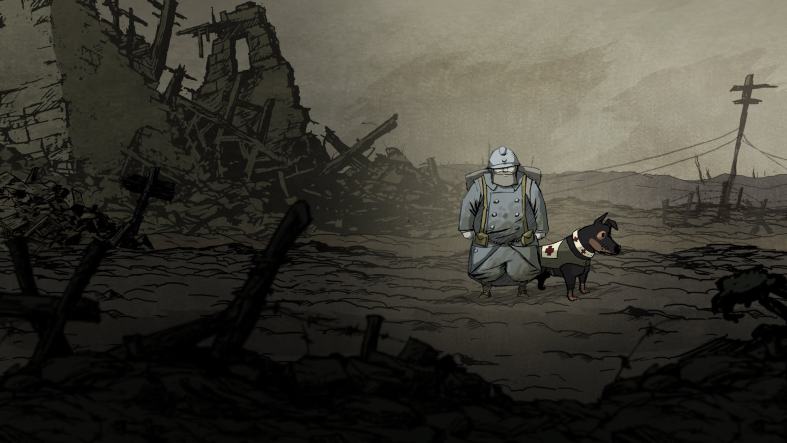
Final Fantasy XVI

Most often, after I’ve played a game, I’ll sit and let my mind ruminate on the experience before I actually begin to write anything. These miniature essays are like a stew, where I toss in the ingredients and let the flavors blend together before I present it to an audience. But from the moment I picked up Final Fantasy XVI, my thoughts have not been able to get away. Although my first experience with the series, in FF8 and FF9, were some of my favorite RPG adventures ever, the majority of entries that came out in my lifetime have yet to capture that same feeling of wonder and amazement. Even the exotic locations of FF10 or the reforged world of FF14 were not enough to draw me back into the series, but between everything that FF16 does right and the similarities it seems to share with my own writing, I find myself unable and unwilling to play anything else for the time being.

As with essentially every other entry in the series, Final Fantasy XVI takes place in a brand-new world featuring a cast of characters attempting to save it. In this instance, players are taken to the twin continents of Valisthea and play as Clive Rosfield, firstborn son of the Duke of Rosaria and sworn protector of its heir, your younger brother, Joshua. In a world filled with magic, those Bearers who wield it are considered less than human, with the exception of the Dominants who can summon powerful Eikons, manifestations of pure magic, to dramatically shift the tides of battle. It is with this backdrop that Clive’s family is betrayed, and he is sold into slavery in the Holy Empire of Sanbreque. Clive discovers the hidden truth behind the presence of magic, and thus attempts to take on the whole world in order to save it from both the ever-encroaching Blight and its peoples’ hubris, while also attempting to uncover what truly happened to his family.

The thing I love most about storytelling and writing is worldbuilding. Creating the histories, mythologies, religions, and cultures of multiple people across an entire world, making it as truthful as possible to its own reality, and FF16 works overtime to ensure that you are familiar with the lore without being inundated with it. The Active Time Lore menu, which can be opened up at any time outside of combat, allows you to review specific written entries concerning what is currently taking place. Whether you forget a character’s motivations or review the rules of magic in Valisthea, the game takes care to build a rich and dynamic realm without having to rely on exposition dumps. The faith of the Goddess Greagor, the legend of the hyper-advanced Fallen society, the various cities and battles that populate and occur throughout history over domination of the land and its magic; all of these and much more are naturally weaved into the game’s narrative, characters speaking to one another as though they actually know and understand the world in which they live. It allows the player to organically perceive the meaning of terms and events without it being explicitly explained to them. And if they require a more concrete commentary, the lore entries can provide more than enough context.

Long gone are the days of traditional, turn-based Final Fantasy combat systems. Although this was a format I loved and found nostalgic, I understand that it is a dated mechanic. It works for games of strategy, but starting with FF12, the games became much more action-oriented. Now, combat is fast-paced and frenetic, as you switch between swordplay, magical projectiles, Eikonic powers, and commanding your hound into battle. This can all be a lot to handle at once, in addition to dodging and using potions and other consumable items. Luckily for players new to the genre, the game offers both a Story difficulty setting, allowing players to focus on the narrative, and Assist accessories, which can take care of some of the game’s systems for you, automatically controlling your dodge or your potions. I admit that I even used the ring which auto-controlled Torgal, my pet dog, during combat, allowing me to instead concentrate on my own tactics versus the enemies. Despite it being real-time, the combat is definitely still tactical, forcing you to consider how you’ll approach enemies. Maybe the Phoenix’s sweeping fire strikes would be best, or perhaps Titan’s massive damage and blocking would be helpful. Luckily, the game allows for you to change your build quite often, reallocating ability points whenever you want to try new combinations of Eikons. There is no “optimal” build, as far as I know, meaning any three Eikons are just as effective as any other three, making playing through the game much more suited to your own playstyle.

One series of segments that separate FF16 from its predecessors is the Eikonic battles. Almost every act within the story is punctuated by a clash between two of these powerful magical creatures, each with different mechanics and presentations, from an on-rails shooter to sprinting across massive arms and dodging obstacles. Each of them plays differently, with the occasional familiar combat segment to tie everything together. My only complaint was that there wasn’t enough of these moments. The game definitely has them more concentrated in the first half than the second; I felt like there were at least two instances in the second half where an Eikonic battle would’ve fit perfectly.

Along with the darker new world and gorier combat, the story and writing are much sterner than in previous games. War is a common feature of the Twins, with death and treason a major presence throughout the world. The commonfolk are indifferent at best to the plight of magic users, malevolent at worst. Bearers’ treatment as sub-humans are displayed time and time again, being forced to work in heartless conditions and taken care of worse than cattle, in addition to the curse of slowly turning into stone as a result of wielding magic. Certain side quests and optional conversations you may come across during your travels further establish this, making it clear that the world you live in is not a forgiving one. There’s one in particular, called Playthings, about a little girl losing her “pet” that I think speaks volumes as to how people can treat other people so cruelly. Established characters can even be killed at any moment; no one you love is ever safe at any point. The tone is much more reminiscent of Game of Thrones and other modern fantasies, which is a pleasant break from the high-fantasy themes of previous Final Fantasy games.

That is not to say the game is depressing and gloomy. The graphics, like with any Final Fantasy, are drop-dead gorgeous, from the massive architectural wonders of Valisthea to the particle effects of magical spells. The contrast between the bright colors of magic and the dull colors of a fading, blighted world makes for a great juxtaposition. Small details like the chainmail Clive wears under his clothing, the wrinkles in the fabric, the individual strands of hair, are all rendered in glorious high definition. The Mothercrystals, vast mountains of crystal which help channel the world’s latent magic, are what stood out to me the most though. Each one is magnificent, massive in scale, awe-inspiring in their presence. Between the ruined sites of the Fallen civilization and the untamed wilderness still surrounding the countryside, the world is oozing with rich and vivid design.

Traveling the world is much more akin to Final Fantasy X-2 (yes, there’s a direct sequel to a numbered entry, and it makes the naming conventions of the games even more confusing) than Final Fantasy IX. Instead of a vast open world in which to discover every secret, the land is split into zones based on the region of the world you’re in, giving you both some sprawling segments and more concentrated, linear ones. I know this point is often a contentious one within the FF community. My consideration is that I much prefer condensed and rich stages if it means the developers can create more interesting levels with unique things to do rather than spread out over a sparsely populated world. A common complaint I have of modern games is the inclusion of an open world without much to do in it; if designers can make more interesting experiences that don’t require traversing a bare and featureless wasteland, I will always be more inclined toward those.

The major grievance I have with the game is the cast of party members; specifically, how they’re treated. While Clive and Joshua get fully realized characters with depth and desires and growth, there is considerably less so for other characters, Jill being the one that comes to the front of my mind. Starting off with very little agency and nothing more than Clive’s companion, she slowly gains more and more importance and independence, and eventually gives almost all of it up by the game’s conclusion. It’s disappointing to have any character, let alone the main female, to have little bearing on the story, and it seemed like Jill was building toward something, the eventual culmination of which leaves her without as necessary of a presence. This, of course, isn’t limited to just Jill, but other female characters (and even some male ones) are introduced primarily as damsels in distress. It’s an old trope that doesn’t fit in this world, especially when we witness some of the women taking charge and doing what they believe is right.

This is actually an unfortunately-recurring trope in FF16. Some moments are built up and pose fascinating questions, but end up leaving you with few answers. And not in a way that’s purposeful. The side quest Live and Let Live has you explore the sapience of goblins, a race of enemies you’ll encounter. Clive slaughters scores of these beastmen throughout the course of the game, but in this mission, you come across a small settlement of goblins driven to the desert because their homeland was devastated by the Blight. They are only stealing from the nearby humans because they do not know how to farm on the land. It creates a complicated situation, where this group you had only considered mindless enemies have motivations of self-preservation and self-determination, leaving you to wonder if the Goblin Coins you sell as valuables proves they display higher intelligence. However, the game never refers back to this quest nor the question. You go back to fighting packs of goblins without considering how they’ve been “humanized” to an extent. This could have made for a deeply fascinating side plot concerning how other species are reacting to the desolation of their world, but just as quickly as it’s brought up, it’s dropped onto the dirt and replaced by the next shiny object.

Similarly, the ending doesn’t bring about any satisfying resolution for the main characters, in terms of the traditional narrative arc. Without major spoilers, I will preface that it is a bittersweet ending, which is the kind of ending I prefer in stories. However, as the climax concludes, we experience the falling action, tying up some of the threads, but leaving us with unresolved narratives. The fates of certain characters are left ambiguous, when, at other times, the game tries to make it explicit what happens to other characters. I don’t necessarily want to blame this on the idea that the developers wanted to make downloadable content to further explore what happens immediately following the climax, since the producers claimed that they wanted to release a complete game and they made no plans to add any new content. However, because of the game’s popularity and high sales figures, Square Enix is now considering their next steps, whether to continue the story or go in-depth into other characters’ pasts. It goes to show that I’m not the only one desiring to explore this world even more, especially if it ties up any other loose ends. The resolution ultimately takes place many years after the game’s conclusion, acting as a metaphor for the fate of the world. In this sense, I enjoyed the ending, giving us something more than “happily ever after.” It’s melancholic, but accompanied by hope for a better tomorrow.

Despite some missteps, Final Fantasy XVI is a masterpiece through and through. A story of seizing fate for oneself, a more somber mood, and an engaging world all work together to draw me further in. It will be difficult for me to move on from Valisthea to new worlds.

RetroSpective – Star Wars: Knights of the Old Republic

Over the last 20 years since I started getting into video games, I’ve probably played well-over 150 separate games, everything from action-packed shooters to choose-your-own-adventures. Every so often, I find myself yearning to play one of these classics again. Modern games have many quality-of-life improvements and many more hours’ worth of content, but there’s a reason that some titles stand the test of time while others are only good for a single playthrough. This is part of a series of entries wherein I talk about games I’ve already played numerous times over the years, but now taking an even closer examination into them. While some of the games I’ve written about before are just as old, it was my first time playing them when I wrote about them. These games, I’ve beaten multiple times and tried to experience everything the game has to offer.


Star Wars is, I truly believe, the reason I am who I am today. I’m pretty sure it wasn’t the first movie I ever saw as a kid, but it’s the first movie I remember having watched, the first movie I remember the experience of watching. It had everything I love: science and space elements, a fantastical world filled with vibrant characters and locales, and an easy-to-follow narrative of good overcoming evil. If it weren’t for Episode IV: A New Hope, I probably wouldn’t be the person I am now. While this love didn’t carry over to include the prequels that were coming out while I was a child, it did come to include video games, which I was starting to become interested in. Luckily for me, one of the perfect titles to engross me into the interactive world was just about to come out. From the moment I first started playing Star Wars: Knights of the Old Republic, I knew this would be another part of the franchise that would greatly affect me.

Taking place thousands of years before Luke Skywalker and the Rebel Alliance, Knights of the Old Republic showcases an era of Star Wars not yet previously explored by any media: a time when Jedi and Sith were numerous across the galaxy. Weakened by the recently-concluded Mandalorian Wars, the Galactic Republic and Jedi Order were not ready for the Sith Empire to emerge from the shadows, having converted two of the Jedi’s greatest war heroes, Revan and Malak. As this conflict spreads across the galaxy, players take control of their character as they decide the path of their own story. Whether altruistic and a servant of the Light Side, or selfishly cruel as a master of the Dark Side, the game provides players with countless dialogue and gameplay choices that influence how the narrative unfolds. As you put together a crew and explore the galaxy, you uncover secrets that could lead to the downfall of both the Republic and the Empire, and it’s up to you to decide who will be victorious.

Up until this point in my life, the only choice really afforded to players in games was single-player or multiplayer. KotOR was the first game I ever saw that allowed the player to choose what their character said, where they went across the galaxy, how they completed missions, even what they looked like. It was at this point that I realized how open games could be. Not everything needs to be static and unchanging, like trying to reach the end of a stage. Now, the very experience of the game, your own perception of the story, would change based on the choices you made. This would only be my introduction to the amount of player agency BioWare would employ in games. But it was not only how I reacted to the choices, but how the game reacted. Party members will comment on your actions, whether they approve or disapprove; the state of the galaxy and the fate of certain planets would be affected by who you decided to aid; even how the final level plays out is determined by the choices you make. For the first time, I felt immersed in a game, like I was truly there. For the first time, I had an impact on how the game is played. And let me tell you, that was mind-blowing for 10-year-old me.
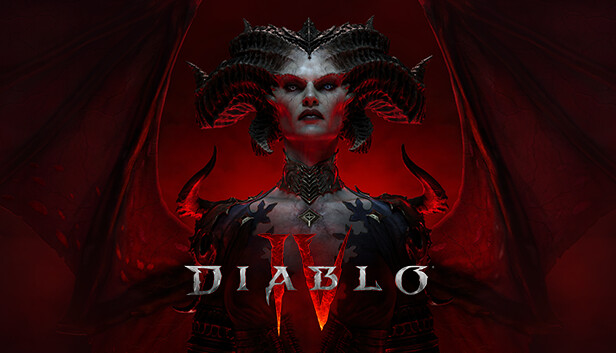
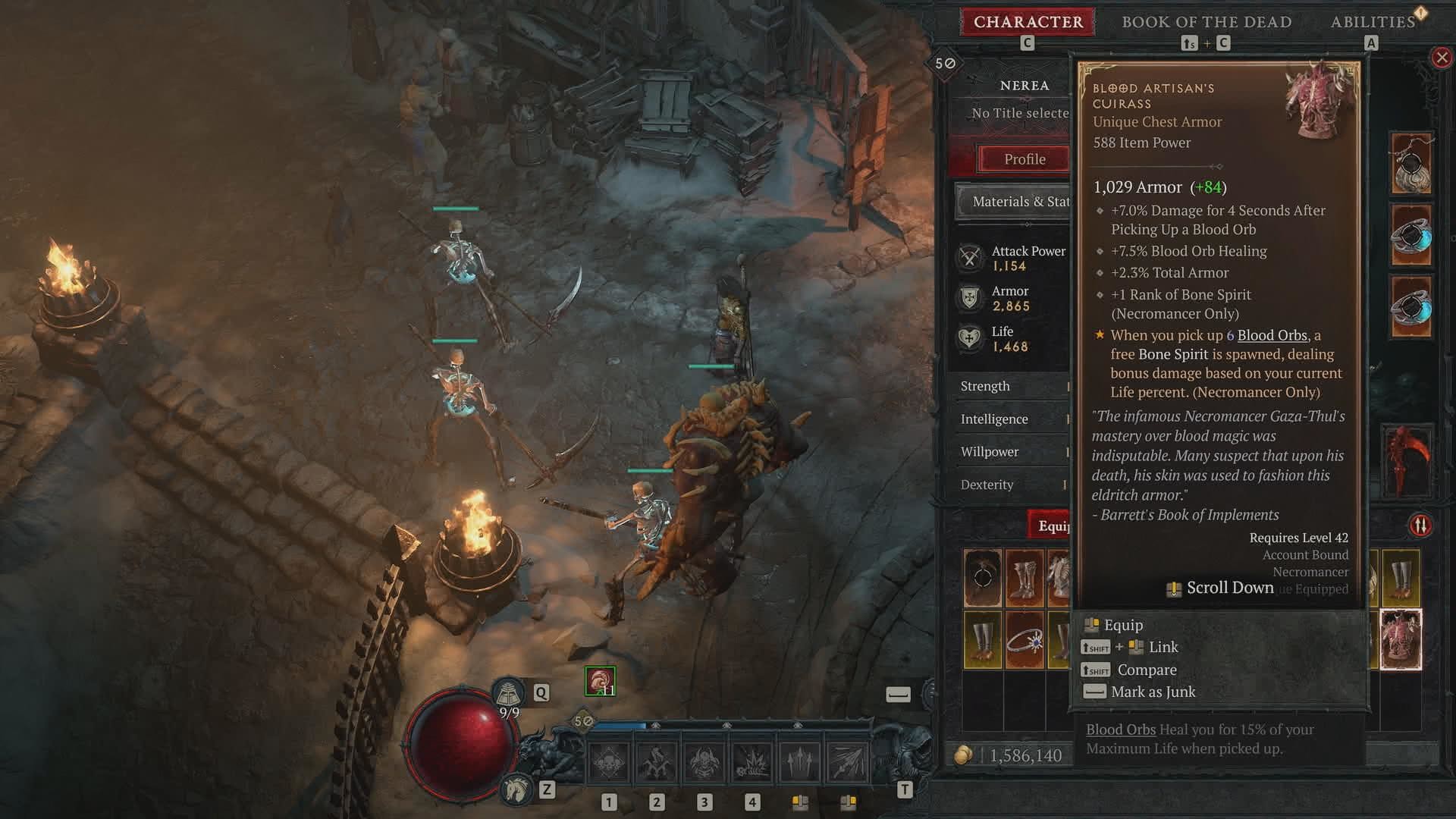
Of course, it’s the cast of characters you meet that truly color the experience for you. Luke had Han Solo, Princess Leia, Chewbacca, C-3PO, and R2-D2, just to name a few; you should expect to be followed by your own crew of miscreants. HK-47 is a fan favorite, myself included, but Jolee Bindo and Canderous Ordo, among others, have gained cult status among players in the know. From street urchins to grizzled veterans, from optimistic padawans to antagonistic assassins, you will pick up a wide variety of characters as you travel across the galaxy in your own spaceship. Although you can only take two companions out with you at any time, you’re free to change up which companions you bring out based on your own gameplay style. You might want to have a droid in your group to take care of all of the security and computers, or you might want a Mandalorian who will take on the brunt of the forces. Again, the choice is what ultimately matters.

As a fan of Dungeons & Dragons, the gameplay mechanics both drew me in and went over my head with their complexity. When creating your player-character, you are given freedom to select their baseline stats, what weapon proficiencies or abilities they may have, and what skills they can utilize. Combat and certain skill checks are determined by a D20 system, with the game internally “rolling a die” to determine success or failure. You can influence the rolls somewhat by what abilities you use or passive upgrades you have, but never being able to actually see the results of the roll is somewhat annoying. Once it’s determined as a success or a failure, the characters will damage their opponents or affect how the combat plays out. It’s important that you pick your gear to match what abilities you have. Don’t try dual-wielding if you don’t have Two-Weapon Fighting, as it will decrease your effectiveness with both weapons. The player can also queue up moves before they take place, since combat works via a pseudo-turn-based system. Unfortunately, the process of pausing, considering your actions, queueing up the ability, and then waiting for it to occur slows down the pace of the game quite a bit. It makes fighting enemies more tactical, much like a tabletop RPG, but unless you have experience with turn-based combat like in Final Fantasy, it can feel like it bogs down the game. Everything else is decided by the number of points you have invested in each skill. As an example, if I want to slice into a computer, I need to have points in the Computer Use skill, and with every 4 points I put into it, the fewer computer spikes I will need to complete the hack. Certain skills like Computer Use, Persuade, and Treat Injury are vital, but others like Demolitions or Awareness don’t factor into the gameplay as often.

What truly captivated me the most when I played, however, were the worlds I visited. Familiar planets like Tatooine and Kashyyyk make appearances, but you also get to explore the sea planet of Manaan or the Sith homeworld of Korriban. Every planet has a unique feel and environment to it. They don’t just look different; they feel different and act differently. Tatooine, outside of the Anchorhead settlement, is nothing but vast deserts you can get lost in and ambushed by Tusken Raiders. On Taris, the ecumenopolis (fancy word for city-planet) the game starts on, certain areas are only accessible if you have approval from the Sith authorities. It is a common critique of Star Wars that every planet only has a single biome; after all, Earth has numerous different climates, with unique flora and fauna for each. To that criticism, I only have to say: Star Wars is space-fantasy, not science-fiction. If you can suspend your disbelief about Jedi and hyperspace travel, you can extend that to include planetary environments.

To this day, Knights of the Old Republic still contains some of my favorite characters and moments from across the entire Star Wars franchise. Darth Revan and HK-47 will always stick with me, as will exploring the excavated tombs of ancient Sith Lords or gazing out across the endless sea outside Ahto City. While this game looks and feels as old as it is, I can’t help but replay it every few years.