The first moments drag like hours, as they’re dragged into the earth. Whether the cruelty of the Fates or the gears of your own perception grinding to a halt, the only thing you’re certain of is that the seconds no longer peel away. Each is another needle pricking your skin, reminding you of your mortality, reminding you of theirs.
Dungeon crawlers and roguelites are a particularly favorite genre of mine, behind anything RPG, and that’s because of their near-infinite replayability. With procedurally generated maps, randomized enemies, benefits that disappear upon dying, and piece after piece of epic gear to loot, some of these games can last the test of time. I find myself going back to Diablo III (less so after the uncovering of Activision-Blizzard’s legal and ethical problems) or The Binding of Isaac every now and then. Hell, Diablo II was released over 20 years ago, and it still has a base of passionate players keeping it going and exploring the corners of Sanctuary. Speaking of hell, however, there’s another game which my friend turned me onto, involving traversing the depths of the underworld and fighting champion enemies. Little did I realize, however, that Hades would become one of my favorite games of the last few years.
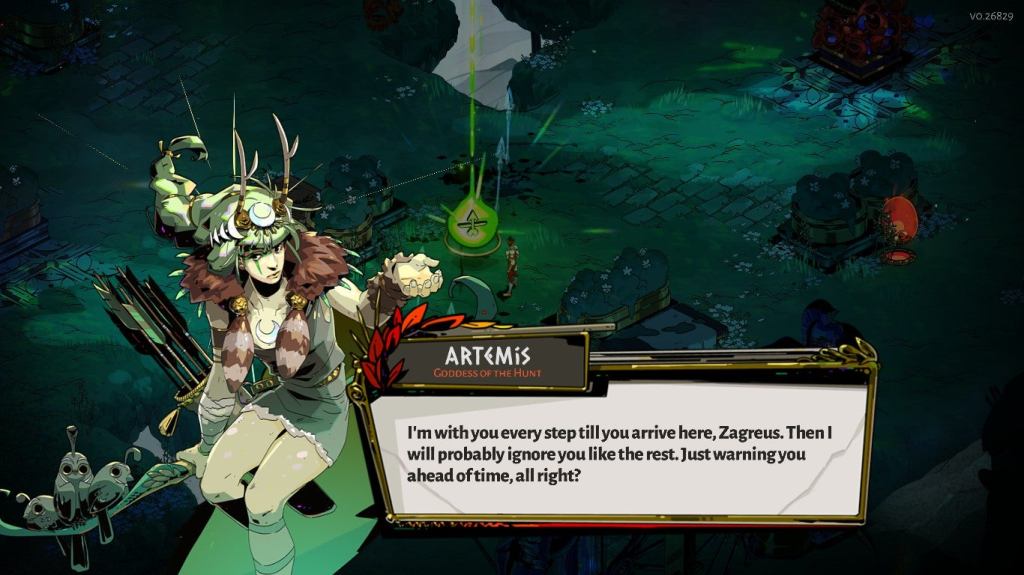
As Zagreus, the Prince of the Underworld, you’re tasked with two responsibilities: maintaining your family’s household, and trying to escape to the surface. After learning the truth about his birth, Zagreus makes it his mission to break out from the Underworld to find his birth mother, living somewhere in Greece. The only thing that’s stopping him are the armies of the dead, waiting to send him home. Assisting him are the Gods of Olympus, who believe Zagreus is trying to flee to their haven. You’ll hear from Athena, Poseidon, Aphrodite, and Hermes, just to name a few. Also along the way, Zagreus builds bonds with the many servants of his palace and denizens of the Underworld. It’s hard to whittle down the cast to determine my favorites, but ones that particularly stood out to me were Achilles, Megaera, Sisyphus, Dusa, Eurydice, and Skelly.
Each room of the various levels of the Underworld (Tartarus, Asphodel, Elysium, and Styx) are built as a constantly-shifting labyrinth, preventing anyone from attempting to escape. I like how the developers created an in-game reason for the rooms to be randomly generated; that’s attention to ludonarratology. Because Zagreus is a God, death is only a minor inconvenience, sending him back to the palace. Every attempt allows for new combinations of active and passive abilities, leading to seemingly limitless options with which you can approach the souls of the dead. You might find a Daedalus Hammer that alters your weapon’s attack, boons from the Olympians, darkness and gemstones, or encounter a level-specific NPC who will provide you with a special item of your choice. Add onto that the Pact of Punishment, which lets you customize your escape attempts even further with new challenges, and it won’t be long before you’ve sunk hours into aiding Zagreus on his mission.
Speaking of weapons, you only get to choose one for your entire run, but you can switch between six unique weapons, which each have four Aspects (three normal, one secret), giving you a total of 24 different playstyles to choose from. Each weapon itself handles differently, with some attacking faster while others are more powerful per strike. Sometimes you’ll want to fight enemies up and close, or other times, you might want to pick them off from afar. Every weapon and aspect is viable, so you can figure out the ones that work best for you. My favorites for each weapon are the Aspect of Chaos for the Shield of Chaos, the Aspect of Lucifer for the Adamant Rail, the Aspect of Rama for the Heart-Seeking Bow, the Aspect of Achilles for the Eternal Spear, the Aspect of Talos for the Twin Fists, and the Aspect of Arthur for the Stygian Blade. Whether you want to pick one of the higher-tiered weapons or experiment with a new style, there’s plenty to pick from.
I just love this game, flat out. Everything has been finely crafted and detailed to create a tidy, charming, difficult, and heartwarming game. The writing is phenomenal, to say the least. Every character feels unique, with their own personalities, backgrounds, and motivations. The dialogue is entirely contextual, too. Depending on what weapon you’re using, what trinket you’re wearing, whether a certain enemy killed you on the previous run, each character will have something unique to say. I don’t even think I’ve seen any repeated lines, except for when I started a new file. You may end up liking some characters more than others, but even the hated ones are ones we love to hate. You’ll see what I mean when you get to Elysium. Along with the writing, the voice acting is fantastic as well, bringing each character even further to life. Whether hearing the sorrow in Orpheus’ ballads or the disapproving tone of your father Hades, it really does feel like every character brings something different to the table. No one feels ancillary, even ones hanging out in the background, because you’re always interacting with them, running errands or helping them out with something. Developing deeper relationships with the cast isn’t just for the benefit of storytelling, either. Each character will give you a little trinket which aids you during your run, and you may even find some pets to join you along the way. Neatly wrapping it all together is a gorgeous soundtrack. Each song brings different emotions with it, whether the excitement of battle or the calm of a respite. I often found myself just standing around the levels and listening to the music, especially in Eurydice’s chamber. Seriously, anyone who doesn’t sit through “Good Riddance” is committing impiety.
None of this is to say that your escape from the Underworld will be easy. On the contrary, this game starts off extremely challenging before you learn enemy attack patterns, how your weapons work, what boons do what, etc. It took me almost 20 attempts just to beat Megaera and advance from Tartarus to the next level. After that, however, the difficulty curve gets really wonky. I found Asphodel and the boss there, the Lernaean Bone Hydra, much easier than the previous level. I initially chalked it up to getting better at the game, but then Theseus and Asterius smacked me down from Elysium and straight back to the palace. But after completing each of these planes and making it out of the Temple of Styx, there’s one final challenge waiting for you. I don’t want to spoil any surprises, but needless to say, you will find yourself consistently surprised by it.
The message this game is trying to tell is really touching, about the importance of family and to persevere even when things seems insurmountable. I grew to care about the fates of these characters, all trying to escape what seems inescapable. And yet Zagreus persists, returning to the surface each time despite never being able to stay there permanently. It’s a lesson we can all learn something from. By the way, I can’t believe I waited this long to mention that there’s a fishing minigame, and that’s why Hades is a near-flawless masterpiece.
When I left off last time, I had mentioned the third Danganronpa game I wanted to discuss was very different than the others. The first ones had elements of visual novels, but they were still undeniably games. Again, this is not the time for a debate on what constitutes a game. This conversation is actually completely irrelevant to the entry I’m about to slash through. With Ultra Despair Girls, there’s no question at all about whether this is a game.
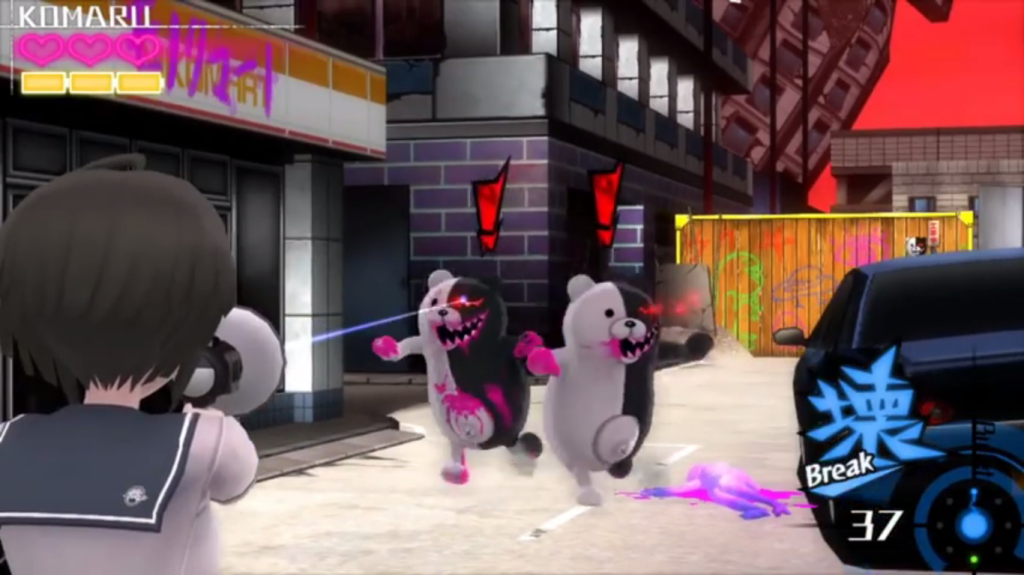
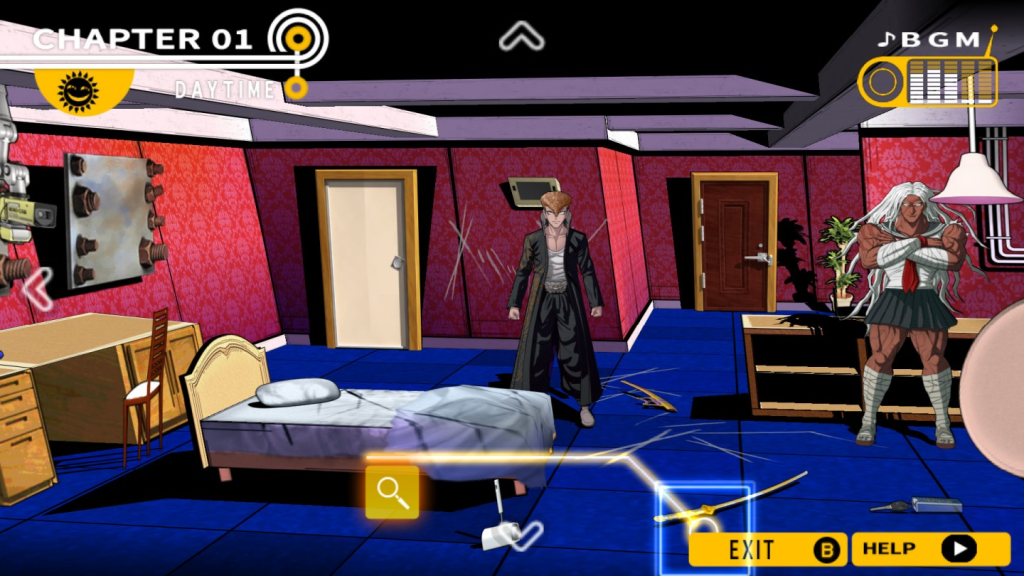
Moving away from the more linearly-driven path of the visual novel, UDG is a third-person shooter with a ton of arcade mechanics. Truth Bullets return, but they’re less of a metaphorical concept and more of an actual piece of ammunition. Players are given a hacking gun with tons of different ammo types, from your basic Break to more gimmicky ones like Paralyze or Dance. Of course, you don’t get to keep all of these powers and have to unlock them again throughout the game, but after getting a small taste of your abilities at the beginning of the game, you’ll find that each ammo type can be helpful depending on the situation. Otherwise, it’s your standard shooter fare, which is fun but a little basic at times. Although there are quite a few different enemy types, they’re all Monokumas (which can get a little boring) and they can usually be dealt with using the default Break ammo.
Other than your shooting segments, there are stealth segments which require you to find a kid without being caught, Monoku-Man arcade machines that act as security cameras for challenge rooms, and riddles to solve to progress in the level. You’ll have plenty of opportunities to not only experiment with your Truth Bullets and find ones which work best for you, but also to collect Monocoins, which are used to purchase upgrades in the form of adjectives for your guns. It’s a strange concept to wrap your head around, but combos like Furiously + Ornately can augment the ammo’s strength and total ammo count. It’s things like this which really make UDG unique, especially among shooters. What other game allows you to improve your guns with the power of language?
Without spoiling too much from the other DR games, players can also temporarily switch characters. This second character has extremely powerful melee attacks and special moves that allow them to slice through enemies like fabric, but is limited by a meter that determines how long they can be used for. It’s honestly a blast to play as this character, weaving and dicing through waves of Monokumas, and their special ability takes the form of pretty sadistic automated segments that can bring a twisted smile to your face.
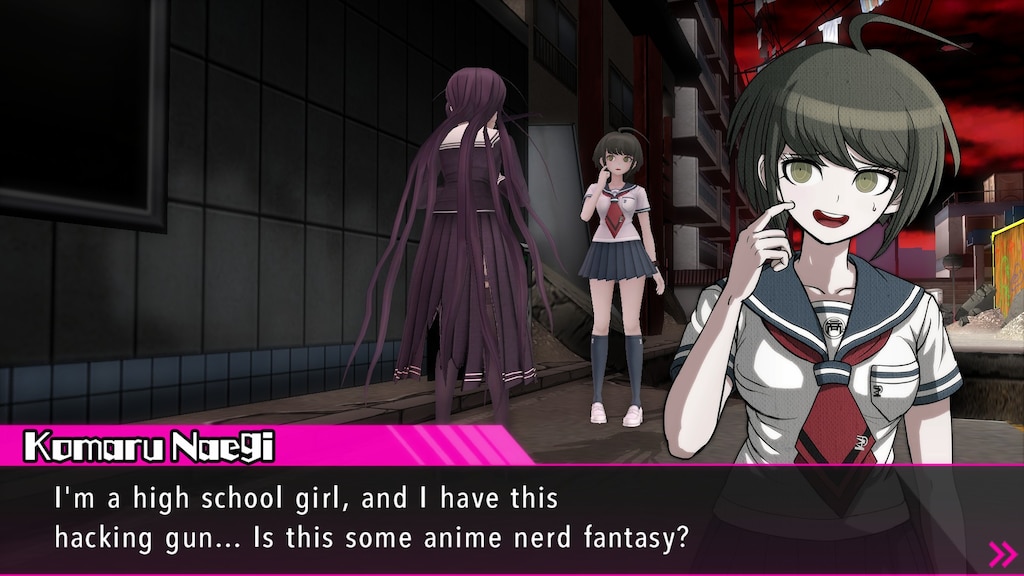
The story is a lot more personal this time around. Instead of the large cast of high schoolers slowly being picked off by each other, the narrative follows Komaru Naegi, the sister of the DR1 protagonist, who was captured and imprisoned during The Tragedy. After escaping an attack by a vicious Monokuma, she finds herself in a world far different than the one she remembers. A ruthless group of children calling themselves the Warriors of Hope have taken over the city and are killing all of the adults to create their own paradise. Working alongside her partner and DR1 veteran Toko Fukawa, the two have to destroy multitudes of Monokumas, escape the city, and defeat the Warriors of Hope.
There’s a greater focus on Komaru finding within herself that she’s more than just a normal high school girl. She and Toko are trapped in this incredibly hopeless situation, and the story follows them working together in order to overcome it and both become stronger because of their partner. It follows the same arc as the other games, with Hope overcoming Despair to save the world, but you can see real character development between Komaru and Toko. They both rise to the occasion and, despite whatever differences they may have in the beginning, they learn to become friends and partners. It really gets to expand on Toko’s character, who was only somewhat touched upon in DR1, and we get to see why Komaru is distinct from the other protagonists, Makoto and Hajime.
When I said that UDG is very different than the other DR games, I wasn’t just talking about the gameplay. The story is more personal to the protagonist than the entire cast, and because of that, there isn’t the same overall emotional impact. We don’t get a chance to develop emotional connections to many of the characters thrown through the game, but come to really understand Komaru and Toko on fundamental levels. The side characters, while all nods and winks to the cast of the mainline games, can be very forgettable beyond a few lines of dialogue. And the villains, although driven by legitimately disturbing events in their past, come off as over-the-top or outright ridiculous. I suppose that’s the kind of flair to expect in these kinds of games, but on reflection, so much of it felt different than what I experienced in the other games. I guess that’s the point, though; as a spinoff, they could include ideas that might not otherwise fit in the mainline series.
To be honest, the voice acting is probably my favorite part of the game. That may be strange, that the acting is what I enjoy most about an interactive experience, but the performances you get from some of the actors are amazing. You’ll probably get the biggest kick out of Kurokuma, the foul-mouthed and hyper-talkative Monokuma variant, who is voiced by Erin Fitzgerald. That name might not mean much on its own, but she also played Chie in Persona 4 (another game I plan on covering), as well as a handful of other characters in UDG. There’s actually a really huge crossover between Danganronpa and Persona voice actors: Cassandra Lee Morris (Aoi and Morgana), Erica Lindbeck (Kotoko and Futaba), Cherami Leigh (Komaru and Makoto), Grant George (Shuichi and Shinjiro), Johnny Yong Bosch (Hajime and Yu AND Adachi); just to name a few. It’s actually really incredible how small the voice acting community is for these kinds of games, when you really investigate it.
Going back on track, I’m not sure what else I can really say about Ultra Despair Girls. If you’re looking for a wacky yet depressing arcade shooter, your choices are either this or CarnEvil. It’s fun overall, but unless you want to get a complete understanding of the story behind Danganronpa, it’s mostly skippable. You face the same waves of enemies over and over again in slightly different configurations. If you aren’t playing on the higher difficulties, there really isn’t any strategy involved other than “don’t miss.” That’s not even mentioning that outside the development of the main characters and one or two of the villains, there isn’t a whole lot going on plot-wise other than “adults bad, kill them.”
For the most part, however, it works, and as a fan of Danganronpa, it’s a welcome addition. But I can’t help but feel that it lacks some of the charm of the main games. Maybe it’s the more concentrated cast or maybe it’s the action-driven gameplay, but some indefinable element is missing which separates this game from the others in my mind.
It is June 28, 1914. Exiting a delicatessen, Gavril Princip steps up to the Gräf & Stift car and fires upon Archduke Franz Ferdinand and his wife Sophie. The bullets strike the Archduke’s jugular vein and Sophie’s abdomen, although Princip was aiming for Oskar Potiorek instead of the duchess. He tries to turn the gun on himself, but is seized by Bosnian police. Sophie has bled out, her body sprawled along the leather seating. Ferdinand passes ten minutes later.
Visual novels are a controversial inclusion to the world of video games. Depending on the amount of interactivity, some amount to nothing more than clicking the mouse to advance text, while others can include divergent choices, minigames, and even multiple endings. It can easily lead to the question: “What even is a game?” This is a discussion for another time, but I bring it up because there’s no measurable mark at which a visual novel becomes a game and vice versa. The distinction is our own personal Kármán line, a loosely-defined point at which game mechanics and play are introduced to the narrative. Danganronpa: Trigger Happy Havoc treads this line, while its sequel, Danganronpa 2: Goodbye Despair, takes a Logic Dive-esque leap further into the ludic realm.
Much like Battle Royale or The Hunger Games, with a hint of Highlander and a dash of anime flair, Danganronpa‘s story consists of groups of high school students gathered together against their will to take part in a brutal killing game, murdering each other until only one remains. Every student has a special talent making them the Ultimate in their field, but when they’re imprisoned and forced to kill each other, their skills might not help them survive. The mysterious Monokuma manipulates events to provoke the students into action, taking glee in their despair, but it’s your job to stop it. While uncovering the enigmas surrounding the strange bear-like creature and the state of the world, players take part in Class Trials to uncover the culprit behind each murder.
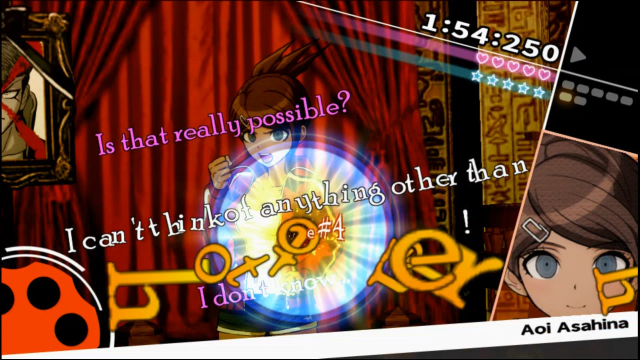
This is where the main gameplay elements of DR1 take place. After investigating various areas of the school (the setting in which the first game takes place), collecting evidence, and hearing testimonies, the students gather together to try to figure out whodunnit, with the killer being able to walk free if they are not discovered. Each bit of info you collect takes the form of Truth Bullets, which you use to literally shoot down others’ arguments during the debates. Other times, you’ll play Hangman’s Gambit, where you have to spell out a hidden clue by selecting letters, or Bullet Time Battle, a short one-on-one rhythm game. My personal favorite is the Closing Argument, during which the player assembles puzzle pieces like a comic book to describe how the crime occurred. While the trials increase in difficulty as the game progresses, these gameplay modes remain simple throughout. Even if you run out of influence and are on the point of losing, the game allows you to refuse to give up. I never once found myself having to redo trials or surprised by the twists (except for the mastermind), but there were definitely points during the debates where I couldn’t find a suitable answer. Reminiscent a standardized test, sometimes it comes down to the least-worst choice.
Before each murder and subsequent trial, you can explore the school and spend time with other characters, responding to their conversations in particular ways, and giving them gifts. This isn’t just to add dating-sim elements to the game (although you can romance them, and they’ll give you special “gifts” of their own), but also to unlock new abilities that can make the class trials even easier, like increasing your Concentration meter or reduce the damage you take for an incorrect answer. The later editions of the game also include a School Mode for the post-game, which allows the player to hang out with the other students, but without the threat of killing one another. I played the PC version, but if you picked up the original release on PSP, you’d have to wait all the way until DR2 to be able to partake in extra curriculars.
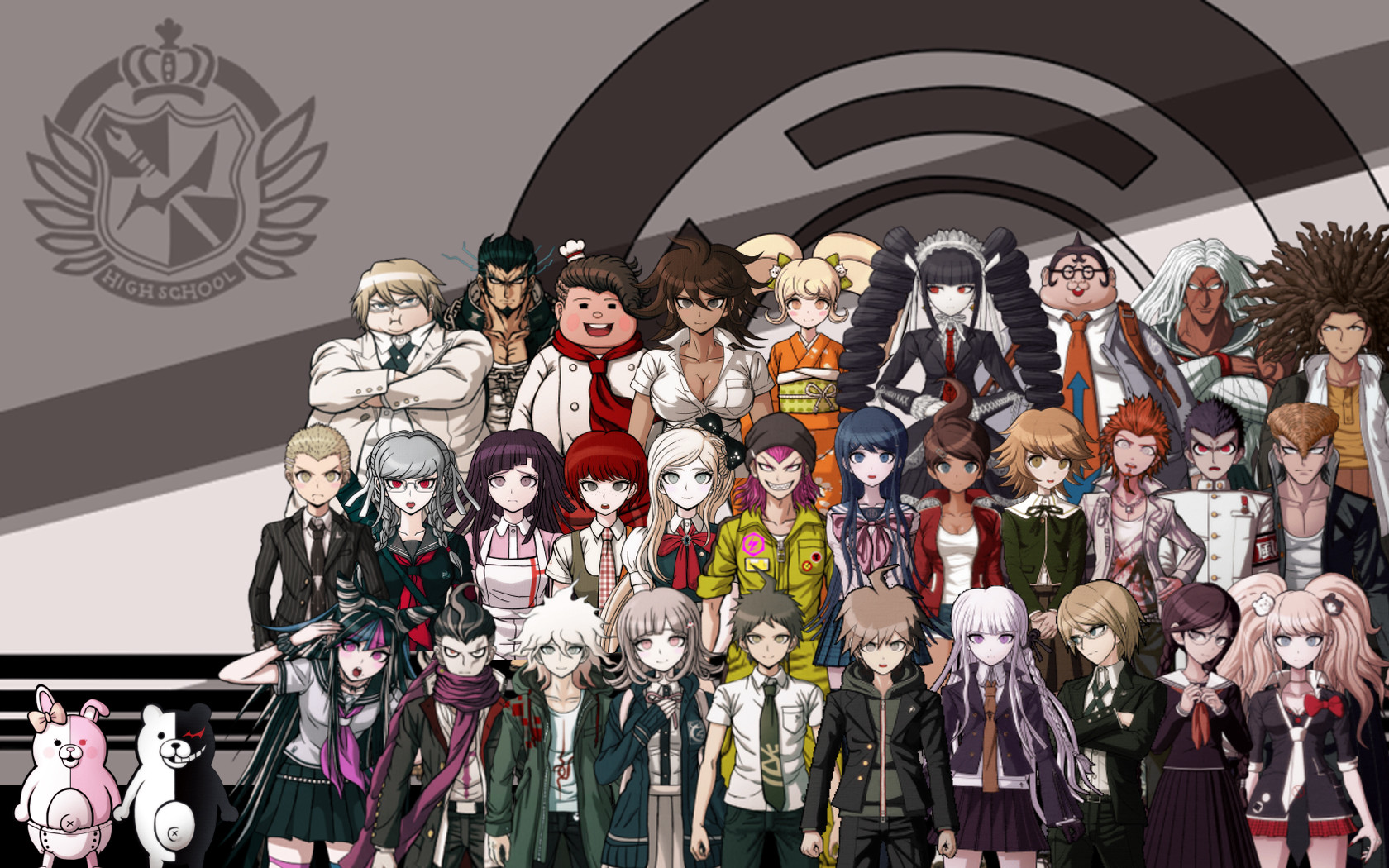
Some of your favorite characters will die, and there’s no way around that. Oh sure, you’ll meet plenty of characters you absolutely abhor, like Hifumi Yamada (ESPECIALLY HIFUMI), but I found myself really liking Aoi Asahina and Kiyotaka Ishimaru. Each character feels unique, with their own goals, interests, and most importantly, distinctions. They all have personality, making them memorable, for better or worse. Unfortunately, though, until you get to School Mode, the cast will be slowly whittled down over time. Will someone else I really like be the victim? Or will I have to reveal them as the killer?
As mentioned earlier, however, DR2 takes the foundation of what the first game built and tries to build a skyscraper on top of it. The plot goes even further than before, with much more unexpected and unpredictable twists. The minigames have more depth and complexity to them. There’s more exploration, character interactions, and additional content to unlock. It’s bigger and (supposedly) better than ever, and yet, I find myself drawn more to the first one.
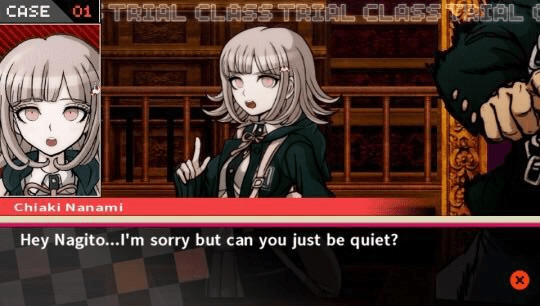
Although tropical settings are my favorite locations in games, it felt really out of place in DR2. I guess that’s the point, juxtaposing the beautiful landscape with vicious murders, but there’s something about the taken-over school that works more for me. It felt like there were more secrets to uncover within the school, even if that’s not really the case, but the creepier atmosphere was right at home with the game’s tone. And even though the characters I love in DR2 are more of my favorites than ones from DR1, I still prefer the original cast overall. The characters in DR2 didn’t feel as unique, some of them having little-to-no personalities at all beyond their Ultimate talent, and some of them being extremely similar to characters from the first game. In addition, Monomi didn’t work as a foil to Monokuma, instead regularly being the butt of a joke. But like I said before, Chiaki Nanami and Fuyuhiko Kuzuryu are probably my favorites from the casts of both games, and they’re both in DR2.
The trials are tougher than before, but not entirely due to the challenge of solving the mystery. The debates are more complicated, now having you reinforce certain statements and refute others, which means there are more pieces to parse. It’s extremely rewarding catching someone in a lie and clarifying the truth, but more than a handful of times, I had to look at a walkthrough to know what clues and evidence to put together. Sometimes, the answers made sense, and sometimes, I was just glad to get pass the bullshit.
Island Mode is unlocked upon beating the game, and if you played the later versions of DR1 that have School Mode, it’s essentially the same. There’s also Magical Girl Miracle ★ Monomi, a bland interstitial subgame to be played between chapters. It’s mainly the trial minigames that take the biggest hit. In my opinion, they are way worse than in the predecessor. Apart from Panic Time Action, which is almost the same as the Bullet Time Battles from DR1, the only fun gameplay element is the Rebuttal Showdown. Part hack-and-slash and part-debate, you combat with another character until you can point out the flaw in their argument. The other two are just plain awful. Logic Dive has you snowboarding down a tube and choosing routes in order to reach a logical conclusion. However, since you have so much health and going down the incorrect path does very little damage, you can guess your way through, making this minigame mostly a waste of time. The absolute worst, however, is Hangman’s Gambit. Letters will fly across the screen from all sides, so you have to combine them before they hit another letter, and once combined, they can be used to spell a letter in the clue or destroyed. It’s needlessly complicated and very easy for this chaotic minigame to get out of hand. It’s less of a puzzle and more of a bullet hell. Luckily, the clues are easy to figure out, so it’s mostly a matter of overcoming the mess on-screen.
Like most other games, however, it’s mainly the characters, their interactions, and how they overcome the challenges of the story that draw me into its narrative, and that’s where Danganronpa and Danganronpa 2 shine. You’ll laugh, you’ll cry, you’ll fall in love. Maybe not as cheesy as that, but it’s very easy to find yourself enamored by the characters, and by then, you’ll want to help them overcome their struggles and survive.
I’m already running on way longer than I anticipated, and I’m not even done; I still have one more Danganronpa game to talk (sans V3), but that game is so dissimilar to the others that I feel like it needs its own section. Consider this a part one, then, and part two will follow.
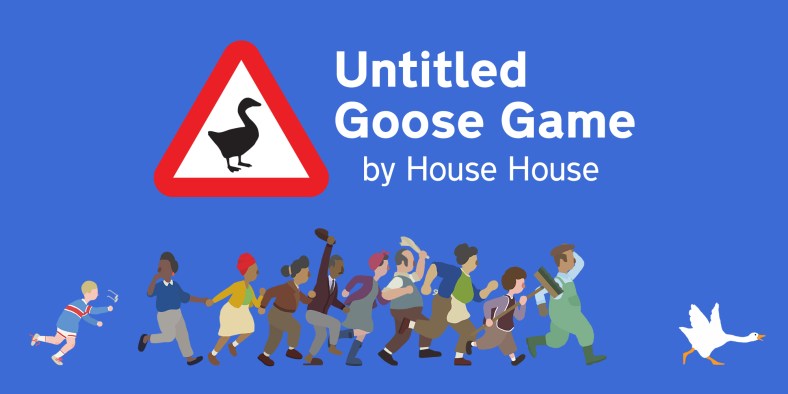
A philosophy of game design I heard nearly a decade ago is that a game should be fun or interesting, if it cant be both. Today, you see a lot of AAA studios struggle to build even one of these two important pillars. It’s in the indie scene where developers are trying new, different things, unmotivated by trying to please the largest possible audience and instead focused on delivering a unique experience that will hopefully leave a lasting impression. House House has managed to do just that with their simply-named Untitled Goose Game.
Players take control of the eponymous goose as they harass the various inhabitants of an quiet and comfortable English town. That’s your entire set-up: go be a dick to the unsuspecting townsfolk. And man, is it fun to disrupt their way of life. The game quickly opens by teaching players how to control their bird, complete with honking and flapping your wings, before dropping you off at the first level.
Here, unlike something like, say, Goat Simulator, UGG does limit players to the laws of physics, but that doesn’t mean the mayhem isn’t entertaining. On the contrary, in fact. By sneaking around and solving puzzles, your goal is to create as much chaos within the hamlet as possible. Of course, while it’s fun to just outright annoy some of the townspeople, you’re also given a “to do” list of various things you can accomplish to create frustration and bedlam. From making a young boy buy back his own toys to destroying someone’s prize-winning garden to performing for a couple of pubgoers, each area provides players a new set of challenges to overcome, culminating in the destruction of the town’s own model village.
It’s a deceptively simple game, with everything, including the art style and even the title, lulling you into a false sense of security. Some of the puzzles seem too easy, like chasing someone from point A to point B, while others can be somewhat confusing. Is the “burly man” the one in front of the pub, or the one cleaning up on the inside? Almost all of the puzzles can be solved through logical thinking, creative problem-solving, and a dash of deviousness, but some of them aren’t as innately decipherable as others. Try to avoid using a walkthrough as much as possible, though, because after you discover the answers, you’ll no doubt smack your head and exclaim, “I should’ve known that!”
There are a ton of details, hidden shortcuts, and additional challenges that add on to the game’s quick completion time. I was almost disappointed by how short the game was for its price, but with the post-game task lists, there’s more to do than just completing the main story (which should only take a couple of hours, roughly). There doesn’t seem like much to this game at first glance, but that’s part of the fun. It’s a surprising and entertaining little jaunt, a fun self-contained experience that will let you unleash your inner sadist.
I don’t have much else to say, really. It’s a neat, compact experience that’s guaranteed to get you to laugh. Personally, I loved just walking through the village and exploring the quiet, cel-shaded community. The atmosphere reminded me a lot of the film Hot Fuzz, with the snug civic-planning and carefree villagers who freak out at the slightest disruption of calm. It makes me wonder what they did with all the crusty jugglers, though?
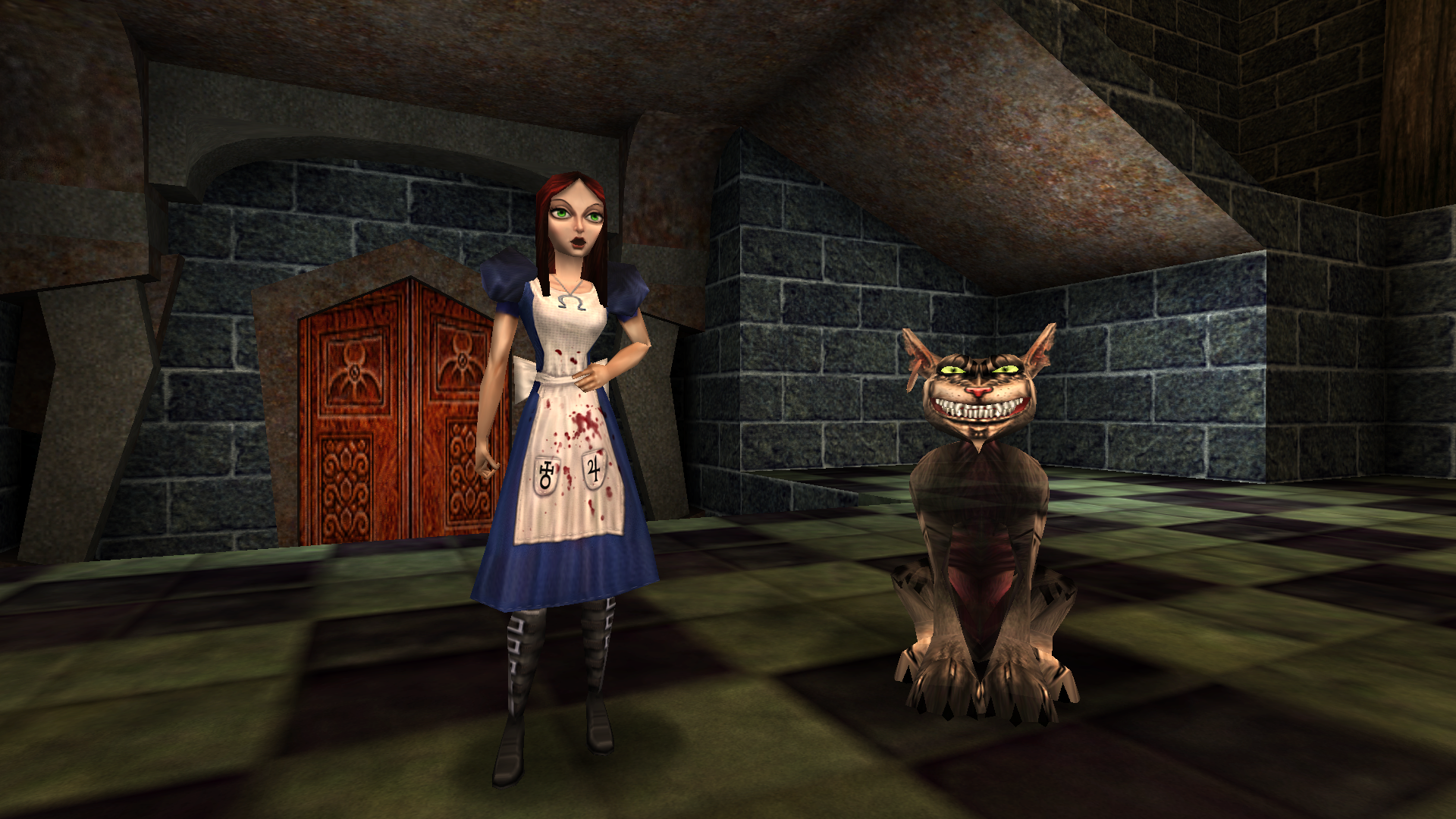
I remember hearing about American McGee’s Alice way back when it first came out, even though I was still a child. All I really knew about it was that it was Alice in Wonderland but dark, twisted, and so edgy, Tim Burton couldn’t handle it. And although it popped up again over a decade later, in the form of its sequel, Alice: Madness Returns, it was still just a blip on my radar. But recently, I’ve heard and read some conversations reminiscing about the games, their creative art design, and their fun take on the typical Wonderland story. Curiosity plus disposable income meant I could finally dive through the looking glass and take on these games for myself.
When you start the first game, Alice is a patient at a mental hospital, recovering after a fire killed her family and left her horribly burnt but alive. That went from zero to sixty quickly, from a cheery fairy tale to a deranged delve into the human psyche, but I’m for it. Wonderland has been equally decimated to reflect Alice’s state of mind, and so she has to defeat the Red Queen in order to rescue her sanity.
My first impression is: WOW, is this game difficult! I enjoy a challenge when playing a game; there needs to be a some adversity to overcome, or else the game it is too easy and not stimulating enough. I say all of this because there’s a difference making a game difficult and what you have to go through in order to beat American McGee’s Alice. First, her controls are, for lack of a better word, slippery. I played this on an Xbox 360, so my experience is different from the original PC version released in 2000, but I have to wonder if the platforming was just as difficult on a computer as on a console. Alice slides around when you so much as tilt the control stick, making it easy to just slip into a death pit. Plus, there’s a delay on the jump action! You have to remember to time each jump carefully because there’s a half-second between the button press and Alice going into the air. If there were an autosave or a quick save, this wouldn’t be terrible, but the game only autosaves at the start of each level, and you have to manually save the game each time you want to return from that point. It’s tedious, and if you’re at the end of a level, fall, and didn’t remember to save, you’ll go all the way back (I’m looking at you, Vale of Tears). I know it’s a convention of older games, but a lot of it feels like it’s there to waste time.
All of that said, I would prefer to have these issues over extremely challenging combat…but this game has both! I played on normal difficulty, and I was clenching my teeth in rage at points. Even the game’s earliest enemies can swarm and kill you in just a few hits, while they can just soak up the damage without so much as getting a scratch. Avoid using melee weapons under any circumstances, too, because your swing has no reach and has a ridiculously long recovery time, meaning enemies can get three or more hits in by the time you get one. The ranged weapons were nice, but quickly running out of willpower means you’ll be sprinting circles around enemies, stabbing their ankles with the Vorpal Blade, just enough to get a meta-substance and recover your magic so you can return to throwing playing cards or jacks. Most of the weapons are stylized as “toys,” so that justifies writing such a ridiculous sentence.
The art design, as I stated earlier, is the most intriguing element. Everything, from Wonderland itself to its inhabitants, is creepily stylized. Some of the levels, like the Village of the Doomed at the beginning or the Valley of Fire and Brimstone toward the middle feel unimaginative, but the Pale Realm and Queen of Hearts Land help set the mood and immerse you in the strange worlds of Alice’s mind. Wonderland is twisted to represent Alice’s broken state of mind, and it shows in the character and level designs. The Cheshire Cat was a notable favorite of mine, with his hoop earring, and the tentacles and corrupted flesh of the Red Queen were sufficiently unnerving. Unfortunately, the game grinds to a halt toward the end, with backtracking puzzles and multi-story mazes, detracting from the building excitement to the conclusion.
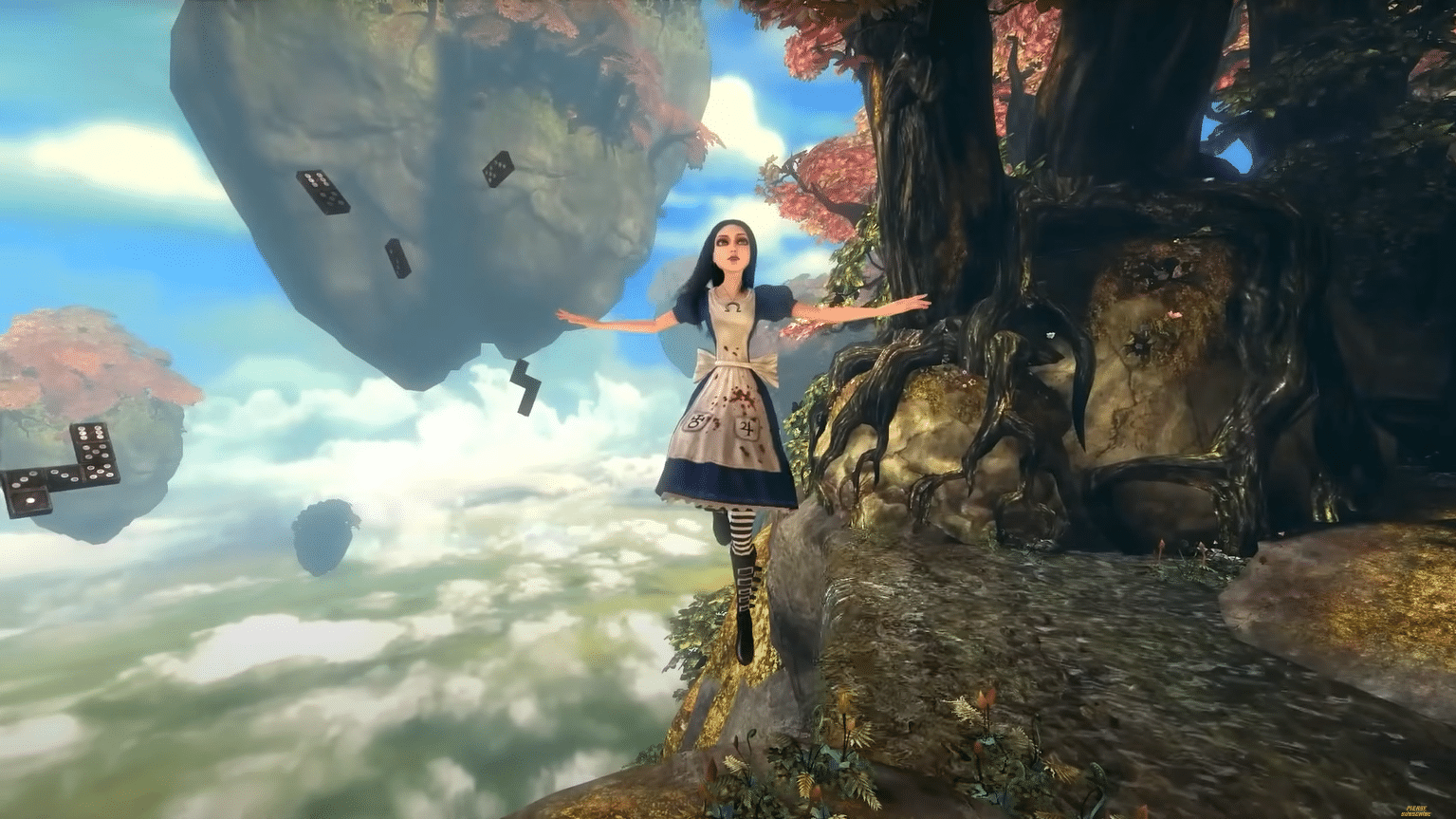
Alice: Madness Returns, on the other hand, suffers from the almost exact opposite problem: it’s too easy. I actually had to bump up the difficulty to hard to feel like I was getting any kind of challenge from the combat. Enemies had very visible “tells” you could notice in battle, and the weapons you acquire can easily be leveled up and made overpowered, defeating basic enemies with a single hit sometimes. The combat itself was also significantly improved, with the weapons each feeling distinct and having their advantages, making the fights themselves more strategic. Additionally, Alice controls much better now, with her movement actually having some weight to it, and the triple-jump made traversing the levels much more enjoyable.
This game is gorgeous and bursting with creativity in its design. Wonderland is back and weirder than ever, and your journey takes you to some very interesting places. Hatter’s Domain, the Oriental Grove, and the Infernal Train are all wonderfully imaginative and fun to explore, while the Dollhouse is disturbing to an entirely new level. Alice also unlocks a unique dress in each level. My particular favorite was the Siren Dress, unlocked in the Deluded Depths, replete with bioluminescent frills and an anglerfish skeleton instead of a bow.
Madness Returns follows Alice after the events at the asylum, where she lives and works at an orphanage under the counsel of a psychiatrist, aiming to help her forget her traumatic past. The story is told as she shifts between reality and Wonderland, trying to unlock the truth of her family’s death. Throughout the course of the game, she recovers these memories and those of significant people in her life. These memories are just one of the many collectibles hidden throughout the game for players to find, along with bottles, pig snouts, and Radula Room challenge levels. These collectible items add something that American McGee’s Alice is missing, which is that explorative element. In the first game, the levels can be difficult to navigate, and there’s no reward for scouring every corner. But Madness Returns has all of the aforementioned collectibles, making maneuvering through the levels much more fun.
I had an inverse experience with these games. The first one, while unquestionably difficulty, was extremely rewarding to finally conquer, while the sequel was much easier to get through and not as satisfying to overcome. Instead of being disincentivized to explore levels in the first game, the second makes searching for secrets rewarding. Whereas the original game had lots of bosses, Madness Returns only has one in the final boss. A strangely balanced experience overall, apropos to the strange nature of Wonderland itself. I’d like to see a follow-up someday, but given the games’ endings, I’m not sure where the story could go. I have no doubt McGee can come up with something appropriate, but how far down the rabbit hole will Alice go?
Mass Effect has been an influence on me like nothing else. I was introduced to the series with the very first game back in 2007 and I was immediately enamored. The (at the time) lifelike graphics, the vast galaxy to explore, the story about struggling for survival, and the substantial cast of characters had me hooked from the very beginning. Every time I played through it again, I would discover something new; an assignment on a previously-undiscovered planet, or by completing a mission (or missions) in a certain order, the rest of the game would acknowledge that specific order. I’d never experienced anything like it up to that point, and with the rare exception of a few games, I haven’t felt it since.
Obviously, my love for the series extends beyond the first game. The trilogy (and Andromeda, although controversial) are among my favorites across all of the digital realm. It’s what inspired me to go into writing, what drove me to become obsessed with video games, and is most likely responsible for the individual I am today. It’s weird thinking about a piece of media that way, but Mass Effect has probably been the single-largest influence on me, as far as pop culture is concerned.
So you can imagine my surprise when, nearly 14 years after the original game’s release, we not only saw a trailer for The Next Mass Effect, but the announcement of a remastered trilogy, with full-HD graphics and quality-of-life improvements. You can also imagine that I purchased it immediately as possible and completed every game to 100%.
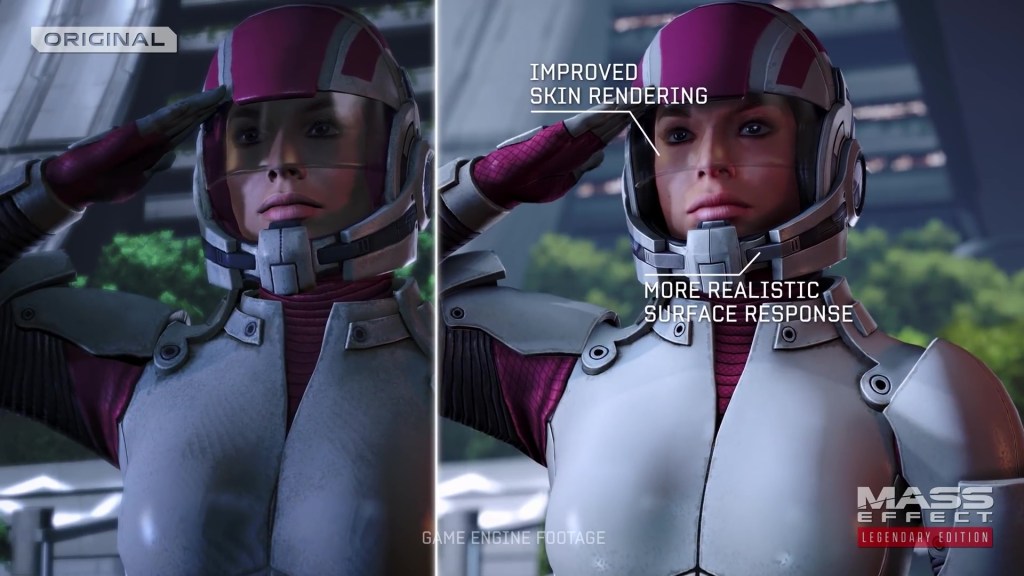
First of all, I am blown away by how great the game looks even after all this time. Yes, everything is displayed in 1080p and with high-resolution textures, but it’s all upscaled from the original. You’ll spend hours, like I did, just revisiting all of your favorite places and seeing how they’ve been updated. The sprawling vista of Zakera Ward and the vast snowscape of Noveria are even better than they were before, but now, you can see fine detailing on the Prothean ruins on Therum, or the wrinkles on Shepard’s face as they respond to someone in disgust. All of the games have been updated to have a visually-consistent theme, too. The default FemShep is available from the start, and Eden Prime looks like it does in ME3. These don’t just feel like separate games in a trilogy now; it feels like one, large, epic saga.
ME1, as expected, had the most significant changes and adjustments made to it. Since it was the original game in the series, BioWare was still trying to figure out what kind of game it was going to be, whether RPG or shooter or somewhere in between. The end result was a clunky and awkward battle system with pieces of cover constantly flying around. Now, however, the gameplay is more reminiscent of ME2 or ME3, with much tighter shooting and ability control. Plus, reworked levels mean that the geometry won’t suddenly change when you use a biotic Throw. The GUI has also been updated to be consistent across all three games. But the biggest single change is probably the Mako.
Fans of the original Mass Effect know what I mean, and I’ve probably triggered a few PTSD flashbacks just by mentioning it. When traversing unexplored planets, you make your way in an all-terrain vehicle/tank hybrid. The problem was you couldn’t drive the damn thing. You might sometimes head in the direction you’re pressing the control stick, but often, you’ll veer off course and go spiraling down a mountain. And the mounted gun was fixed at an angle, meaning that if enemies were below or above you, you would have to change the elevation of the vehicle to attack them, not just adjust the angle you’re aiming at. I am happy to report that now, the Mako behaves like an actual, drivable vehicle. It goes where you want it, it fires where you shoot, and they added a forward boost alongside the original vertical boost. Having a working game mechanic might not seem like much to ask for, but I am grateful that now I can trek new worlds without my biggest fear being the traction.
ME2 and ME3 also received some changes, although much more minor compared to ME1. For one, the Extended Cut is built right into the game, meaning the original cut of the endings are no longer available. Fine by me, honestly. With the multiplayer removed, however, players will have to complete the majority of the game to achieve total Effective Military Strength during the final assault. Hopefully, BioWare will include the multiplayer portion again, which would be more than enough reason for me to resubscribe to PlayStation Plus.
Across my latest playthrough of the trilogy, nearly half of my time was spent in Photo Mode. I loved taking action shots of the squad in battle, or capture the wide landscapes of some visually stunning planets, and it gave me the time to appreciate many of the small changes and details across the games. I’ll post a gallery of my favorites at some point. I would spend up to an hour reangling the camera, or changing the filters, or shifting the blur and bloom effects, trying to find the perfect picture. But even then, it didn’t feel like wasted time. Every second I spent playing them was a positive experience for me.
And that’s probably what I’ll take away most from the Legendary Edition: this is the definitive way to reexperience my childhood. Instead of just staring at starscapes, I could capture pictures of them. Instead of trying to make a custom FemShep that looks like the default in ME3, I can use the default from the very first game now. All of the DLC was included, and BioWare even kept in many of the glitches and exploits from the original games, meaning it’s still possible to break out those dominant strategies from 2007. Mass Effect opened my eyes to a whole new universe of gaming, and being able to reencounter my favorites with a bright coat of paint is something I cherish.
I’ll never forget the first time I walked over the hill and saw Sovereign. It still sends chills up my body every time I see it.
I’ve never been much for blogs, mostly because I’m terrible about updating things regularly. I like working in bursts, getting a whole bunch done at once and then take time off. But I came to the realization that it doesn’t matter how often I add to this. The blog can stand as more of a record, for self-posterity, than anything else, kind of like an online journal.
I don’t imagine this becoming much more than an account of all the games I play and my ideas about them. Even if no one else reads these, I need to put my thoughts down somewhere. I’ll try not to spoil them, in case anyone is actually interested in checking them out, but if one or two sneak through, that’s on you for reading about something you haven’t actually played.
How well will this go? Only one way to find out, right?
Entrant in the 2020 ANA Avatars XPRIZE Missing Story Contest
I stood – floated, rather – at the edge of the abyss. Particles of dust and gas tickled my feet as they drifted ever closer to the accretion disk. They swirled and danced until they reached the maw of darkness, so black that it swallowed all of existence. No light has ever penetrated that darkness, no one has observed the inside of a singularity.


















 LAFworks