After experimenting a little with a Persona-inspired tabletop RPG and watching my seniors struggle through P3FES, the concept of the series had piqued my interest, but lacking the consoles to play the “definitive” versions of P3 and P4, it would be years before I actually played the games for the first time. I hadn’t even necessarily planned on playing any of them, until a sale on the PlayStation Store brought down Persona 5 to $20. A single-player RPG with over 100 hours of content for $20 sounded like an absolute steal, and so I dipped my toes into the cognition-centered game, not realizing I had just started one of the best modern JRPGs in the last 20 years. Not even a year later, when the revamped Persona 5 Royal version came out, I had pre-ordered it and anticipated returning to Shibuya, not realizing yet that while the gameplay had been smoothed out and rebalanced, the narrative at the core of it took a major hit.
Much like in its predecessor, Persona 5 starts out with the high-school-aged protagonist (commonly referred to as Akira Kurusu or Ren Amamiya, depending on whether you read the manga or watched the anime) being sent to Tokyo as part of a required probation after being accused of assaulting an adult. Prejudged by the student body, the faculty, and the community, the player eventually teams up with other social outcasts and, thanks to the deus ex machina of a supernatural phone app, infiltrates alternate realities created through people’s twisted cognitions and the collective unconscious. Sneaking into these Palaces, stealing away people’s distorted desires, and summoning supernatural legendary figures and monsters as Personas, the main characters take on the guise of Phantom Thieves and steal treasure to cause a change-of-heart in their victims. Much like P4, players take on increasing challenges, adding to their network of confidants, and save all of reality from subjugation.
There is a serious thematic base being built to support the narrative and world of the game, between all of the philosophical remarks and literary allusions. To just name a few, some of the theorists and concepts approached include Carl Jung and cognitive functions; Georg Hegel and dialectics; Shelly Kagan and perception; Jeremy Bentham and utilitarianism; Robert Nozick and libertarianism; even Albert Camus and absurdism. Hell, one of the characters literally asks the others, “Is it like the application of optical illusions in social cognitive psychology?” Not to mention the constant references to picaresque literature, appropriately categorized by roguish protagonists who are able to survive in corrupt societies living by their own wits and skills, in the specific forms the characters’ Personas take, including Arsène Lupin, Ishikawa Goemon, Captain William Kidd, and Popess Joan. This can be quite a lot to absorb, especially considering some of the extremely serious topics the game attempts to approach, from sexual assault to suicide. While these are some very impressive and massive motifs to grapple with, the game doesn’t always handle them with the most grace. The writing itself can vary in quality, ranging from extremely thought-provoking to unintentionally tone-deaf, depending on the subject approached. While somewhat tactless at times, perhaps because it was originally created for a Japanese audience and then localized into English, the game tries to handle all of these mature topics while still keeping things light-hearted and fun. It’s a careful balance that isn’t always perfectly achieved, but the core of the narrative remains.
Also like in the previous installments in the franchise, social links return in the form of Confidants, which not only advance each character’s individual arcs, but also provide benefits like passive combat abilities or new inventories/services by merchants. Perhaps because this was technically my first Persona game (even though I’d been already exposed to the cast of P4), or perhaps of some latent empathetic connection, but I felt a real affinity for the cast of characters this time around. I suppose there’s something to be said for rooting for the underdog, the person everyone else shrugs off and doesn’t believe much will come of them. P5‘s cast is loaded with all these kinds of characters, societal “rejects” and “outcasts” who are attempting to find their own place. I constantly find myself rooting for Kawakami to realize her own self-worth, or Iwai trying to provide his son with a safe and normal life despite his own past with the yakuza. Maybe it’s because of this affinity that I had more difficulty this time around in pursuing a single romantic interest (although going for the “harem” route this time around will have consequences). Each of the characters they can overlap and try to dominate one another for screen time, but thanks to the hundreds of hours this game takes, you’ll be able to spend plenty of time with everyone. On their own, they are all, for the most part, extremely well-written and easy to relate to, with some minor exceptions.
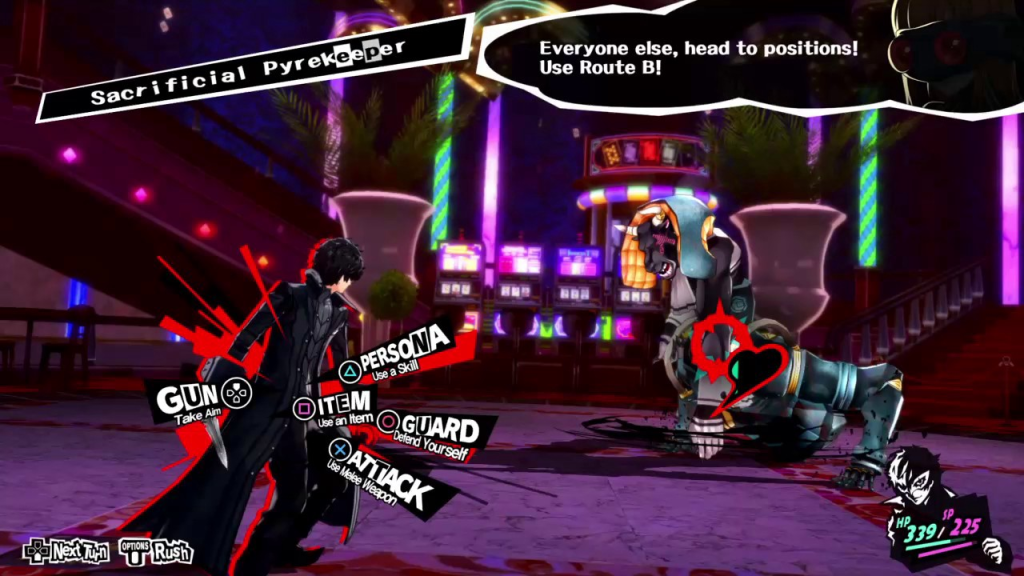
Describing the gameplay to friends has been a bit challenging, so bear with me for a moment. Persona plays like part Pokémon, part high school simulator. You split your days between being a normal high school student and being a nationally-famous ephemeral thief. In the real world, you spend time studying for exams, strengthening friendships, improving social skills, going fishing, playing pool or darts, and going out to eat; while as a phantom thief, you sneak through the Palaces of corrupt individuals, defeating enemies and making your way to the Treasure chamber at the very end. Your escapades will take you to locales perfectly suited for stealth and thievery, from a gilded museum to a high-stakes casino. All the while, the vast majority of Shadow enemies you encounter can be weakened and convinced to join you, being “captured” by the main character and turning into a Persona, which you may use in battle (hence the reference to Pokémon) and fuse together in Execution rituals to create new, powerful allies. Be careful, though. As Morgana will constantly remind you, every action you take will chip away at your limited time, whether you have to go to bed or are coming up against the deadline to claim a Palace ruler’s Treasure, so you have to carefully consider how you spend your days. You might want to level up your Personas through constant battle, but that may mean neglecting advancing your Social Links with friends, locking you out of certain interactions and events. Or you might want to take an excursion to a nearby town with a friend, but you will have even less time to clear any particularly difficult Palaces before the deadline. It’s entirely possible to finish a Palace in a single day, but you need to be particularly prepared in order to do so.
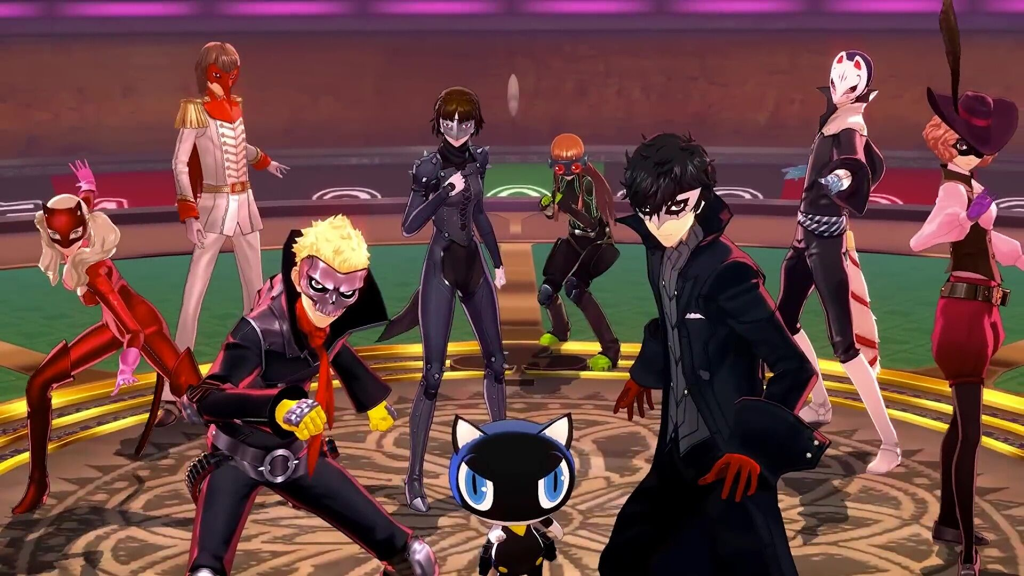
One of the main reasons I love this game is how it expresses and presents itself. P5 just oozes style, with its comic/pop-art aesthetic, regular use of red, white, and black, and text styled after clippings in a ransom note. It appears to be heavily influenced by the British punk scene of the 1970s and 1980s, with a thematically-appropriate “never back down to authority” attitude pervading throughout. Contrasting that is the soundtrack, which brings an element of jazz new to the franchise. Each song is unique and memorable, helping to build the mood of whatever it is you happen to be doing. I found myself regularly singing along with the songs, whether humming “Beneath the Mask” while wandering Shibuya’s streets at night, or belting out “The Whims of Fate” exploring the distorted casino. By far, however, my favorite part of the entire game’s presentation is the animation that displays whenever you defeat enemy Shadows. The Victory Screen is integral to any JRPG, as fans of the Final Fantasy franchise can attest. Instead of describing it to you, however, just take a look and see what I mean.

As with Persona 4 and Persona 4 Golden, there are key differences between the original “vanilla” release of Persona 5 in 2016 and the Royal release in 2020. Royal revamps the gameplay majorly, including reworked Palaces with platforming sections, a grappling hook allowing you to traverse the environment or engage enemies from afar, a roaming store in Mementos, the palace of the collective unconscious, and new wildcard mechanics to the Executions. It also smooths out many of the kinks from the original release, like restocking your ammunition after every battle (as opposed to restocking it after exiting the Palace) or an “assist” function that provides players with a recommendation as to how to spend their time. By far the largest additions to the game, though, include a new party member, an additional semester with a new final Palace, an extra Tokyo neighborhood with more activities and stores, two new confidants, reworked calendar events, and additional cutscenes that are now voiced. However, some of these changes aren’t necessarily as welcome. People familiar with both games will no doubt know what I am talking about when I refer to an infamous boss fight roughly halfway through the game, which was changed from being mildly annoying in the original to notoriously difficult in the rerelease.
While the vast majority of these adjustments improve the experience and make the gameplay even more enjoyable, I feel as though the changes to the narrative ultimately take away from the story being told. Two of the new characters, Yoshizawa and Maruki, feel shoehorned into the plot, creating an expectation from the very beginning that they will be important to the story and, as a result, feel “railroaded” into how the story itself is told. In addition, the Third Semester adds another 10-20 hours of gameplay after the original’s climactic final battle, which ends up bloating the game and making the narrative feel artificially extended. As a result of these changes, the True Ending isn’t as satisfying as the original; the characters’ final interactions are underwhelming, and the narrative threads aren’t as neatly tied together. These additions the developers injected into the story ultimately make the game fall flat toward the end.
That is not to say that Royal is, in any way, a bad game or has a story not worth experiencing. I just believe that the execution felt tighter and neater in the original P5. It all depends on the kind of experience you, as a player, are looking for: what the developers originally intended to do, or a streamlined version of that.
I should also point out that the vanilla ending leads much more neatly into the beginning of Persona 5‘s sequel as opposed to P5R. *hint hint*

 LAFworks
4 thoughts on “Persona 5 and Persona 5 Royal”